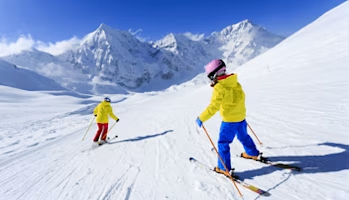
No, most standard travel insurance policies usually don’t automatically cover skiing, snowboarding and other winter sports. When you compare quotes with MoneySuperMarket, you’ll need to select winter sports cover - depending on the policy, this can add cover for risks such as:
Medical treatment and rescue after a winter sports accident
Lost, stolen or damaged ski or snowboard equipment
Replacement equipment hire
Piste closures or avalanche disruption
Be sure to look through the exact wording of your policy before you buy, as activities, limits and exclusions usually vary between insurers.
Do I need winter sports cover for my holiday?
You’ll usually need winter sports cover if you plan to:
Ski or snowboard
Take winter sports lessons
Use a terrain park
Hire or bring your own ski or snowboard equipment
Take part in other snow or ice activities your standard policy doesn’t cover
You may not need winter sports cover if you’re:
Visiting a ski resort but not taking part in winter sports
Going on a Christmas market or sightseeing break
Taking a winter holiday where all your planned activities are covered by standard travel insurance
The activities you'll be covered for can vary between insurers, so check that everything you plan to do is included before you buy.
Skiing and snowboarding
Winter sports cover commonly includes recreational skiing and snowboarding, although certain conditions might apply to your policy, so check for any restrictions on location or days of cover.
Other snow and ice activities
Depending on your provider and policy, cover may also be available for activities such as ice skating, sledging, snowshoeing or glacier walking. However, you should always look at the specific wording of your policy so you know what winter sports you'll be covered for.
Off-piste and higher-risk activities
Off-piste skiing, snowmobiling, ski touring, heli-skiing and other higher-risk activities are likely to have additional conditions, while they might also require specialist cover or be excluded altogether. For example, off-piste cover may only apply within recognised resort boundaries or when you’re with a qualified guide.
Competitive or professional winter sports
Standard travel insurance with winter sports cover usually exclude racing, competitions, professional sport and organised training. If you’re travelling to compete or train, you'll usually need specialist insurance.
What does travel insurance with winter sports cover include?
What may be covered
Medical treatment and rescue: Cover for eligible medical costs if you’re injured while taking part in an insured activity, plus rescue or repatriation where included
Ski and snowboard equipment: Cover for your own or hired equipment if it’s lost, stolen or damaged, subject to policy limits
Replacement equipment hire: Cover towards hiring replacement equipment if yours is lost, stolen, damaged or delayed
Ski passes and lessons: Some policies cover unused passes, lessons or equipment hire if illness or injury stops you from skiing
Piste closure: Some policies pay a benefit or reasonable travel costs if weather or safety concerns close the slopes
Avalanche disruption: Cover may be available for extra transport or accommodation if an avalanche prevents you reaching or leaving your resort
Personal liability: Some policies cover costs if you accidentally injure someone or damage their property while taking part in an insured activity
What may not be covered
Unlisted activities: You likely won't be covered for winter sports or activities that aren’t explicitly included in your policy
Off-piste restrictions: Off-piste skiing or snowboarding may be excluded unless you meet certain conditions, such as staying within resort boundaries or using a qualified guide
Professional or competitive sport: Racing, competitions, professional sport and organised training are often excluded
Unattended equipment: Claims may be refused if your ski or snowboard equipment is left unsecured or unattended
Missing safety equipment: You may not be covered if you don’t use safety equipment required by your insurer or the activity
Alcohol or recreational drugs: Claims linked to excessive alcohol or recreational drug use will usually be refused
Undisclosed medical information: A claim could be affected if you don’t give the insurer medical information they asked you to provide
Travel against official advice: Cover may not apply if you travel against relevant Foreign, Commonwealth & Development Office advice
What should I compare in a winter sports policy?
Price matters, but the cheapest policy won’t necessarily give you the most useful cover. Compare the limits and conditions that matter for your trip.
Medical cover
Look at the overall limit for emergency medical treatment abroad
Medical rescue
Look for mountain or helicopter rescue cover if it’s relevant to your plans
Cancellation
Make sure the cancellation limit is enough to cover your prepaid trip costs
Ski equipment
Check both the total equipment limit and any limit for an individual item
Replacement hire
See how much the policy pays if you need to hire replacement equipment
Piste closure
Compare the qualifying conditions, waiting periods and maximum benefit
Avalanche cover
Check what costs are covered if an avalanche disrupts access to your resort
Off-piste cover
Look at any restrictions on where you can ski and whether a guide is required
Excess
Compare how much you’ll need to contribute if you make a claim
The average price of a travel insurance policy with winter sports cover is £57.90[3]
What affects the cost of cover?
The price you'll pay for your travel insurance policy with winter sports cover will depend on a number of different factors, including your destination, the length of your trip, your age and health, and the type of cover you choose.
Destination
Countries that have higher medical fees or are considered dangerous can impact the cost of travel insurance.
Length of trip
The longer your holiday is, the greater the chance is of something happening. If you're travelling often, multi-trip and long-stay policies can work out cheaper than paying for several single-trip policies.
Your age and health
Insurers put certain age groups, such as over 65s and 75s, into higher risk categories because older age groups typically pose more of a medical risk. It might be worth looking into specialist insurers and pre-existing condition travel policies to get a more competitive price.
Your cover
Your activities, equipment, policy limits and optional extras can all affect the total cost of your policy.
Why medical cover matters
A winter sports accident can leave you facing more than the cost of treatment itself - travel insurance can also cover eligible rescue and repatriation costs. ABI members paid £262 million[4] in overseas medical travel insurance claims in 2024, with an average medical claim of £1,528[4].
Which type of travel insurance do I need for my ski destination?
There are three different levels of travel insurance depending on which locations you want to cover. The more destinations you want covered under your policy, the more your policy will cost.
📍Resorts such as Val Thorens, Chamonix, St Anton, Zermatt, and Cervinia.
Worldwide excluding USA and Canada
Includes Europe plus long-haul ski destinations such as those in Japan or in New Zealand, offering broader cover without the high costs of North America.
📍Resorts such as Niseko, Hakuba, Treble Cone and Coronet Peak.
Worldwide including USA and Canada
Full global cover, including high-cost North American resorts. Including these countries costs more because medical and rescue expenses are significantly more expensive.
📍Resorts such as Whistler, Banff, Vail, Breckenridge, and Park City
Some insurers have restrictions on certain countries and will not cover you if you travel against the advice of the FCDO. Always check policy documents for any exclusions before taking out travel insurance.
Want rewards, cashback and free experiences? We've got you....
“You shouldn't pick your travel insurance policy with winter sports cover based on price alone - two policies with similar premiums can have very different limits for equipment, piste closure, avalanche disruption or replacement hire. Check the activities you plan to do first, then compare the cover amounts and limits that would matter most if something went wrong.”
Ryan NizzarTravel, Business & Landlord Insurance Expert
Yes, you can get winter sports cover with a joint or family travel insurance policy. All you need do is add the optional cover to your policy to cover multiple people under one policy. It will cover your medical costs, your equipment, and travel disruptions while you travel together, and a joint policy can sometimes work out cheaper than buying several individual travel insurance policies.
Can I get multi-trip winter sports cover?
Yes, you can add winter sports cover to annual multi-trip travel insurance policies. This can be a really valuable addon if you regular take skiing holidays or regularly take part in winter sports when you travel.
Is winter sports travel cover needed for ice skating?
You will need to add winter sports cover to your travel insurance policy if you want cover for ice skating. Most travel insurance policies are unlikely to cover adventure sports or sports with a high-risk of injury. So, if you plan to go out on the ice, consider whether winter sports cover is worth adding.
Do I need winter sports cover to travel to Lapland?
You don’t need to take out winter sports cover for travel insurance to cover a trip to Lapland. European travel insurance will give you standard cover for a holiday to Lapland and will cover all the basics.
However, if you plan to take part in any winter sports, such as sledding or ice skating, then you will need winter sports cover added to your policy to cover you when taking part in any of these activities.
Does winter sports cover include mountain rescue?
Winter sports cover will cover the cost of mountain rescue as well as the cost of repatriation if you need urgent transport back to the UK. These are included as part of your medical cover, so it’s worthwhile to take the cost of these into consideration when choosing your cover.
Travelling to a specific destination? You can compare travel insurance for the location you're travelling to.
How does MoneySuperMarket create and review the content on its website?
At MoneySuperMarket, we want to give you clear, accurate and trustworthy information so you can make confident financial decisions for your circumstances.
Every page on our website goes through a careful editorial process before it is published. It’s written or reviewed by one of our experienced experts, checked for accuracy, and updated regularly to reflect the latest information.
We do use AI tools to support our research and drafting, but a human editor is always in the loop to review, fact-check and approve everything before it’s published, so you can trust that what you’re reading is both reliable and up to date.
We get paid by the companies we work with, but the payment we get doesn’t have any bearing on the information we provide. We get paid in different ways, depending on the type of product or service you buy through us. Our goal is to search deals from as wide a range of companies as possible, but we only show results from our partner providers.
Our comparison service is, and will always be, free to use.
One of the best ways to get the lowest prices and best deals is to compare quotes from different companies. We do the work for you, comparing quotes side-by-side and giving you all the information you need so you can choose the right deal for your needs and your wallet.
We don’t give recommendations or financial advice, but we give you clear information so you can choose financial products that suit your circumstances.
Does MoneySuperMarket work with all the providers on the market?
No, not every company can be included in our service. This is because some companies don’t want their products included on comparison sites, and some decide that they would rather not pay a fee. There are also a few smaller providers who can struggle to cope with the volume of customers that can find their products if they appear on MoneySuperMarket.
Our goal is to search deals from as wide a range of companies as possible so that you can choose the deal that suits you.
Is travel insurance eligible for SuperSaveClub and rewards?
Yes, you can earn SuperSaveClub rewards when you buy travel insurance through MoneySuperMarket.
This includes:
Up to £5[9], which you can withdraw as a pre-paid Mastercard or a gift card for brands like Sainsbury's and Amazon.co.uk
Free Days Out pass (worth £180), which gives free entry to a range of UK attractions (you must download our app to get this)
Cashback of up to 10% when you spend at brands including eBay, Just Eat and Argos
To earn SuperSaveClub rewards on purchases you must:
Sign up to SuperSaveClub (it's free)
Be signed in to your account when you make the purchase
YouGov Survey 1st July 2025 to 30th June 2026. Net Recommend score derived from "Which of the following online service websites would you recommend to a friend or colleague, or tell them to avoid?" Base: Current Customers of (MoneySuperMarket n=17,883, Compare the Market n=16,193, Go.Compare n=8,523, Confused.com n=7,918, Uswitch n=514)
[2]
Data based on the minimum price of travel insurance sold through MoneySuperMarket with winter cover in September 2026. Prices vary based on your personal details & circumstances.
[3]
Data based on the 51st percentile price of travel insurance sold through MoneySuperMarket with winter cover in October 2026.
[4]
Source: Association of British Insurers (ABI), 2025. ‘Eight to Embark’ – the ABI shares top travel insurance tips as claims data highlights importance of cover. https://www.abi.org.uk/media-hub/news-post/eight-to-embark-the-abi-shares-top-travel-insurance-tips-as-claims-data-highlights-importance-of-cover
[5]
T&Cs and restrictions apply, see here for more information