


Dog insurance
As well as protection for adult dogs, MoneySuperMarket can show you quotes for:
Quotes from £3.95


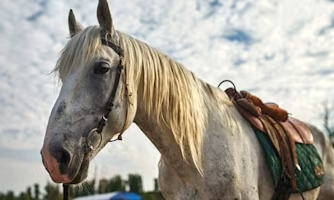
We can help you compare pet insurance quotes for dogs, cats, rabbits and horses.
As well as protection for adult dogs, MoneySuperMarket can show you quotes for:

As well as protection for adult cats, MoneySuperMarket can show you quotes for:
📣 Sainsbury's Bank: EXCLUSIVE price cut for MoneySuperMarket customers. Defaqto Pet Insurer of the Year 25/26. Sainsbury's can pay your vet directly and 98% of claims paid in 5 working Days
Scratch & Patch: Enjoy a 20%
Co-op: Price includes a 5% discount for Co-op members
Animal Friends: Protect your pet, treat yourself! Get a £50

We compare quotes from 38


Pet insurance is a financial safety net that helps cover unexpected costs related to your pet. For example:
Your pet is ill, injured, or needs to be put down
Your pet is lost or stolen
Your dog harms someone, their property or other pets
Most people use pet insurance to protect against high vet bills, which can quickly reach thousands of pounds. Having cover in place means your pet can get the treatment they need without delay.
Pet insurance doesn’t usually cover routine care like vaccinations, flea and worming treatment, neutering or regular dental cleaning.
🚩 Standard pet insurance isn’t designed for people who work with animals. If you’re a pet sitter, groomer or similar, you’ll need a business insurance policy instead.
There are four main types of pet insurance:

Protects your pet for life, as long as the policy is renewed each year.
Average cost: £13.19

Covers your pet for a specific period of time (usually 12 months).
Average cost: £12.01

Sets limits on how much you can claim for any given illness or injury.
Average cost: £14.12

Only covers your pet for accidents, does not protect against illnesses.
Average cost: £3.96
Pet insurance can financially protect you from paying some very big bills. Veterinary treatment is often expensive, especially if your pet develops a chronic condition. For example, it costs on average:
£1,300
£2,000-£4,000
With insurance in place you will not have to worry about whether you can afford to give your pet all the treatment it needs if it becomes ill or injured.
In comparison, the average monthly price for lifetime cover, the most comprehensive type of insurance, is £13.19
Paying out of pocket for insurable problems is usually significantly more expensive than taking out an insurance policy.
Yes. As a dog owner, you can be held legally responsible - and have to pay compensation - if your dog injures someone or damages their property, including other pets.
Pet insurance can help protect you financially, as many policies include third-party liability cover for dogs. This can pay for legal costs and compensation if your dog causes harm.
💡 Top tip: You only need this cover if you have a dog. Cat owners aren’t generally held liable for their pet's behaviour.

Cover varies by provider and policy, so always check your insurance documents.
✔ Vet bills e.g. medicines, treatments and prescriptions
✔ Hospital visits
✔ Diagnosing illnesses e.g. consultations, X-rays, MRIs
✔ Dental treatment for accidents, like breaking a tooth
✔ Alternative therapies e.g. hydrotherapy or acupuncture (when recommended by a vet)
✔ Euthanasia (putting pets down)
✔ Lost and stolen pets e.g. advertising, rewards, refund of purchase price
✔ Third party liability cover e.g. your dog harms someone or their property
✔ Emergency boarding fees e.g. if you are unexpectedly hospitalised
✖ Routine care e.g. pet vaccinations, boosters, regular check-ups
✖ Routine dental treatment including routine check-ups
✖ Fleas and worming
✖ Elective or cosmetic treatments
✖ Cremation and burial
✖ Training and obedience classes
✖ Banned breeds or dog breeds classed as dangerous
✖ Unvaccinated or unmicrochipped animals
Pet insurance costs vary depending on factors such as the type of cover you select, your pet's age, your pet's breed, your location, and your history of claims.
Some breeds are more prone to certain illnesses, hereditary conditions or injuries, which can make them more expensive to insure.
Dog Breeds | Average Cost | Cat Breeds | Average Cost |
|---|---|---|---|
Mongrel | £10.93 | Moggie | £7.67 |
Cockapoo | £10.87 | Birman | £8.43 |
Golden Retriever | £15.31 | Ragdoll | £8.11 |
French Bulldog | £24.31 | Maine Coon | £11.47 |
Pedigree breeds in particular often come with higher premiums because they tend to have more health risks and may require more frequent vet care.
Crossbreeds and mixed-breed pets are usually cheaper to insure as they often have fewer genetic health problems.
In general, the older your pet is, the more expensive their insurance will be. Many insurers also add higher excesses or require you to pay co-payments (a percentage of each claim) once your pet reaches a certain age.
Age | Dog | Cat |
|---|---|---|
Under 1 | £10.01 | £6.92 |
1-2 years old | £9.80 | £6.35 |
3-4 years old | £11.41 | £6.20 |
4-5 years old | £14.23 | £6.56 |
6-7 years old | £16.73 | £7.19 |
Over 7 years old | £24.45 | £12.64 |
💡 Top tip: Some providers won’t offer new policies for older pets at all, or offer policies with more exclusions and stricter terms. It’s often cheaper and easier to take out insurance while your pet is still young and keep the policy running throughout their life.
Yes, but you’ll usually need a specialist pre-existing conditions pet insurance policy, which is typically more expensive than standard cover.
A pre-existing condition is generally any illness or injury your pet showed symptoms of, was diagnosed with, or received treatment for before your policy started.
However, each insurer defines pre-existing conditions differently. Some may exclude anything that occurred in the last few years, while others only exclude ongoing or recurring issues.

🚩 Lower premiums can come with lower protection. You could end up paying large bills out of pocket if your pet requires extensive vet treatment.
This is the average annual saving for customers who choose a £1,000 vet fee limit.
This is the average annual saving for customers who took out this type of policy.
MoneySuperMarket, the UK’s most recommended price comparison website
You can easily filter for the cheapest premiums or the highest level of cover, helping you find a policy that truly matches your pet’s needs at a fair price.
Monthly payments usually include interest or admin fees, so paying for your pet insurance annually can work out significantly cheaper over the year.
Your pet insurance excess is the amount you pay towards each claim. Choosing a higher excess can lower your monthly premium, but make sure it’s still an amount you could comfortably afford if your pet needed treatment.
Covering all your pets under a single multi-pet policy can often unlock discounts, helping you cut costs without reducing the quality of your cover.
Keeping up with vaccinations, boosters and microchipping can reduce the likelihood of future claims and may help keep your premiums lower over time.
Some insurers may also refuse to pay out for certain conditions if your pet isn’t up to date with routine care, so staying on top of this is essential.
Pets that are stopped from breeding by being spayed or neutered are less likely to develop certain health conditions, which can result in lower premiums.
Alongside adult cats and dogs, MoneySuperMarket can help you find a good deal on pet insurance for the following animals:

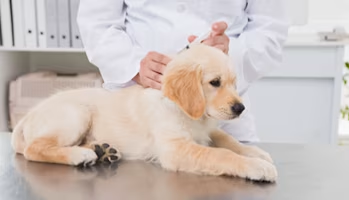


Vet bills have become so expensive that the Competition and Markets Authority (CMA) launched a formal Market Investigation into the veterinary sector. Pet owners facing extreme costs can be forced to make very tough choices. The RSPCA reports that in 2024 there were 22,503 incidents relating to an abandoned animal.
According to the CMA, 25% of pet owners don't know they can shop around for medicines: you do not have to buy them through your vet. Several charities also help lower-income households with some of their vet bills. The RSPCA, the Blue Cross, Dogs Trust and Cats Protection all run these sorts of schemes. Charities also run pet food banks across the UK.
Alicia Hempsted Insurance Expert


✓ Pet’s age
✓ Pet's breed or size
✓ Pet's health
✓ If they have been neutered/spayed
✓ Price you paid for them
✓ Behavioural history
✓ Medical history
MoneySuperMarket has won the Feefo Platinum Trusted Service Award, an independent seal of excellence, which recognises businesses that consistently deliver a world-class customer experience.


We’ll reward you every time you make a purchase. Exchange your earnings for a gift card for Amazon.co.uk

A years worth of free experiences across the UK. From London Zoo and Go Ape, to Hussle Swimming and English Heritage, there’s an adventure for everybody. Worth £180

Whether you're buying clothing, homewares or takeaways, earn up to 10%

You and your friends each get up to £20 when they join the Club and make a qualifying purchase. Win-Win!

All our insurance providers are authorised and regulated by the Financial Conduct Authority (FCA).

We're also the UK's most recommended price comparison website

Save £££ on your pet insurance. Plus, we price match and will give you £20 if you find a cheaper deal

Buy through us and get up to £10
Yes, policies start straight away, but most insurers apply waiting periods before you can claim. Common waiting times are 48 hours for accidents and around 14 days for illnesses.
Avoid leaving insurance until your pet is already ill, as anything with symptoms before the start date will count as pre-existing.
Paying annually for pet insurance is usually cheaper because monthly payments often include interest or admin fees.
Yes, you will almost certainly have to pay an excess (a pre-set contribution to the costs) every time you claim on your pet insurance. Some insurers will ask you to pay a flat fee for the excess, whereas others will ask for a flat fee plus a percentage of the remaining cost. Check your policy for more details.
Setting a higher excess can bring your premiums down, but will make claims less affordable.
Yes, you can get multi-pet insurance, where all your pets are covered under one policy.
Multi-pet insurance can make it easier to manage your pet cover. It can also be cheaper, because many insurers offer discounts if you cover more than one animal on the same policy.
Contact your insurer as soon as possible with your policy number, details of the illness or injury and copies of vet invoices or medical notes. You’ll need to fill in a claim form and submit evidence such as receipts, reports and test results.
Some vets can claim directly from insurers so you don’t have to pay upfront. Claims usually take from a few days to a few weeks to process, depending on how quickly documents are provided.
Talk to your vet about your financial situation. Some vets offer credit plans and are able to work with you to accommodate your situation, others may refer you to a less expensive vet facility.
You can also shop around for medicines: you do not have to buy them through your vet.
Several charities also help lower-income households with some of their vet bills. The RSPCA, the Blue Cross, Dogs Trust and Cats Protection all run these sort of schemes.
No. Routine treatments such as vaccinations, flea and worming, regular check-ups, microchipping and neutering are not usually covered by pet insurance. These are considered everyday healthcare costs that owners are expected to pay out of pocket for.
Despite the expense, it's recommended to keep on top of routine healthcare for your pet, both for their wellbeing and because pet insurers may refuse to pay out for illnesses that routine vaccinations would have prevented.
Some vets offer payment plans or ‘pet health clubs’ that spread the cost of vaccinations, parasite treatment and check-ups into monthly instalments. These aren’t a substitute for pet insurance, but they can make routine care more affordable.
Most pet insurance policies only cover dental treatment that’s needed because of an accident or an illness. For example, insurers may cover treatment for a broken tooth after an injury, infections caused by trauma, abscesses, or extractions needed because of gum disease that wasn’t preventable.
What they won’t usually cover are routine dental check-ups, scale and polish treatments, or cleaning carried out to maintain good oral hygiene.
Despite the out-of-pocket costs, it's a good idea to pay for routine dental care for your pet. If dental disease develops because your pet hasn’t had regular care, insurers may also refuse to pay out.
Hereditary conditions (inherited from a pet’s parents) and congenital conditions (present from birth) are often only fully covered by lifetime pet insurance, and even then only if the condition had not shown symptoms before the policy began.
Time-limited and maximum-benefit policies may cover hereditary and congenital conditions that start showing symptoms for the first time while the plan is active, but only up to their set financial or time limits. Once you reach the cap - either the 12-month window or the maximum payout amount - the condition will no longer be covered. In contrast, many lifetime policies will continue to cover these conditions year after year, as long as you renew without a break.
Some insurers exclude certain conditions in high-risk breeds, such as breathing issues in brachycephalic dogs (squashed-face breeds like Pugs and Bulldogs) or joint problems in large pedigree breeds. In rarer cases, an insurer may refuse to cover a specific breed altogether because of the expected likelihood of claims.
It depends on the policy. Many standard pet insurance policies exclude cover if your dog is injured or causes damage while in a workplace, even if they are simply accompanying you for the day. Always check your policy wording, as insurers treat workplaces as higher-risk environments.
If your dog is working at your workplace — for example providing security, therapy, assistance or other services — you will usually need a specialist policy or an add-on that covers work-related injuries and liability. Standard pet insurance won’t cover this type of activity.
If you regularly take your dog to work, it's worth contacting your insurer to confirm whether your cover still applies and whether any additional protection is needed.
Yes, you can get cover for working dogs (like service dogs, police dogs, or farm dogs). However, you will need to declare this to your insurer and policies may cost more or have stricter terms because of the higher risk of injury.
Some companies also offer specialised working-dog policies.
Many pet insurance policies include some level of overseas cover, typically when you travel within Europe. This usually includes vet treatment abroad, loss of travel documents, and costs if your pet needs to be quarantined, delayed or repatriated due to illness.
However, cover varies widely. Some policies only include basic overseas protection, while others require you to add it as an optional extra. You may also need to meet certain conditions, such as keeping vaccinations, worming treatments and microchipping up to date, for your cover to remain valid while travelling.
If you plan to take your pet abroad, check your insurer’s policy wording carefully to confirm:
• which countries are covered
• how long you can travel for
• any exclusions or documentation requirements
• whether emergency return costs are included
If overseas cover isn’t included or isn’t sufficient, you may need to pay extra or choose a policy specifically designed for travel with pets.
At MoneySuperMarket, we want to give you clear, accurate and trustworthy information so you can make confident financial decisions for your circumstances.
Every page on our website goes through a careful editorial process before it is published. It’s written or reviewed by one of our experienced experts, checked for accuracy, and updated regularly to reflect the latest information.
We do use AI tools to support our research and drafting, but a human editor is always in the loop to review, fact-check and approve everything before it’s published, so you can trust that what you’re reading is both reliable and up to date.
You can read more in our editorial guidelines.
We get paid by the companies we work with, but the payment we get doesn’t have any bearing on the information we provide. We get paid in different ways, depending on the type of product or service you buy through us. Our goal is to search deals from as wide a range of companies as possible, but we only show results from our partner providers.
Our comparison service is, and will always be, free to use.
One of the best ways to get the lowest prices and best deals is to compare quotes from different companies. We do the work for you, comparing quotes side-by-side and giving you all the information you need so you can choose the right deal for your needs and your wallet.
We don’t give recommendations or financial advice, but we give you clear information so you can choose financial products that suit your circumstances.
No, not every company can be included in our service. This is because some companies don’t want their products included on comparison sites, and some decide that they would rather not pay a fee. There are also a few smaller providers who can struggle to cope with the volume of customers that can find their products if they appear on MoneySuperMarket.
Our goal is to search deals from as wide a range of companies as possible so that you can choose the deal that suits you.
Yes, you can earn SuperSaveClub rewards when you buy pet insurance through MoneySuperMarket.
This includes:
Up to £10, which you can withdraw as a pre-paid Mastercard or a gift card for brands like Sainsbury's and Amazon.co.uk
Free Days Out pass (worth £180), which gives free entry to a range of UK attractions (you must download our app to get this)
Cashback of up to 10% when you spend at brands including eBay, Just Eat and Argos
To earn SuperSaveClub rewards on purchases you must:
Sign up to SuperSaveClub (it's free)
Be signed in to your account when you make the purchase
More information can be found on our SuperSaveClub homepage.
Yes, pet insurance is included in our Super Save Price Promise.
If you buy through us then find the same deal for less we will:
refund the difference
give you a gift card worth up to £20
Terms and conditions apply. More information can be found on our Price Promise page.
Reviewed on 19 Mar 2026 by
Accurate as of 13 March 2026.
Based on the 10 percentile of monthly premiums our customers were quoted less than £3.95 for pet insurance based on quotes created on MoneySuperMarket in the month of December 2024 where only 1 pet was included in the quote.
YouGov Survey 1st July 2024 to 30th June 2025. Net Recommend score derived from “Which of the following online service websites would you recommend to a friend or colleague, or tell them to avoid?” Base: Current Customers of (MoneySuperMarket n=18,382, Compare the Market n=16,802, Go.Compare n=10,162, Confused.com n=8,229, Uswitch n=528).
Source: Association of British Insurers (ABI), 2024. https://www.abi.org.uk/news/news-articles/2024/8/record-numbers-take-out-pet-insurance-for-their-four-legged-fur-ends/ Data sourced November 2025.
Based on the 51st percentile of monthly premiums our customers were quoted per month for dog insurance based on quotes created on MoneySuperMarket between December 2025 and February 2026 where only 1 pet was included in the quote.
Based on the 51st percentile of monthly premiums our customers were quoted per month for cat insurance based on quotes created on MoneySuperMarket between December 2025 and February 2026 where only 1 pet was included in the quote.
Based on the 51st percentile of monthly premiums our customers were quoted per month for dog insurance based on quotes created on MoneySuperMarket between December 2025 and February 2026 where only 1 pet was included in the quote.
Based on the 51st percentile of monthly premiums our customers were quoted per month for cat insurance based on quotes created on MoneySuperMarket between December 2025 and February 2026 where only 1 pet was included in the quote.
Based on the 51st percentile of monthly premiums our customers were quoted per month for dog insurance based on quotes created on MoneySuperMarket between December 2025 and February 2026 where only 1 pet was included in the quote.
Based on the 51st percentile of monthly premiums our customers were quoted per month for cat insurance based on quotes created on MoneySuperMarket between December 2025 and February 2026 where only 1 pet was included in the quote.
Based on the 51st percentile of monthly premiums our customers were quoted per month for dog insurance based on quotes created on MoneySuperMarket between December 2025 and February 2026 where only 1 pet was included in the quote.
Based on the 51st percentile of monthly premiums our customers were quoted per month for cat insurance based on quotes created on MoneySuperMarket between December 2025 and February 2026 where only 1 pet was included in the quote.
Based on the 51st percentile of monthly premiums our customers were quoted per month for dog insurance based on quotes created on MoneySuperMarket between December 2025 and February 2026 where only 1 pet was included in the quote.
Based on the 51st percentile of monthly premiums our customers were quoted per month for cat insurance based on quotes created on MoneySuperMarket between December 2025 and February 2026 where only 1 pet was included in the quote.
Based on the 51st percentile of monthly premiums our customers were quoted per month for dog insurance based on quotes created on MoneySuperMarket between December 2025 and February 2026 where only 1 pet was included in the quote.
Based on the 51st percentile of monthly premiums our customers were quoted per month for cat insurance based on quotes created on MoneySuperMarket between December 2025 and February 2026 where only 1 pet was included in the quote.
Based on the 51st percentile of monthly premiums our customers were quoted per month for dog insurance based on quotes created on MoneySuperMarket between December 2025 and February 2026 where only 1 pet was included in the quote.
Based on the 51st percentile of monthly premiums our customers were quoted per month for cat insurance based on quotes created on MoneySuperMarket between December 2025 and February 2026 where only 1 pet was included in the quote.
Based on the 51st percentile of monthly premiums our customers were quoted per month for dog insurance based on quotes created on MoneySuperMarket between December 2025 and February 2026 where only 1 pet was included in the quote.
Based on the 51st percentile of monthly premiums our customers were quoted per month for cat insurance based on quotes created on MoneySuperMarket between December 2025 and February 2026 where only 1 pet was included in the quote.
Based on the 51st percentile of monthly premiums our customers were quoted per month for dog insurance based on quotes created on MoneySuperMarket between December 2025 and February 2026 where only 1 pet was included in the quote.
Based on the 51st percentile of monthly premiums our customers were quoted per month for cat insurance based on quotes created on MoneySuperMarket between December 2025 and February 2026 where only 1 pet was included in the quote.
Based on the 51st percentile of monthly premiums our customers were quoted per month for dog insurance based on quotes created on MoneySuperMarket between December 2025 and February 2026 where only 1 pet was included in the quote.
Based on the 51st percentile of monthly premiums our customers were quoted per month for cat insurance based on quotes created on MoneySuperMarket between December 2025 and February 2026 where only 1 pet was included in the quote.
SuperSaveClub restrictions and T&Cs apply. Click here for details.
Based on the 51 percentile of monthly premiums our customers were quoted less than £10.32 for pet insurance based on quotes created on MoneySuperMarket in the month of February 2026 where more than 1 pet was included in the quote and none of the pets had pre-existing medical conditions
Based on the 51 percentile of monthly premiums our customers were quoted less than £13.19 per month where the customer requested lifetime pet insurance based on quotes created on MoneySuperMarket in the month of February 2026 where only 1 pet was included in the quote and the pet didnt have pre-existing medical conditions
Based on the 51 percentile of monthly premiums our customers were quoted less than £12.01 per month where the customer requested time limited pet insurance based on quotes created on MoneySuperMarket in the month of February 2026 where only 1 pet was included in the quote and the pet didnt have pre-existing medical conditions
Based on the 51 percentile of monthly premiums our customers were quoted less than £14.12 per month where the customer requested max benefit pet insurance based on quotes created on MoneySuperMarket in the month of February 2026 where only 1 pet was included in the quote and the pet didnt have pre-existing medical conditions
Based on the 51 percentile of monthly premiums our customers were quoted less than £3.96 per month where the customer requested accident only pet insurance based on quotes created on MoneySuperMarket in the month of February 2026 where only 1 pet was included in the quote and the pet didnt have pre-existing medical conditions
Based on 1 visit per month – average ticket value £15.30 (Oct 24)
T&Cs and restrictions apply, see here for more information
T&Cs apply to SuperSaveClub and Price Promise.
SuperSaveClub restrictions and T&Cs apply. Click here for details.
20% multi-pet discount for any additional cat or dog you choose to insure with Scratch & Patch on the same policy. Additional pets can be added once you have clicked through to the Scratch & Patch website.
Amazon.co.uk Gift Card restrictions apply, see www.amazon.co.uk/gc-legal for further information.
Based on the 51st percentile of annual premiums our customers were quoted per month for cat insurance based on quotes created on MoneySuperMarket between December 2025 and February 2026 where only 1 pet was included in the quote and was more than 1 year old.
Based on the 51 percentile of monthly premiums our customers were quoted less than £12.88 for pet insurance based on quotes created on MoneySuperMarket in the month of April 2024 where only 1 pet was included in the quote and the pet did have a pre-existing medical conditions
ABI data 2023
Based on the 51st percentile of annual premiums our customers were quoted per month for dog insurance based on quotes created on MoneySuperMarket between December 2025 and February 2026 where only 1 pet was included in the quote and was more than 1 year old.
Based on Pet Insurance enquiries on MoneySuperMarket between 2025-01-01 and 2025-04-01 where the quote was for all covertype.
Based on Pet Insurance enquiries on MoneySuperMarket between 2025-01-01 and 2025-04-01 where the quote was for all covertype.
T&Cs and restrictions apply, see here for more information
T&Cs apply, click here for more information
Based on the 51 percentile of monthly premiums our customers were quoted less than £10.96 for pet insurance. Based on quotes created on MoneySuperMarket in the month of January 2025 where only 1 pet was included in the quote and the pet didn't have pre-existing medical conditions


