

Earn up to £20^ every time you buy
We’ll reward you every time you make a purchase. Exchange your earnings for a gift card for Amazon.co.uk
Prices from £252

Compare quotes from 44 trusted insurers in minutes
Van insurance is a type of motor insurance designed to protect you financially if your van is involved in an accident, causes damage, or is stolen.
There are three main levels of cover. Third-party is the minimum legal requirement, covering damage or injury caused to others. Third-party, fire and theft adds protection if your van is stolen or damaged by fire. Fully comprehensive cover offers the highest level of protection, often at competitive prices, and includes repairs to your own van even if you are at fault, as well as cover for other vehicles, property, injuries, and some legal costs.
You must have van insurance by law to drive in the UK. It ensures you are financially protected if your van is involved in an accident, stolen, or causes damage or injury to others.
The type of cover you need depends on how you use your van. Private van insurance is suitable if you use your van for personal or leisure purposes. If you use it for work, such as transporting goods or equipment, you will need business or commercial cover to remain legally compliant and properly protected.
Easily compare quotes for both commercial and private van insurance from over 51







There are three types of van insurance:
✔ Highest level of protection
✔ Covers damage to your own van, even if you’re at fault
✔ Covers damage or injury you cause to other people, vehicles or property
✔ Usually includes fire and theft cover
✔ Covers damage or injury you cause to other people or their property
✔ Covers your van if it’s stolen
✔ Covers your van if it’s damaged by fire
✔ Covers damage or injury you cause to other people, vehicles or property
✔ Meets the legal minimum requirement to drive in the UK
The best time to renew your van insurance is 28
Van drivers who buy insurance 28 days early save an average of £89.70
Number of days before your renewal date | Average saving |
|---|---|
0 (renewing on the day) | £0 |
1 | £19.75 |
10 | £59.29 |
20 | £72.82 |
28 | £89.70 |
30 | £58.76 |
Yes, electric vans are often more expensive to insure than petrol or diesel models.
While they’re generally safer and cheaper to run, electric vans can cost more to repair after an accident due to specialist parts, battery systems and fewer approved repairers. The higher upfront value of many electric vans can also push premiums up.
However, prices are starting to come down as electric vehicles become more common and repair networks expand.
Electric Vans | Petrol Vans | Diesel Vans |
|---|---|---|
£643 | £592 | £507 |
Yes, it is usually still possible to get van insurance for convicted drivers.
However, during the time that your conviction is unspent your insurance premiums will likely be higher and you may need to get cover from a specialist insurer.
We’ll reward you every time you make a purchase. Exchange your earnings for a gift card for Amazon.co.uk

A year's worth of free experiences across the UK. From London Zoo and Go Ape, to Hussle Swimming and English Heritage, there’s an adventure for everybody. Worth £180

Whether you're buying clothing, homewares or takeaways, earn up to 10%

You and your friends each get up to £20 when they join the Club and make a qualifying purchase. Win-Win!
Van insurance protects you financially if your van is damaged, stolen, or involved in an accident. What your policy covers depends on the level of insurance you choose, but the process of making a claim is broadly the same:
Report the accident – Notify the police if required and contact your insurer as soon as possible.
Gather evidence – Collect photos, witness details, and exchange information with anyone else involved.
Make a claim – Submit the details to your insurer, including evidence and any forms they request.
Claim settlement – Your insurer will assess the claim, arrange repairs or compensation, and cover costs in line with your policy.
Example scenario
If you are involved in a collision and the accident is your fault, a fully comprehensive policy would cover the repair costs for both your own van and the third party’s vehicle. However, with third-party only cover, your insurer would pay for the third party’s damage, but you would need to cover the cost of repairing your own van.
🚩 Cover can vary between insurers. Always read your own policy documents carefully to see what you're covered for.
Injury to other people
Damage to other vehicles or property
Theft of your van
Repairs to your own van after an accident
Fire, flood, or storm damage
Theft if the van was left unlocked or unsecured
Driving without a valid licence or insurance
General wear and tear
Accidents while driving under the influence of alcohol or drugs
Incidents that occurred while the van was being driven by someone not named on your policy
Whether an add-on is worth paying for depends on how you use your van. For example, breakdown cover can be valuable if you rely on your van daily, while tool or goods-in-transit cover matters more if you carry equipment for work. Business van users often particularly benefit from broader protection as it can help avoid lost income.
Van breakdown cover provides roadside assistance, recovery and onward travel if your van breaks down. 18%
No-claims discount protection allows you to make a limited number of claims without losing your no-claims discount.
Courtesy van insurance gives you a temporary replacement van while yours is being repaired after an insured claim. 19%
Legal expenses cover helps cover legal costs if you need to pursue an uninsured loss or defend a claim after an accident.
It is one of the most popular types of van insurance add-ons, with 24%
Personal belongings cover protects personal items kept in your van if they are stolen or damaged. There will be limits on how much you can claim for, and exclusions (for example, the car can't have been unlocked).
If you want to fully protect higher-value personal items like an expensive handbag or a smartphone, you may need to look into personal possession insurance (usually sold as a home insurance add-on) or gadget insurance.
Misfuelling cover pays for draining and repairing your van if the wrong fuel is added.
Tool cover protects work tools stored in your van against theft or damage, usually up to a set limit. It can also be taken out separately as part of your business insurance.
Goods in transit cover insures items or materials you’re carrying for work if they’re lost, stolen or damaged in transit.
Any driver cover allows any eligible driver to drive the van, which can be useful if you share it with employees or colleagues.
Premiums are usually higher, and insurers may still apply age, licence or experience limits.
Van insurance is often more expensive than car insurance because vans are typically larger, cost more to repair, and are frequently used for business purposes. Rising repair costs, inflation, and the price of replacement parts have also pushed premiums higher across the market.
Your personal circumstances also affect what you pay. Factors such as your age, driving history, the type and age of your van, and how you use it all influence the cost. Business use generally carries higher premiums than private use, as it often involves more time on the road, longer journeys, and carrying goods or equipment, all of which increase risk.
Van insurance can be costly, particularly if you use your van for business or carry goods. However, there are several ways to reduce premiums without compromising cover:
Paying in a lump sum is usually cheaper than monthly instalments, which often include interest. On average, this could save around £53.78
Parking "On a driveway
Agreeing to a higher voluntary excess usually results in lower premiums, but ensure it’s an amount you can afford if you make a claim.
Comparing quotes before renewal is one of the most effective ways to cut costs, as insurers often reserve their best deals for new customers.
A “black box” policy that tracks driving habits can reward safe drivers with lower premiums.

According to a report from Consumer Intelligence, van insurance premiums fell by 8.9% in 2025. With prices showing signs of decline, now could be a great time to compare quotes to ensure you're on the best rate available for the cover you need.
As always, it’s important to make clear whether you use your van for work, pleasure or both, as this can have a big impact on the price you end up paying. There are several ways you can reduce costs, such as not storing goods or tools inside your van, limiting your mileage, and shopping around for the best deal.
Sara Newell Motor & Home Insurance Expert

For vans used only for personal purposes, such as hobbies, moving house, or running everyday errands.

Designed for vans used in connection with work, covering activities such as transporting tools, goods, or making deliveries.

Short-term cover lasting from a few hours to several weeks, ideal for borrowing a van, moving house, or test driving before purchase.

Tailored for vans used in frequent deliveries and collections, where high mileage and stop-start driving carry higher risk.

Applies to vehicles with a cabin and open cargo bed. The policy depends on whether the vehicle is used privately or commercially.

Aimed at drivers under 25, who typically face higher premiums due to limited experience.
Your details – including your age, address, occupation, and driving history, along with the same information for any named drivers.
Vehicle details – the van’s registration number, make and model, age, estimated value, and details of any modifications.
Usage information – how you plan to use the van (private, business, or courier), your annual mileage, and where the van will be kept overnight.
No-claims discount – the number of years you’ve held a no-claims bonus, which can help reduce your premium.

Budget Insurance
Great for
But be aware that

We listen to your needs and find the best policies to suit them

We compare quotes from 36 FCA regulated providers to find you the cheapest deals

With 30+ years experience and independence from insurers, we’re trusted by our customers

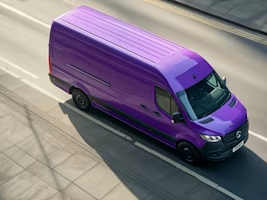

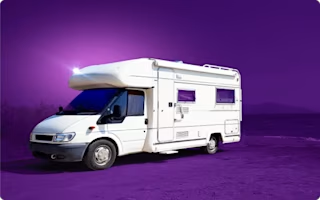
It depends on how you use your van. Private van insurance is only suitable for social, domestic or leisure use, such as personal errands or hobbies. Commercial van insurance is needed if you use your van for work in any way, including commuting to job sites, carrying tools or equipment, or making deliveries.
Even occasional business use matters. If you use your van for work but only have private cover, your insurer could refuse to pay out on a claim and may cancel your policy altogether. To avoid declined claims, it’s important to insure your van for its actual use, even if work-related driving only makes up a small part of how you use it.
Yes. Many insurers offer multi-van insurance policies, which allows you to cover two or more vans under a single policy. This can be cheaper and easier to manage than arranging separate policies, as insurers may offer discounts and combine renewals into one date.
Multi-van policies are often cost-effective once you insure two or three vehicles, particularly for self-employed tradespeople, families with multiple vans, or small businesses.
For larger operations (usually five or more vehicles), a fleet policy may be better value, with pricing based on overall risk rather than each van individually and more flexible driver arrangements, though often with higher excesses and less individual tailoring.
Yes, most insurers allow you to add additional drivers to your van insurance policy. You can choose to add them as named drivers, who are specifically listed on your policy, or take out any driver van insurance, which lets anyone meeting the policy requirements drive the van.
Adding extra drivers can increase the cost of your premium, especially if they are young or inexperienced, but it may be more convenient if more than one person needs regular access to the vehicle.
Many van insurance policies include some level of cover for driving abroad, but the countries included and the extent of cover will vary by provider. In many cases, your comprehensive policy may only provide third-party cover while in Europe, unless you arrange an upgrade.
If you plan to take your van abroad, always check your policy documents in advance. You may also want to add European breakdown cover, which can be bought separately or as an add-on to your van insurance, to ensure you’re protected if your van breaks down while overseas.
You can check your van’s insurance group through our van insurance group checker tool. You can also ask your insurer, dealer, or specific van manufacturer which group your vehicle falls into.
Just like car insurance groups, van insurance groups are a classification system used by insurance providers to weigh up the risk associated with insuring a particular van. This helps determine your van insurance premium, along with your personal risk factors.
A new insurance rating system for cars and vans is being phased in in the UK. Instead of insurance groups, vans will be given 'vehicle risk ratings'. However, this will only affect you if your vehicle went on sale in the UK from 1 August 2024 and is part of a brand new van model range. If you own an older van, it will continue to be assessed under the old group system.
Yes, most insurers let you use your no-claims discount (NCD) when taking out van insurance, even if it was built up on a car or motorbike policy. However, an NCD can usually only be applied to one active policy at a time, meaning you cannot use the same discount across multiple vehicles simultaneously.
If you switch providers, you may need to provide proof of your no-claims history, so it’s important to request this from your previous insurer to ensure you receive the correct discount.
Yes, black box (telematics) insurance is available for vans. A small device fitted to your van, or a mobile app, monitors how you drive, including speed, braking, acceleration and the times of day you’re on the road. Insurers use this information to assess risk and usually base your renewal price on your driving behaviour.
Telematics policies tend to benefit younger or less experienced drivers, new van owners, and anyone quoted a high initial premium. If you drive smoothly, avoid harsh braking and stick to speed limits, you’re more likely to see lower premiums at renewal. For businesses, black box insurance can also help monitor driving standards across multiple vans and encourage safer driving, which may reduce claims over time.
Yes, you can take out temporary van insurance if you only need cover for a limited time instead of committing to an annual policy. Short-term policies are flexible, with options ranging from a single day to several weeks or months.
This type of insurance is ideal if you are borrowing a van, moving house, test driving a vehicle, or need occasional business use without taking out a full policy. Temporary cover provides the same legal protection as standard van insurance but only for the period you choose.
No, in most cases a standard car insurance policy will not cover you to drive a van, particularly if it is used for business purposes.
Some comprehensive car policies include third-party cover for driving other vehicles, but this often excludes vans or applies only to smaller, privately used models.
Because cover varies by insurer, you should always check your policy documents before driving a van. If you need regular access, it’s usually safer and more cost-effective to take out a dedicated van insurance policy.
In most cases, electric vans can be insured under standard van insurance policies, with the same levels of cover as petrol or diesel vans.
However, some insurers may offer or exclude cover for electric-specific parts, such as the battery, charging cables or home charging equipment.
If your van has a leased battery, you must tell your insurer, as cover can vary and any payout is usually made to the battery owner rather than you.
Yes. Most insurers let you spread the cost of van insurance across monthly instalments, rather than paying for the full year upfront.
Paying monthly usually involves a credit agreement and interest, so it typically costs more overall than paying annually. However, it can be easier to manage if you’re budgeting month to month.
It's worth noting that even if you pay for your van insurance in monthly instalments, you’re still committing to a 12-month policy. If you stop making payments, the insurer or credit provider can pursue the outstanding balance. You can cancel your van insurance policy part-way through the year, but insurers usually charge cancellation or administration fees, which can reduce or remove any refund. If you only need cover for a short time, temporary or pay-as-you-go van insurance could be a more flexible alternative.
Reviewed on 12 Jun 2026 by
Based on the 10th percentile of annual prices for van insurance policies sold through MoneySuperMarket in April 2026 where the covertype was Comprehensive.
SuperSaveClub restrictions and T&Cs apply. Click here for details.
T&Cs apply, click here for more information
YouGov Survey 1st July 2024 to 30th June 2025. Net Recommend score derived from “Which of the following online service websites would you recommend to a friend or colleague, or tell them to avoid?” Base: Current Customers of (MoneySuperMarket n=18,382, Compare the Market n=16,802, Go.Compare n=10,162, Confused.com n=8,229, Uswitch n=528).
Based on Van Insurance enquiries on MoneySuperMarket between 2025-01-01 and 2025-04-01 where the quote was for Comprehensive covertype.
Based on Van Insurance enquiries on MoneySuperMarket between 2025-01-01 and 2025-04-01 where the quote was for Comprehensive covertype.
Based on Van Insurance enquiries on MoneySuperMarket between 2025-01-01 and 2025-04-01 where the quote was for Comprehensive covertype.
Based on Van Insurance enquiries on MoneySuperMarket between 2025-01-01 and 2025-04-01 where the quote was for Comprehensive covertype.
Based on Van Insurance enquiries on MoneySuperMarket between 2025-01-01 and 2025-04-01 where the quote was for Comprehensive covertype.
Based on Van Insurance enquiries on MoneySuperMarket between 2025-01-01 and 2025-04-01 where the quote was for Comprehensive covertype.
Based on Van Insurance enquiries on MoneySuperMarket between 2025-01-01 and 2025-04-01 where the quote was for Comprehensive covertype.
Based on Van Insurance enquiries on MoneySuperMarket between 2025-01-01 and 2025-04-01 where the quote was for Comprehensive covertype.
Based on the median annual price of comprehensive van insurance policies sold through MoneySuperMarket between February 2026 and April 2026.
Based on the median annual price of comprehensive van insurance policies sold through MoneySuperMarket between February 2026 and April 2026.
Based on the median annual price of comprehensive van insurance policies sold through MoneySuperMarket between February 2026 and April 2026.
Based on Van Insurance enquiries on MoneySuperMarket between 2025-01-01 and 2025-04-01 where the quote was for Comprehensive covertype.
Based on Van Insurance enquiries on MoneySuperMarket between 2025-01-01 and 2025-04-01 where the quote was for Comprehensive covertype.
Based on Van Insurance enquiries on MoneySuperMarket between 2025-01-01 and 2025-04-01 where the quote was for Comprehensive covertype.
Based on Van Insurance enquiries on MoneySuperMarket between 2025-01-01 and 2025-04-01 where the quote was for Comprehensive covertype.
Based on 1 visit per month – average ticket value £15.30 (Oct 24)
T&Cs and restrictions apply, see here for more information
Based on the van insurance policies sold through MoneySuperMarket between February 2026 and April 2026.
Based on the van insurance policies sold through MoneySuperMarket between February 2026 and April 2026.
Based on the van insurance policies sold through MoneySuperMarket between February 2026 and April 2026.
Based on the van insurance policies sold through MoneySuperMarket between February 2026 and April 2026.
T&Cs and restrictions apply, see here for more information
Based on van insurance policies sold through MoneySuperMarket between February 2026 and April 2026 where the user requested Breakdown Cover and it wasnt included as standard cover.
Accurate as of 12 June 2026.
Based on van insurance policies sold through MoneySuperMarket between February 2026 and April 2026 where the user requested Legal Cover and it wasnt included as standard cover.

