

Unsecured personal loans
You don’t need to put any assets down as security and rates can be competitive, but you may need a good credit score to be eligible
MoneySuperMarket is a credit broker not a lender. You must be 18 or over and a UK resident.


We do the heavy lifting, so you don't have to. We work with leading providers to help you borrow the money you need.






A £1,000 loan can help cover short-term costs. Here’s how they work:
Compare loan deals to find the best interest rates and repayment options that suit your budget
Use it for urgent expenses, from car repairs to medical bills or essential purchases
Repay the loan in fixed instalments over your chosen term. You might be able to clear it early – just check for any fees
Find out what monthly repayments would be, how much you'll pay overall and how much you could borrow.
Oops! That doesn't look quite right - can you check and enter again?
Total amount
‐
Based on the information you supplied, you would be borrowing XXX and repaying the loan in XXX monthly instalments of . The total sum to repay, subject to XXX% APR over the full loan term would be XXX. This assumes there are no extra fees and that your payments are made on time and in full.
Total amount
‐
Based on the information you supplied, you could borrow XXX at a monthly repayment rate of to be paid over XXX monthly instalments. Over the full loan term at XXX% APR, the total amount repayable would be XXX. This assumes there are no extra fees and that your payments are made on time and in full.
Oops! That doesn't look quite right - can you check and enter again?
If you need a larger amount, consider a secured loan, which will allow you to borrow more but uses your home as collateral. Be aware that lenders can sell your house if you fail to keep up with repayments.
There are different types of loan available when you want to borrow £1,000. These include:
You don’t need to put any assets down as security and rates can be competitive, but you may need a good credit score to be eligible

An option if you’ve got a limited or poor credit history – a trusted friend or family member agrees to back you up by guaranteeing your repayments.

A quick fix for emergencies, but they come with very high interest – only consider if you’re sure you can repay in full on your next payday.
MoneySuperMarket data from May 2025 indicates that the average APR for someone taking out a loan between £1,000 and £3,000 is 38.6%, with a typical loan term of 2 years. Here’s what that would cost:
Loan details | Amount |
|---|---|
Loan amount | £1,000 |
APR | 38.6% |
Monthly payment | £58 |
Total interest paid | £380 |
Total Repayment amount | £1,380 |
A £1,000 personal loan can give you a quick cash boost for smaller purchases or emergency situations. Here’s what it might cover:

Use it to pay for smaller wedding details – like the cake, invites, or entertainment – with simple repayments

Clear a credit card balance or overdraft with one fixed repayment plan that keeps things predictable

Cover essential repairs, servicing or insurance renewals, and get back on the road faster

Handle minor upgrades like garden work, lighting, new carpets, or updating kitchen appliances

From urgent dental treatment to fixing the boiler, a personal loan can help when you don’t have savings to fall back on

Book a budget break or help cover extras like spending money or travel insurance
Before you take out a £1,000 loan, it's worth weighing up the advantages and disadvantages:
Quick access to emergency funds when needed
Lower total interest versus bigger loans
Flexible repayment terms, often manageable under 3 years
APR may be higher on small loans
Set-up fees could eat into funds
Credit score could be damaged if you miss repayments
You might be eligible for a £1,000 loan if you meet some basic requirements set by most UK lenders. These small personal loans are generally easier to qualify for than larger amounts, but approval still depends on your personal and financial circumstances.
To be eligible, you’ll usually need to:
Be at least 18 years old
Be a UK resident
Have a UK bank account and regular income
Pass basic credit and affordability checks
A poor credit score won’t always stop you getting a loan, but it can limit your options and mean you’ll pay a higher interest rate. Always check the terms carefully before applying.
Even if you’ve struggled with debts in the past and have a low credit score it should still be possible to find a £1,000 loan. But you may be offered:
Higher interest rates or APRA smaller loan amount
There are specialist lenders who offer loans to those with a less than perfect credit history.
For very small loans, flexibility and low cost are key:
Smaller loans often have higher APRs, so compare carefully
Try to repay quickly to avoid racking up interest
Even small loans can include fees or early repayment charges
Choose FCA-regulated lenders with good reviews and fair terms
Could savings, 0% credit cards, or family help be better?
Whether a £1,000 loan affects your credit score depends on how responsibly you manage it. Making on-time monthly repayments can help build your credit history and improve your score.
Missed or late payments, however, will be reported and could harm your rating – potentially making future borrowing harder and more expensive.
You can see your chances of approval and the likely rate without impacting your credit by using our eligibility checker when comparing deals.

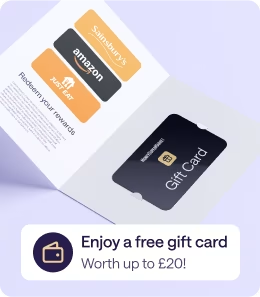
We’ll reward you every time you make a purchase. Exchange your earnings for a gift card for Amazon.co.uk

A year's worth of free experiences across the UK. From London Zoo and Go Ape, to Hussle Swimming and English Heritage, there’s an adventure for everybody. Worth £180
Whether you're buying clothing, homewares or takeaways, earn up to 10%

You and your friends each get up to £20 when they join the Club and make a qualifying purchase. Win-Win!
If you're looking to borrow £1,000, the Bank of England’s base rate cut in May to 4.25% might bring some relief. It could mean slightly lower interest rates on personal loans, depending on your lender.
However, not all lenders act right away when the base rate drops. Some may take time to adjust their rates, and others might not change theirs at all. It’s always worth shopping around to find the most competitive deal.
Before lenders offer loans, they consider your personal circumstances, like your outgoings, income, and previous borrowing history. For a successful loan application, consider the following:
Lenders often require you to:
Be over 18
A UK resident
If you don't meet this criteria, lenders are very unlikely to enter a loan agreement with you.
Every time you apply online for a form of lending, like credit cards, mortgages, or loans, the lender will perform a 'hard credit check' which shows up on your credit file.
If you have multiple hard checks over a short period of time, this is a red flag to lenders and may reject your application.
We recommend using a loan eligibility checker to perform a soft search and find lenders where you have a higher chance of being approved.
Lenders will check your credit file, so before you start making applications you should review your report and address any errors before applying, including:
Existing credit agreements
Your financial links with other people (including ex-partners)
Missed payments
Beyond errors, check you're registered on the electoral roll and take steps to improve your credit score - it could make a big difference to your monthly repayments and wider loan eligiblity.
We’re here to help you find the right small loan for your needs

We’ll ask you a few questions about yourself and what you need the debt consolidation loan for. Then we’ll carry out a ‘soft search’ which won’t hurt your credit score.

You see the key information upfront straightaway, such as the interest rate and monthly repayment amounts, so you can easily compare £1,000 loans.

Good news: when you compare loans with MoneySuperMarket, you don't have to worry about hurting your credit score as we'll only carry out a soft search.

Compared to other forms of credit, such as credit cards, a small loan of £1,000 can be a cost-effective and comparatively cheap way to borrow. For that reason, it could be a viable option for funding emergency expenses, for instance car repairs or new household appliances. As with all loans, though, you want to find the best deal. So be sure to try our free-to-use eligibility checker and look closely at our comparison tables, so you get the right loan at the right price.
Kara Gammell Personal Finance & Insurance Expert
Find the right loan for you and see which rates you’ll be guaranteed to get.
MoneySuperMarket has won the Feefo Platinum Trusted Service Award, an independent seal of excellence, which recognises businesses that consistently deliver a world-class customer experience.





APR or Annual Percentage Rate is the interest rate at which you pay back money you’ve borrowed. It takes into account the actual interest rate you pay, plus any other fees or charges involved in the deal, to give you a more complete picture of what your loan will cost.
When you see a rate advertised as the representative APR, this means the lender is required to offer this rate to at least 51% of applicants – however it doesn’t mean you’re guaranteed to receive this interest rate yourself. You could be offered a higher or lower interest rate than those advertised. The APR you’ll be offered by a lender will be primarily based on your financial circumstances and your credit score.
A soft-search or soft-application is a way of finding out where you stand in terms of getting a loan without leaving a mark on your credit report. It’s a useful way of finding a loan you’ll be eligible for without harming your chances of being accepted.
Once you’ve been approved for a loan, depending on your provider, you could receive the funds into your bank account very quickly – this could be the next day, for example, or within the next week or two.
If you’ve applied by phone or post it may take slightly longer. Things can also take a bit longer if your application or your financial circumstances are more complicated.
Typically most lenders will allow you to pay off part or all of your loan early, although there may be an early repayment charge. It’s best to check what this charge might be before you apply for the loan – if you think you may want to redeem early.
Depending on your repayment terms, missing loan repayments can mean extra charges and interest will be applied by your lender – this could increase your debt burden and it could also have a negative effect on your credit score. If you’re struggling or you know you might not be able to afford your repayments speak to your lender immediately to explain the situation and work out a solution.
It is possible to get a £1,000 loan without a guarantor if you meet the lender’s criteria. But in some cases, if you have a history of bad credit, the interest rates offered may be quite high. A guarantor loan is an option to consider for those who need a loan but have poor credit.
You can search and compare different loan deals on MoneySuperMarket and it will not affect your credit score in any way. But once you make a formal application for any loan in the UK the lender will do a credit check. This is to safeguard that the loan is suitable for you and affordable.
You’re not guaranteed to get the representative APR on a £1,000 loan. Lenders only need to offer that rate to just over half of successful applicants. If your credit score is lower or your income is limited, you may be charged a higher interest rate.
Repayment terms usually range from 12 to 36 months. A longer term can reduce your monthly payments but may mean paying more overall in interest. Small loans like this often need to be repaid quicker. You can usually repay early, but check for any early settlement fees.
Thinking of borrowing £1,000? Here’s what to keep in mind:
Do I really need to borrow the funds? For such a small amount, consider how long it would take you to save up or whether there’s a cheaper or interest-free way to cover the cost
How can I make sure I am getting the best deal? Even small loans can vary in price. Compare APRs and try to avoid payday lenders with high rates
Can I afford to meet repayments? It’s a short-term commitment, but you’ll still want to budget carefully. Don’t apply for the loan if you won’t be able to meet the monthly financial commitment
What happens if I miss a payment? Missing even one repayment can lead to charges and hurt your credit score. Set up a direct debit and keep on top of when money is due
What happens if I want to pay the loan off early? Check if there are any fees. Lenders may allow early repayment without penalty for smaller loans
Before taking out a £1,000 loan, ask yourself if you really need to borrow – could you save up instead and avoid interest charges?
Check your credit score too. A strong rating gives you access to better deals, while a lower score could mean higher interest rates. It might be worth improving it before applying.
Make sure you can comfortably afford the repayments now – and if your circumstances change. If the answer’s yes, and borrowing is the right option, comparing lenders can help you find a deal that suits your budget.
You have a few other options if you don’t want to take out a £1,000 loan.
Borrow from friends or family: Borrowing from friends and family can be quick, interest-free and more flexible than a formal loan. But it could strain relationships if repayment becomes difficult – so be clear about the terms from the start.
Authorised overdraft: Overdrafts can be useful for short-term borrowing with instant access to funds. But interest and daily fees can be high, and if you go over the limit, charges can spiral quickly.
Credit card: 0% purchase cards can help you spread the cost without paying interest. You’ll need a good credit rating to qualify and must keep up with monthly repayments to avoid charges.
Save up: Delaying the purchase to save means no debt or interest. But this might not work if the need is urgent or time-sensitive.
You work hard to earn your money, and we don’t think you should waste a penny of it paying over the odds on your household bills. That’s why at MoneySuperMarket, we’re on a mission to save Britain money.
Whip your credit score into shape with Credit Score
Super save over and over again with Energy Monitor
There are always more ways to save with MoneySuperMarket
So how do we make our money? In a nutshell, when you use us to buy something, we get a reward from the company you’re buying from.
You might be wondering if we work with all the companies in the market, or if our commercial relationships with our partners might make us feature one company above another. We’ve got nothing to hide, and we want to give you clear answers when it comes to questions like these, so we’ve pulled together everything you need to know on this page.
Curious about who’s behind the loans? Take a look at each lender’s page below to learn more:
Reviewed on 30 Mar 2026 by


