


Earn up to £20^ every time you buy
We’ll reward you every time you make a purchase. Exchange your earnings for a gift card for Amazon.co.uk


We’re committed to finding the right cover for you and your home. That’s why we compare 94




Buildings insurance is a type ofhome insurance that covers your home from damage caused by:
Flood
Fire
Subsidence
Storm
Vandalism
It protects the structure of the building (the walls, roof, floors, and extensions) and its fixtures (such as built-in wardrobes, bathroom suites, and fitted kitchens).
Your buildings insurance will also usually cover repairs for:
Damage caused by leaky pipes or faulty electronics
Criminal damage, such as someone smashing a window to break into your house
Accidental damage. For example, if you drill through an electrical wire
If necessary, your insurer will even foot the bill to rebuild your house completely.
Buildings insurance isn’t a legal requirement, but homeowners commonly have it because many mortgage providers require you to take out a policy when lending you money.
Whether or not you need buildings insurance will depend on your living situation:
Whether you own your house outright or have a mortgage, buildings insurance protects your home from all sorts of problems.
Buildings insurance will ensure you have financial protection if your building's structure is compromised. As the landlord, you're responsible for any repairs. Read our guide to landlord insurance.
If you’re a leasehold flat owner, the freeholder of your property is usually responsible for arranging buildings insurance. However, this isn’t always the case if you own a leasehold house so it’s important to check the terms of your lease.
Renters don’t need buildings insurance. Consider renters insurance instead.
The specific level of cover depends on the particulars of your insurance policy but typically includes:
If your home is damaged or even completely destroyed by fire
This includes any related damage, such as roof repairs if a tree falls on your home
For example, if someone breaks an expensive lock to enter your property or smashes a window
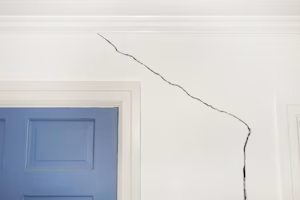
Covers things like cracks in walls due to shifting ground, or, in extreme cases, strengthening a property’s foundations
If your property is unsafe following an event such as a fire or flood you can claim for the cost of living elsewhere while repairs take place
Helps you to find the source of a water leak in your property
The specific level of cover will depend on the particulars of your insurance policy, but buildings insurance generally won’t cover:
Buildings insurance protects the physical structure of a property, but not the contents within it – contents insurance is a separate insurance that protects your furniture and belongings
Buildings insurance won’t cover damage that naturally occurs with time, like loose or dislodged shingles, cracked and broken tiles, or rust and corrosion
Insurers won’t pay out for damage that’s your fault, for example, if you forget your key and break a lock to enter the property, or you leave a window open during a storm and the property floods
This would usually fall under wear and tear
If storm damage occurs outside the property, it’s unlikely to be covered
Pest invasion is typically considered a maintenance issue that you could have prevented. However, you might be able to claim under home emergency cover
The cost of fixing poor installation, substandard repairs, or DIY won’t be covered by home insurance, so it’s important to use reliable tradespeople for any improvements
Buildings insurance won’t cover you for any issues present when you took out the policy – so, for example, if you purchased a house that had subsidence, you won’t be covered for fixing any issues arising from it
We’ll reward you every time you make a purchase. Exchange your earnings for a gift card for Amazon.co.uk

A year's worth of free experiences across the UK. From London Zoo and Go Ape, to Hussle Swimming and English Heritage, there’s an adventure for everybody. Worth £180

Whether you're buying clothing, homewares or takeaways, earn up to 10%

You and your friends each get up to £20 when they join the Club and make a qualifying purchase. Win-Win!
No, your house’s market value also includes the price of the land it’s built on, and any things that add value to the property, such as local amenities and transport links.
So, for example, if you purchased your house for £350,000, the cost of materials and labour to rebuild might only be £250,000.
Use a reliable rebuild calculator, such as the ABI rebuild calculator
Hire a chartered surveyor for a professional assessment
Check your buildings survey if the home is newly purchased – this will usually include a rebuild cost estimate
If you underestimate the true cost of rebuilding your home and then need to make a rebuild claim you could find yourself with a shortfall when the pay-out doesn’t match the cost, meaning even more unexpected expenses.
The following factors will influence the cost of rebuilding your house if it is destroyed:

Older materials are often more expensive

Non-standard materials are often more costly or require a specialist builder

Local crime statistics often have an effect on your premiums

A higher subsidence risk means more chance of serious damage

If the property is near a river there is a higher flood risk

These indicate a larger building and higher costs

Listed buildings are especially expensive to insure
The average cost of a buildings insurance policy is £201.59
However, there are quite a few variables that affect your buildings insurance premiums, including where you live and what type of home you live in.
How many bedrooms you have is often a good yardstick for determining how much your buildings insurance will cost. The table shows how insurance prices change based on the number of bedrooms.
In general, it's cheaper to buy buildings insurance three weeks before your renewal is due. According to our most recent data, the best time to renew your buildings insurance is 29
Number of bedrooms | Average sold premiums for buildings insurance only |
|---|---|
1 | £162.29 |
2 | £174.61 |
3 | £186.11 |
4 | £250.82 |
It costs this amount of average to buy a buildings insurance policy
10% of the lowest-paying customers pay this amount or less for buildings insurance
Here are a few things you can do to get cheaper buildings insurance:
Here are a few things you can do to get cheaper buildings insurance:
Asking for a higher excess tells insurers that you’re less likely to make small claims, so you get a lower premium. However, be careful not to increase your excess so much that it becomes unaffordable.
If an event happens where you need to claim for multiple incidents, you may need to pay your excess more than once, which is something to keep in mind.
Paying for your insurance annually usually works out cheaper than paying monthly, so it’s worth doing if you can afford to.
If your property is undervalued, insurance payments may not cover the rebuild costs. Similarly, if the building is overvalued, your insurance premiums will be higher than they need to be and your insurer might reject your claim.
You can usually get a no-claims discount if you’ve gone several years without making a claim. Avoiding making small or frivolous claims can help you boost your discount and save on your insurance.
Overinsuring yourself is a common way that people end up overspending on their insurance. By accurately calculating the value of your jewellery you can avoid making this mistake.
Comparing quotes online is a great way to find a good deal on your home insurance. Even when it's time to renew your policy, it's worthwhile to double check whether you can get the same cover for cheaper elsewhere.
If your home is secure, insurers will consider it lower risk for break-ins. High-quality locks, alarm systems, and motion-activated lights can all help to make your property more secure.
Data shows that buying three-four weeks before renewal is the best time to purchase new home insurance if you want the most competitive prices.
Some properties, like listed buildings or houses in flood-prone areas, are more expensive to insure. In these instances, using specialist insurers can help bring prices down.
Yes, it's worth getting building insurance because it provides financial protection against unexpected and potentially devastating events, such as fires, floods, storms, or subsidence, which can cause significant damage to your property.
Financial protection: Data shows that the average cost to rebuild a three-bedroom house is £270,000, but can be much higher for larger or more complicated builds. If you have a mortgage, you’ll also still be liable for paying this. Buildings insurance can make sure you’re not out of pocket for hundreds of thousands of pounds.
Mortgage approval: Many mortgage lenders won’t lend to you without buildings insurance.
Peace of mind: Knowing that you won’t be liable for the cost of damages – or even the full rebuild cost of your home – can alleviate stress and provide reassurance, allowing you to enjoy your home worry-free.
Compare quotes from 94
Below are some of the common extras you can add to your building insurance policy to get comprehensive cover:
Protects against unintentional damage to your home or contents – for example, a cracked TV screen or spilt paint on the carpet. It’s especially useful if guests or renters use the property, or if you're not around to supervise repairs and upkeep.
Covers the cost of urgent repairs for incidents like a broken boiler, burst pipe, or blocked drain.
Covers legal fees if someone injures themselves on your property and makes a claim against you or you have a dispute with your neighbours.
Covers the cost if your keys are lost or stolen and you need to change the locks.

Buildings insurance isn't a legal requirement, but mortgage lenders typically ask you to take it out because it protects their interest. If you don't have buildings insurance, the cost of major repairs could bankrupt you and your mortgage provider would then lose out. Taking out insurance – even if you’ve paid off your mortgage – is a sensible option.
According to the Association of British Insurers (ABI) research, claims for damage to homes from storms, heavy rain and frozen pipes reached £144 million between April and June 2024. Our own home insurance data revealed that the average settled claim amount for a fire between August 2023 and August 2024 was £16,102.88. These figures confirm that a good buildings insurance policy can offer financial security and peace of mind if you ever need to make a claim.
David McDermottroe Insurance & Personal Finance Expert



MoneySuperMarket has won the Feefo Platinum Trusted Service Award, an independent seal of excellence, which recognises businesses that consistently deliver a world-class customer experience.

disasters or vandalism, while contents insurance protects your possessions.
As a rule of thumb, anything that can be carried out of a house is protected under contents, which means things like carpets, curtains, white goods, light fittings and furniture. Meanwhile anything fixed to the structure of the house, such as built-in wardrobes, plus things like your garage or conservatory, are covered by buildings insurance.
There are exceptions to this. For example, if your carpet is glued to the floor your buildings insurance might cover it. Similarly, laminate flooring usually comes under buildings insurance. Insurers can also treat integrated appliances differently. Always check your policy wording or speak to your insurer to be sure what cover you have.
No. While your mortgage lender will almost certainly require you to buy buildings insurance, you don’t have to buy it from their preferred insurer. In fact, you’ll probably be able to find cheaper insurance by shopping around and comparing prices.
If you own a leasehold property, you might find that the building is already insured by a landlord who owns the freehold. If you’re not sure, your solicitor can advise you.
In certain blocks of flats where leaseholders have joined forces to buy a portion of the freehold, you might have to buy your own buildings cover.
Check your documents, such as your lease agreement or your service charge documents, for clarification.
No, most buildings insurance policies do not cover rising damp as it’s considered to be a maintenance issue.
If you spot signs of rising damp, such as rot or cracks along skirting boards and damp staining along the bottom of walls, you may need to look for the source and contact a professional to make repairs to leaks or damp proof the property.
If you want to extend or convert your house, or make significant renovations, you should let your insurer know before the work begins. You will probably be able to make changes to your policy, but it’s best to inform them first, in case anything goes wrong and your policy is invalidated.
Having the correct insurance can also address the risks associated with the house being empty for extended periods.
If you’re using builder or contractors, your insurer will want details about them, including their public liability insurance,
No, garages are considered separate structures for the purposes of buildings insurance, and you’ll have to list it as such when you apply. You should still be able to get cover, but it’s not wise to claim it as another ordinary room.
If you have any outbuildings or other detached structures such as sheds or summer houses you’ll also need to declare these and make sure they’re covered.
Buildings insurance is available to people who own listed buildings or those made from non-standard materials such as thatched roofs, though the chances are you'll have to pay a little extra due to the extra risk, and the extra rebuild costs.
This depends on the type of flooring in the property. In general, if the flooring is nailed or glued down, and would cause damage to the floor if removed, then it is covered by buildings insurance as it’s a fixed item.
Flooring such as carpet or click lock flooring may not be included in your buildings insurance policy as they’re considered removable items but they will be covered by contents insurance.
It's also worth noting that insurers will not pay out for general wear and tear to any flooring. You are only covered in the case of an event listed in your policy, such as a fire or vandalism.
You can add-on accidental damage to your contents insurance to cover situations such as spilling wine on your carpet.
Yes, water damage to your property caused by leaks or 'escape of water' is covered within most standard building insurance policies. However, the cost of repairing the leaking pipe itself isn’t usually covered.
There are a number of things that can invalidate your buildings insurance, including:
Leaving your home unoccupied for too long (typically 30-60 days) without purchasing unoccupied house insurance
Not updating your personal details e.g. change of name or address
Failing to inform your insurer of any renovation changes to the property within your policy term e.g. extensions, loft conversions, or similar structural alterations.This can include things like adding a new kitchen or bathroom
Using your home for business purposes without telling your insurer (although remote working is usually covered)
Not reporting an incident, thinking it may be too small or irrelevant
Getting a lodger
Accidentally undervaluing your property rebuild cost
Not disclosing any previous home insurance claims
If your mortgage lender requires you to have building insurance you’ll be violating your agreement with them and your home could be repossessed. Without insurance, you won't be covered for events like fire or flood.
We get paid by the companies we work with, but the payment we get doesn’t have any bearing on the information we provide. We get paid in different ways, depending on the type of product or service you buy through us. Our goal is to search deals from as wide a range of companies as possible, but we only show results from our partner providers.
Our comparison service is, and will always be, free to use.
One of the best ways to get the lowest prices and best deals is to compare quotes from different companies. We do the work for you, comparing quotes side-by-side and giving you all the information you need so you can choose the right deal for your needs and your wallet.
We don’t give recommendations or financial advice, but we give you clear information so you can choose financial products that suit your circumstances.
No, not every company can be included in our service. This is because some companies don’t want their products included on comparison sites, and some decide that they would rather not pay a fee. There are also a few smaller providers who can struggle to cope with the volume of customers that can find their products if they appear on MoneySuperMarket.
Our goal is to search deals from as wide a range of companies as possible so that you can choose the deal that suits you.
Yes, you can earn SuperSaveClub rewards when you buy home insurance through MoneySuperMarket.
This includes:
Up to £15, which you can withdraw as a pre-paid Mastercard or a gift card for brands like Sainsbury's and Amazon.co.uk
Free Days Out pass (worth £180), which gives free entry to a range of UK attractions
Cashback of up to 10% when you spend at brands including eBay, Just Eat and Argos
To earn SuperSaveClub rewards on purchases you must:
Sign up to SuperSaveClub (it's free)
Be signed in to your account when you make the purchase
More information can be found on our SuperSaveClub homepage.
Yes, home insurance is included in our Super Save Price Promise.
If you buy through us then find the same deal for less we will:
refund the difference
give you a gift card worth up to £20
Terms and conditions apply. More information can be found on our Price Promise page.
Reviewed on 1 Apr 2026 by
The annual premium that 10% of our customers paid in February 2026 where the cover type purchased was buildings insurance.
Accurate as of 01 April 2026.
T&Cs and restrictions apply, see here for more information
T&Cs apply, click here for more information
Data based on the median premium of buildings insurance policies sold through MoneySuperMarket in February 2026.

