What is extreme sports travel insurance?


Key takeaways
Extreme sports travel insurance covers activities that standard policies often exclude, including adventure sports such as skydiving, climbing, diving, and water sports
Always check that your chosen activity is covered before you travel, as insurers have different definitions, restrictions, and exclusions for extreme sports
Specialist cover can protect you from costly incidents, including medical treatment, rescue, repatriation, cancellation, and loss or damage of sports equipment
Declare any medical conditions and understand your policy limits to make sure you have the right protection for your activity and circumstances

What is extreme sports travel insurance?
Extreme sports travel insurance is a specialist type of travel insurance that provides cover for higher-risk activities that are often excluded from standard travel insurance policies.
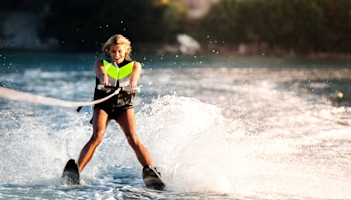
It can cover activities such as skydiving, bungee jumping, mountaineering, rock climbing, scuba diving, or other adventure sports, depending on the policy and level of cover you choose.
Insurance providers classify hundreds of activities and sports as extreme, so if you’re unsure whether your activity is covered, check your policy before booking or making any travel arrangements.
Once you’ve found a travel insurance policy that covers your chosen extreme sport or activity, you can enjoy your trip knowing you have the right protection in place.
What activities are labelled as extreme sports by insurance companies?
Insurance companies consider a wide range of activities to be extreme sports because they involve a higher level of risk than typical holiday activities. The exact definition varies between providers, so it’s important to check your policy before taking part.
Activities that may be classed as extreme sports include:
Assault courses
Bungee jumping
Canyoning and gorge walking
Hang gliding
Kite surfing
Mountain biking
Rock climbing
Sea kayaking
Shark diving
White water or black water rafting
Sky diving
Paragliding
For some sports and activities, it all depends on the risk level. For example, the following may be considered extreme:
Canoeing or kayaking on rivers classed above or certain grade
Yachting outside of territorial waters
Scuba diving below a certain depth
Hiking above a certain altitude
You may be surprised to learn that some travel insurance providers classify activities such as swimming with dolphins, horse riding, inflatable water rides, and even rugby as extreme sports or higher-risk activities.
Activities that aren’t covered by your policy can be negotiated with your provider by contacting them directly. If no cover is available, you may need to find specialist cover.
Certain sports that require specific cover include golf, water sports, and winter sports.
What is included in extreme sports holiday insurance?
Extreme sports holiday insurance provides specialist cover for activities that are usually excluded from standard travel insurance policies. The exact cover varies between providers, but it will usually include:
Medical expenses: including the cost of medical treatment and hospital bills if you’re injured during your extreme sport, or fall sick. You're also covered for ambulance or air ambulance fees
Repatriation: covers the cost of getting you home safe if necessary, or if you miss your flight after receiving hospital treatment
Holiday cancellation: offers protection if you need to cancel your trip due to an unforeseen circumstance such as an injury or illness
Missed flights and connections: if you miss a flight or connection in circumstances out of your control, such as extreme weather or public transport delays
Loss and theft: this will cover you if you lose your baggage or if your possessions are stolen
Cover for specialist equipment: such as sports gear that is lost, stolen, or damaged.
Activity-related cancellation or interruption cover: depending on the policy terms.
Can I get extreme sports travel insurance while I'm on holiday?
It may be possible to add extreme sports cover after you’ve started your trip, but this depends on the insurer and the policy terms. Some providers only allow specialist cover to be purchased before you travel.
If you’re already abroad and decide to take part in an activity, check with your insurer first to make sure you’re covered. Taking part in an extreme sport without the right cover could mean any medical costs, rescue expenses, or equipment losses are not covered.
To avoid gaps in protection, it’s best to arrange extreme sports travel insurance before you leave and make sure your chosen activities are included in the policy.
It is strongly advised that you do not take part in any activity without the right insurance in place.
Can I get extreme sports travel insurance if I have a health condition?
Yes, you may still be able to get extreme sports travel insurance if you have a pre-existing medical condition, but you’ll need to declare it when applying for cover.
Insurers may consider factors such as:
The type of health condition you have and how it affects your daily life
Whether your condition is stable or has recently changed
Any medication, treatment, or medical advice you’re receiving
The type of extreme sport or activity you plan to take part in
You may be offered cover with an additional premium, certain exclusions, or through a specialist provider. It’s important to be honest about your medical history, as failing to declare a condition could affect any future claims.
Before taking part in an extreme sport abroad, check that both your medical condition and chosen activity are covered by your policy.
Comparing travel insurance with pre-existing medical conditions on the MoneySuperMarket website means we'll only show you quotes from providers who will cover you, with no exclusions.
Is off-piste skiing covered by winter sports insurance?
Off-piste skiing may be covered by winter sports insurance, but it depends on the policy and the conditions attached. Many standard winter sports policies only cover skiing on marked and recognised pistes, while off-piste skiing may require additional cover.
Is travel insurance necessary if you have a GHIC or EHIC card?
Yes, travel insurance is recommended in addition to GHIC or EHIC. GHIC or EHIC provide access to public medical treatment in the EU, but don't cover private medical costs, mountain rescue, stolen luggage, cancellation, or repatriation.
Some travel insurers will insist you hold an GHIC or EHIC before covering your medical expenses.
What should I consider before getting extreme sports travel insurance?
Before buying extreme sports travel insurance, consider the activities you plan to take part in and check that your policy provides the right level of cover.
Things to consider include:
Check your activities are covered
Insurers classify sports and activities differently, so make sure your chosen activity is included.
Understand any restrictions
Some policies may have limits on locations, difficulty levels, equipment, experience, or whether you need a qualified instructor.
Declare any medical conditions
Failing to provide accurate health information could affect your cover or future claims.
Check the level of medical cover
Make sure it includes emergency treatment, rescue, and repatriation if needed.
Consider equipment cover
If you’re taking specialist gear, check whether it is covered for loss, theft, or damage.
Compare policies carefully
Look at exclusions and limits, not just the price, to make sure the policy suits your trip.
Similar to any form of insurance, your cover usually won’t be valid if:
You don't follow the safety instructions
You're under the influence of drugs or alcohol
You have behaved dangerously or recklessly
Make sure you check your policy documents and understand any exclusions and limitations before you undertake any extreme sports or activities.
Are some activities too risky for travel insurance cover?
Activities like base jumping, wing-suiting, and free solo climbing are often considered too risky and may not be covered. Specialised policies might be needed for high-risk sports like mountaineering, caving, or ice-climbing.
You might also need specialist cover if you are entering a professional competition.
Which insurance providers offer extreme sports travel insurance?
A number of travel insurance providers offer extreme sports or adventure travel insurance designed for activities that may not be covered by standard policies. Options include:
ActivitySure
Offers specialist sports and activity travel insurance covering a wide range of adventure activities.
Snowcard
Specialises in adventure, mountain, and winter sports cover, including activities such as climbing, skiing, and water sports.
British Mountaineering Council
Provides specialist travel insurance for climbers, trekkers, skiers, and mountaineers.
Adventures Cover
Offers cover for a wide range of sports and hazardous activities.
InsureandGo
Offers adventure and extreme sports travel insurance options for higher-risk activities.
SportsCover Direct
Provides specialist cover for extreme sports, including medical expenses, repatriation, and equipment protection.
The right provider will depend on the activity you’re planning, such as skiing, scuba diving, climbing, or skydiving. Always check the policy wording carefully, as insurers differ in what they class as an “extreme sport” and what restrictions apply.
It's worth looking at your existing travel insurance policy first, as extra cover can often be added for specific activities.
Why compare travel insurance with MoneySuperMarket?
At MoneySuperMarket, we’re here to make sure your holiday planning is as quick and easy as possible. You can compare quotes from the UK's leading providers in minutes and save money on a range of policies, including annual multi-trip, single trip, family, backpackers insurance, and more.
Author
Collette Shackleton
Content Writer
Collette is an experienced Content Writer at MoneySuperMarket, helping people make sense of money and insurance topics without the jargon. She shares her experience as a first-time Mum and top...
Reviewer