What is pet travel insurance?


Key takeaways
Pet travel insurance is not a standalone product - it is often included in pet insurance or can be added to your policy for an extra fee
Pet travel insurance can cover the cost of emergency vet fees, as well as travel delays or cancellations caused by your pet being ill or injured
Pet travel insurance usually won’t pay out if you haven’t followed the required rules for travelling with your pet

Does my pet insurance policy include travel insurance?
Some pet insurance policies include cover for travel abroad, and others offer it as an optional add-on for an extra cost.
There are usually limits on how long your pet can travel for, often between 30 and 90 days, and restrictions on which countries are covered.
Claim limits can be lower than at home, and will generally count towards your yearly claim allowance.
Will my travel insurance cover my pet?
No, cover for pets is not normally included in travel insurance.
However, some travel insurance policies include limited cover for your lost travel costs if you have to cancel or cut short a holiday because your pet unexpectedly required life-saving treatment.
Do I need travel insurance for my pet?
No, pet insurance is not usually a legal requirement for pet travel.
However, some individual travel or holiday operators may insist you have pet insurance in order for your pet to use their services. Without pet insurance, you could also be responsible for large out-of-pocket costs if your pet falls ill or has an accident abroad.
Alongside vet bills, pet travel insurance can cover extra nights of accommodation or new travel arrangements if your pet's illness or injury means you have to change your plans. Pet travel insurance can also cover you if the worst happens and your pet dies abroad.
What does pet travel insurance cover?
Policies vary but pet travel insurance normally includes:
Cover for overseas vet treatment for illness or injury
Cover for additional accommodation bills if your pet is lost or too ill to return as scheduled
Holiday cancellation if you need to cancel your trip because your pet is ill or has died
Cover to replace lost or stolen travel documents for your pet
Quarantine costs if they are due to a pet's illness, lost travel documents, or a microchip failing
Costs related to the theft or loss of your pet while it is abroad
Cover to bring home or dispose of your pet's remains if they die while abroad
What doesn’t pet travel insurance cover?
Typical exclusions on a pet policy might include:
Pre-existing conditions
Any costs incurred due to not complying with any pet travel rules and requirements
Treatment abroad unless a vet advises your pet is too ill to travel on your scheduled return date
Treatment that you can’t produce a receipt for
Claims above a pre-set vet fee limit
Claims if you are living in another country full-time
Third party liability (if your dog harms another person or their property)
💡 Top tip: While third party liability is a standard feature of most dog insurance policies, a lot of pet insurers will limit its protection to the UK only.
Will pet travel insurance cover me if my pet is denied travel?
Pet travel insurance can cover some of your costs if you could not have predicted your pet wouldn't be allowed to travel.
For example, pet travel insurance would likely cover you if the travel refusal was caused by your pet's microchip failing (and you did not know it was faulty), or because your pet became sick and had to be quarantined, or because someone stole your pet's travel documents from a locked safe.
However, pet insurance will generally not cover you for situations in which you could be considered to have been negligent. That means you would probably not be covered if your pet was denied travel because you didn't apply for the correct documentation, or because you didn't confirm their place with the airline in advance, or if your pet's travel documents were stolen from an unsecured location.
Will pet travel insurance cover me if I cancel my holiday because of my pet?
Pet travel insurance will usually cover some of the costs of cancelling or cutting short your holiday if your pet is too injured or ill to continue with it. You will generally need to have this decision signed-off by the vet who is treating your animal.
If you decided to go home early because of a non-emergency, such as your dog being anxious in a new environment, you would probably need to cover all the cancellation costs yourself.
Will pet travel insurance cover pre-existing conditions?
Yes, pet travel insurance can cover chronic or recurring conditions, providing that the condition developed after your current pet insurance cover began. Pre-existing conditions start dates are counted from the time your pet started showing symptoms, not from when the condition was diagnosed.
However, some providers may place extra restrictions on cover abroad, so check your policy documents before you travel.
Pet travel insurance will usually not cover:
Conditions that existed before your pet insurance policy start date
Travelling abroad to get medical treatment for your pet
Travelling with your pet against veterinary advice
💡 Top tip: Only lifetime pet insurance covers conditions from when you first took out insurance with your provider. Time-limited policies 'reset' each year, and accident-only policies won’t cover illness at all.
Will pet travel insurance pay for vet visits abroad?
Pet travel insurance will usually pay your vet fees (minus your excess) for emergency treatment while abroad.
It will not generally cover anything that could be considered routine or preventative care. For example, if you went to a vet in France to get the tapeworm treatment dogs need before they can return to the UK, you should expect to pay these costs yourself.
You may also be able to call your home vet for advice while travelling or arrange a video consultation. Pet insurers sometimes offer access to video-based vet support while at home and abroad as part of your policy package.
Will pet travel insurance cover me if my pet dies abroad?
Yes, pet travel insurance often includes some cover for death-related claims such as euthanasia, cremation, disposal of the remains or the cost of bringing them home with you.
There are generally no restrictions on bringing pet ashes back into the UK, although it is recommended to carry a cremation certificate with you in case questioned.
What is the Pet Travel Scheme (PETS)?
The PETS (England) Order 1999, also known as the Pet Travel Scheme, allows pet dogs and cats to travel to certain countries and back to England without quarantine.
PETS covers all UK and EU countries, plus Andorra, Gibraltar, Iceland, Liechtenstein, Monaco, Norway, San Marino, Switzerland and the Vatican. Pet travel insurance often restricts its cover to countries that are in PETS.
Does my pet need a passport to travel abroad?
If you are a resident of England, Scotland or Wales, your pet will need an Animal Health Certificate (AHC) to travel to the EU, which you get from a vet. If you are a resident of Northern Ireland or an EU country, you can instead use an EU-issued pet passport to travel within the EU and UK.
If you are travelling further afield, you may instead need to apply for an export health certificate on the UK government website.
Your pet will also need to be microchipped, vaccinated against rabies, and meet other health conditions in order to travel.
Can I take my pet on a plane?
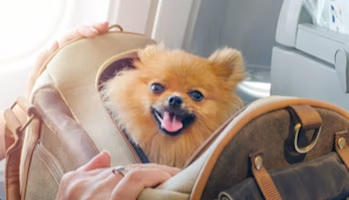
Yes, some airlines allow pets on planes, but their policies can vary significantly. Some airlines allow smaller pets to travel in the cabin, but it's more common for airlines to require all animals to travel in the hold. Usually only cats and dogs can be taken on planes, and you should expect to pay extra fees to bring your pet on board.
There's also often a cap on the number of animals that can travel on any plane, so you should always book your pet's spot as far in advance as you can.
Which airlines allow pets in the cabin?
Air France, Lufthansa, KLM and Vueling allow some pets to travel in the cabin on certain flight routes if certain conditions are met. You should always add your pet to your booking in advance of travelling.
Airline | Animals allowed | Size restrictions |
|---|---|---|
Cats and dogs | Pet must weigh no more than 8kg. | |
Cats and dogs | Pet must weigh no more than 8kg | |
Cats and dogs | Pet must be in enclosed carrier of maximum 46 x 28 x 24 cm. Pet and carrier can weigh no more than 8kg. | |
Cats, dogs, birds, turtles and tortoises | Pet must be in approved carrier of maximum dimensions 45 x 39 x 21 cm. Pet and carrier must weigh no more than 10kg. |
In general, you will not be able to bring more than one pet per person into the cabin, and your pet must remain in a secured container throughout the flight.
🚩 Even airlines that allow pets in the cabin may not be able to accommodate them for certain routes, passenger classes or aircraft types. Always check in advance, and plan for last-minute changes.
Which airlines allow pets in the hold?
The UK government maintains a list of commercial airlines that allow pets to travel in the hold for departures from UK airports. These airlines include Aer Lingus, British Airways, Cathay Pacific, Etihad Airways, Lufthansa, and TUI Airways.
However, pets may not be allowed for all departure airports, routes, or aircraft types, so always check in advance of your travel.
Airlines that do not allow any pets on their aircraft include easyJet, Jet2, Ryanair and Wizz Air.
Can I take my guide dog or assistance animal on a plane?
Yes, the rules for air travel with animals are different if your dog is a registered assistance animal rather than a pet. Anti-discrimination legislation will generally protect your right to fly with your assistance animal within the UK and most of Europe, including on airlines that otherwise do not allow animals on board.
These laws include:
The Equality Act 2010 (for England, Scotland and Wales)
The Disability Discrimination Act (for Northern Ireland)
EC Regulation No 1107/2006 (for the European Union)
You should still inform the airline in advance of your travel so they can safely accommodate you and your guide dog, and you will usually need to meet certain health and safety requirements for your animal, such as providing them with appropriate travel documentation and vaccinations.
💡 Top tip: Emotional support animals, therapy dogs, and non-accredited dogs are not legally recognised as assistance animals and will not be covered by the same protections.
Can I take my pet across the English Channel?
Yes, cats and dogs can cross the Channel via the Eurotunnel Le Shuttle, or via ferry companies such as Brittany Ferries, P&O Ferries, and Stena Line.
They will need to have all the necessary travel and medical documents to be allowed on board. Individual companies may also have specific rules to follow, such as pets needing to board in a vehicle or remain muzzled while in public spaces.
Eurostar does not allow pets on their trains. Guide and assistance dogs are allowed.
Can I take my pet to a hotel?
Yes, there are pet-friendly hotels, guest houses, villas and AirBnBs. However, they will often charge extra for bringing a pet and they may have stipulations such as the animal must not be left alone in the room.
These rules do not apply to guide and assistance dogs, who generally must be allowed in hotel rooms free of charge.
Can I take my pet in a hire car?
Some rental car companies, including Avis, Budget and Hertz, have some hire shops that allow pets in cars, providing you inform them in advance. They may charge extra cleaning fees or have specific stipulations such as your dog must be secured with a travel harness or crate.
You should also check driving laws for the country you are visiting. In the UK, your pet must be secured while travelling in the car or your car insurance could be invalidated.
You should never leave your pet unattended in a hot car, even for a short period.
Author
Lauren Chong
Senior Commercial Manager | Vet
Dr Lauren Chong BSc BVSc PgCertVBM MRCVS is MoneySuperMarket’s pet expert with an extensive background of working across the veterinary and pet care industry for the past 12 years. She qualified as a...

Reviewer
Beth Leslie
Senior Insurance Content Editor
Beth is an experienced writer and editor who specialises in financial and economic content. She is currently the Senior Insurance Content Editor for MoneySuperMarket. Beth is passionate about making...