Does home insurance cover burst pipes and water damage?


Key takeaways
Most home insurance policies cover burst water pipes and water damage, unless the damage is deemed your fault
Adding accidental damage cover to your policy will cover you if the water damage is due to your mistake
You can help prevent leaks and burst pipes by keeping your home heated during cold spells and turning off stopcocks and drain pipes before freezing weather

Does home insurance cover burst pipes and water damage?
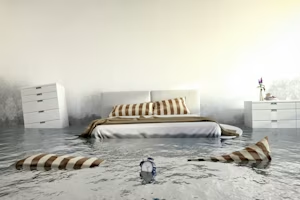
Most home insurance policies will cover burst pipes and water damage if you weren’t at fault. Data from MoneySuperMarket shows that escape of water is the second most common claim on home insurance, making up 29.26%
However, home insurance policies don't usually cover mistakes and negligence. For example, your home insurance probably won't pay out if you accidentally left a bath running and it overflowed. To cover this sort of event you’ll need accidental damage cover or plumbing and drainage cover.
💡 Top tip: Check your policy’s excess for water damage - claims related to water escape often have higher compulsory excess amounts.
Is water damage covered by buildings insurance or contents insurance?
Home buildings insurance protects the structure and fittings of your home from water damage, while contents insurance protects your furniture and belongings.
If you are a homeowner, you should buy a combined buildings and contents policy. If you rent, you generally only need contents insurance. Your landlord is responsible for any damage to the property itself, which they will generally cover with landlord insurance.
Can I take out accidental damage cover for water damage?
Yes, you can usually add accidental damage cover to your home insurance for an extra fee. Some home insurance policies may include it as standard, but this is uncommon.
How do I make a claim for water damage?
If you have a burst water pipe, here’s what you need to do to prevent further damage and make a successful claim on your policy:
Stop the leak
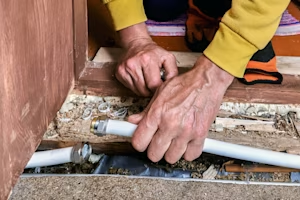
Stop the leak as soon as possible to prevent damage. If a pipe has burst then turn the water off at the mains and if necessary the tank. Drain the system by running your taps, and consider turning off the power if the leak is particularly bad. Prevent further damage by moving any possessions or furniture out of the way.
Contact your insurer
Once you’ve dealt with the initial situation, contact your insurer and let them know what’s happened - they should have a 24-hour number to call. They will be able to tell you what to do regarding making a claim and arranging repairs.
Arrange repairs
Your insurer may arrange repairs for you if your policy includes home emergency cover, or recommend an approved repairer - otherwise you’ll need to do this yourself.
Gather evidence
Take photos of the leak and any damage caused so you can record it as evidence. You might also need to keep any damaged items you want to claim for until the loss adjuster sees them.
Book trace and access if necessary
If you aren’t sure where the leak is coming from, you’ll need to book trace and access - it might be covered as part of your home insurance.
However it usually only covers the cost of finding the leak, while the escape of water part of your policy covers repairs.
Go through loss adjustment
Your insurer might send a loss adjuster to work out what caused the flood, the cost of repairs and the extent to which you’ll be covered. They’ll use this to decide how much they’ll pay out.
You can also hire your own loss adjuster if you want to dispute your insurer’s decision.
Start the claim process
Once the repairs are complete, start preparing a claim for any damaged contents.
What causes burst pipes?
Burst pipes can occur for a number of reasons, such as increases in water pressure or blockages, but sub-zero temperatures during winter are the most common cause. Cold weather causes water to freeze and expand, causing damage to pipes, which eventually burst when the ice melts and water escapes.
What should I do if my pipes are frozen?
If your water pipes are frozen, do the following as soon as you can:
Turn your water off at the mains
Try thawing them slowly with a hair dryer or hot water bottle, but not with hot or boiling water as this could cause further damage
Call an emergency plumber - or call your insurer first as they may be able to help you find one
What should I do if my mains water pipe bursts?
If the mains water pipe has burst, it’s your water company’s responsibility to restore your supply within 12 hours - or 48 if it’s a strategic main pipe. They’ll also be required to tell you where you can access an alternative water supply, when yours will be back and where to find more information.
You can be entitled to compensation if the water company do not meet these obligations. This is set by the water regulator Ofwat £20 for the first 24 hours and £10 for each subsequent day that the mains supply is not repaired.
How can I prevent burst pipes and leaks?
Here are some tips to help you avoid the hassle of burst pipes and leaks:
Keep your home heated during cold spells, even if you're away.
Turn off stopcocks and drain pipes before freezing weather hits.
Invest in lagging or pipe insulation to protect against the cold.
Don't leave appliances running unattended, and ensure they're properly installed by experienced plumbers.
Consider installing a leak-detection device to alert you to any issues.
What is the best home insurance for burst pipes and water damage?
The right home insurance policy for you will depend on your home and how much protection you need. The easiest way to find suitable cover is to compare home insurance quotes. MoneySuperMarket can make this process quicker and easier by showing you side-by-side quotes from 94
Because water damage can be very expensive, it’s worth looking beyond the cheapest option and choosing a policy that gives you the level of cover you’d actually need if the worst happened.
Author
Mehdi Punjwani
Insurance specialist
Mehdi is a financial writer and editor with over six years of experience in personal finance. He has written for organisations and publications including Equifax, The AA, and USAToday, covering a...

Reviewer
Beth Leslie
Senior Insurance Content Editor
Beth is an experienced writer and editor who specialises in financial and economic content. She is currently the Senior Insurance Content Editor for MoneySuperMarket. Beth is passionate about making...