


Lifetime
Pays for conditions year after year, as long as you keep renewing.


Single policy - All your named pets are covered under one policy, which means you have a single set of documents and a unified renewal date for easier management and administration
Same cover - Whether you choose accident-only, time-limited, per-condition, or lifetime cover, all your pets will have consistent and equal protection
Discounted premium - As you include more pets, you can potentially enjoy cost savings on your overall insurance premiums, making multi-pet insurance a more affordable option for pet owners with multiple furry companions

A multi-pet insurance policy offers several advantages for pet owners with more than one pet including:
Many insurers offer discounts for insuring multiple pets under a single policy.
You only have to deal with one provider for all your pets, making policy management and claims processes more convenient.
You can often customise cover levels for each pet, ensuring that they have the right amount of protection based on their specific needs.
Knowing that all your pets are protected can provide reassurance in case of unexpected accidents or illnesses.
There are different types of covers to choose from. Think about what type of cover your pet would need most.
Pays for conditions year after year, as long as you keep renewing.

You get a set pot of money for each condition; once it’s used up, that condition isn’t covered again.

Covers a condition for 12 months (or until the limit is used). After that, it’s excluded.

Only covers injuries from accidents, not illness.
Yes, insuring your pets on a multi-pet policy can be cheaper than buying individual policies for each animal. This is because many insurance providers offer discounted premiums for insuring multiple pets under one policy.
The discounts will vary for each provider, offered as either a percentage discount on the policy or a fixed discount amount for each pet added.
The maximum number of pets you can insure on a multi-pet policy is usually capped at six, although this will vary between different providers.
Type | Average monthly price |
|---|---|
Multipet | £10.19^ |
Dog | £13.13^ |
Cat | £7.69^ |
Keeping up with vaccinations, boosters and microchipping can reduce the likelihood of future claims and may help keep your premiums lower over time.
Some insurers may also refuse to pay out for certain conditions if your pet isn’t up to date with routine care, so staying on top of this is essential.
Pets that are stopped from breeding by being spayed or neutered are less likely to develop certain health conditions, which can result in lower premiums.
Accident-only pet insurance is usually the cheapest type of cover because it only pays out if your pet is injured in an accident, not if they become ill. This can make it a good option if you’re on a tight budget or want basic protection for unexpected injuries. However, it won’t cover common illnesses, long-term conditions or ongoing treatment, so you may need to pay those costs yourself.
MoneySuperMarket, the UK’s most recommended price comparison website
You can easily filter for the cheapest premiums or the highest level of cover, helping you find a policy that truly matches your pet’s needs at a fair price.
Your pet insurance excess is the amount you pay towards each claim. Choosing a higher excess can lower your monthly premium, but make sure it’s still an amount you could comfortably afford if your pet needed treatment.
Choosing a lower vet fee limit - for example, a policy with a £1,000 £ cap rather than a £5,000 cap - can reduce the cost of your pet insurance, because the insurer is covering less overall risk.
However, it also means you may need to pay more out of pocket if your pet needs expensive treatment, such as surgery, ongoing medication or specialist care. If you lower your limit, it’s worth checking typical vet costs and making sure you could afford the difference if you had to make a large claim.
Cover inclusions and exclusions usually apply per pet.
✔ Vet bills – Treatment costs up to your policy limit, depending on cover type.
✔ Holiday cancellation – Refunds if your pet becomes ill and you can’t travel.
✔ Lost pet assistance – Costs for advertising, posters and rewards if a pet goes missing.
✔ Third-party liability – Legal costs if your dog injures someone or damages property.
✔ Boarding fees – Paying for temporary boarding if you’re hospitalised.
✔ Dental care – Usually accident-only dental treatment unless your policy includes wider dental cover.
✖️ Unlimited pets – Most insurers cap multi-pet policies at around six animals.
✖️ Pets in your workplace – No cover if you take your pet to work with you.
✖️ Working pets – For example, therapy puppies or hunting dogs.
✖️ Banned/dangerous breeds – Dogs listed under the Dangerous Dogs Act cannot be insured.
✖️ Pre-existing conditions – Illnesses or symptoms that showed before cover started.
✖️ Routine care – Routine check-ups, vaccinations, flea/worm treatments and other preventive care.




For multi-pet households, a combined multi-pet policy is often the most practical and cost-effective way to insure your pets. It typically works out cheaper than taking out separate policies for each animal and makes managing claims and renewals far simpler.
According to the PDSA, around 30% of UK adults own a dog (about 11.1 million dogs), 24% own a cat (about 10.5 million cats), and 2% keep rabbits (around 700,000 rabbits). This means many families could benefit from the convenience and savings a single multi-pet policy provides.
Lucas Mansilla Life & Health Insurance Expert
We compare quotes from 39


MoneySuperMarket has won the Feefo Platinum Trusted Service Award, an independent seal of excellence, which recognises businesses that consistently deliver a world-class customer experience.

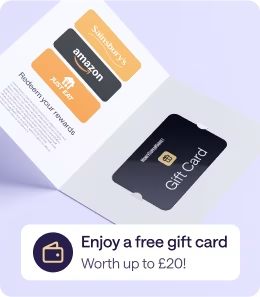
We’ll reward you every time you make a purchase. Exchange your earnings for a gift card for Amazon.co.uk

A year's worth of free experiences across the UK. From London Zoo and Go Ape, to Hussle Swimming and English Heritage, there’s an adventure for everybody. Worth £180

Whether you're buying clothing, homewares or takeaways, earn up to 10%

You and your friends each get up to £20 when they join the Club and make a qualifying purchase. Win-Win!
Finding the right insurance provider for you is easy, all you need to do is follow these three steps

Give us a few details about each pet you want to be covered and the level of protection you’re looking for. Remember – you can tailor cover levels and excesses for each pet.

We’ll put together a list of providers with appropriate cover for your specific needs

Pick the policy that is perfect for you and your pets.
Potential discounts: Insuring several pets under one policy can reduce your overall premiums compared to separate plans.
One renewal date: All pets renew at the same time, so you only need to review and update your cover once a year.
Tailored cover for each pet: Even under one policy, each pet can have its own cover level to match its age, breed and needs.
Simpler admin: One set of documents, one policy number and one combined monthly premium make it easier to manage.
Add new pets easily: You can usually add extra pets at any time, with cover starting straight away (subject to waiting periods).
Yes, you can usually add a new pet to an existing multi-pet policy at any time.
Premiums: Adding a pet will increase your overall premium, as the new pet’s cost is added to the existing policy. Multi-pet discounts may apply, reducing the extra cost.
Waiting periods: The new pet may have its own waiting periods before certain cover starts, even if your other pets are already covered.
Renewal date: All pets on the policy will share the same renewal date, so the new pet will align with your existing policy schedule.
Age or breed limits: Some insurers may restrict adding pets above a certain age or of certain breeds (e.g., dogs listed under the Dangerous Dogs Act) to an existing policy.
Adding a pet mid-term is straightforward, but always check the insurer’s terms for limits and waiting periods.
Yes, multi-pet insurance usually lets you set different cover levels for each pet.
You could choose £3,000 vet fee cover for one pet and £7,500 for another, or add dental cover for a dog but not a cat.
Customisation may be restricted by maximum vet fee levels, breed exclusions, or pre-existing conditions.
Premiums will vary according to the cover selected for each pet, so higher cover means higher cost.
You can get specific policies that cover your pet's pre-existing conditions - these are the health issues or conditions that existed before your policy's start date.
It's important to review the policy terms and exclusions for specific details on pre-existing conditions coverage.
Contact your insurer promptly – Notify them as soon as possible after the incident.
Gather documents – Include veterinary bills, medical records, and proof of payment.
Submit your claim – Complete the claim form (online or paper) and attach the supporting documents.
Claim assessment – The insurer reviews your claim and may request additional information.
Payment – Approved claims are usually reimbursed to you, though some insurers may pay the vet directly.
Typical claim processing times range from a few days to a few weeks, depending on the insurer and the complexity of the claim.
Keep separate records for each pet to make managing multiple claims easier.
Each pet’s claim is treated individually, even under one policy, so excesses and limits apply per pet.
At MoneySuperMarket, we want to give you clear, accurate and trustworthy information so you can make confident financial decisions for your circumstances.
Every page on our website goes through a careful editorial process before it is published. It’s written or reviewed by one of our experienced experts, checked for accuracy, and updated regularly to reflect the latest information.
We do use AI tools to support our research and drafting, but a human editor is always in the loop to review, fact-check and approve everything before it’s published, so you can trust that what you’re reading is both reliable and up to date.
You can read more in our editorial guidelines.
We get paid by the companies we work with, but the payment we get doesn’t have any bearing on the information we provide. We get paid in different ways, depending on the type of product or service you buy through us. Our goal is to search deals from as wide a range of companies as possible, but we only show results from our partner providers.
Our comparison service is, and will always be, free to use.
One of the best ways to get the lowest prices and best deals is to compare quotes from different companies. We do the work for you, comparing quotes side-by-side and giving you all the information you need so you can choose the right deal for your needs and your wallet.
We don’t give recommendations or financial advice, but we give you clear information so you can choose financial products that suit your circumstances.
No, not every company can be included in our service. This is because some companies don’t want their products included on comparison sites, and some decide that they would rather not pay a fee. There are also a few smaller providers who can struggle to cope with the volume of customers that can find their products if they appear on MoneySuperMarket.
Our goal is to search deals from as wide a range of companies as possible so that you can choose the deal that suits you.
Yes, you can earn SuperSaveClub rewards when you buy pet insurance through MoneySuperMarket.
This includes:
Up to £10, which you can withdraw as a pre-paid Mastercard or a gift card for brands like Sainsbury's and Amazon.co.uk
Free Days Out pass (worth £180), which gives free entry to a range of UK attractions (you must download our app to get this)
Cashback of up to 10% when you spend at brands including eBay, Just Eat and Argos
To earn SuperSaveClub rewards on purchases you must:
Sign up to SuperSaveClub (it's free)
Be signed in to your account when you make the purchase
More information can be found on our SuperSaveClub homepage.
Yes, pet insurance is included in our Super Save Price Promise.
If you buy through us then find the same deal for less we will:
refund the difference
give you a gift card worth up to £20
Terms and conditions apply. More information can be found on our Price Promise page.
Reviewed on 8 Apr 2026 by

