

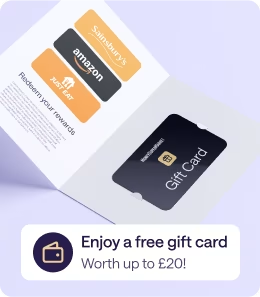
Earn up to £20[4] every time you buy
We’ll reward you every time you make a purchase. Exchange your earnings for a gift card for Amazon.co.uk[5], Sainsbury’s & more
MoneySuperMarket is a credit broker not a lender. You must be 18 or over and a UK resident. Representative 24.9% APR
*Selected providers. SuperSaveClub restrictions and T&Cs apply. Click here for details.

Virgin Money
All Round Credit Card
Representative example: If you spend £1,200 at a purchase rate of 24.9% (variable) p.a. your representative APR is 24.9% APR (variable
Great for
But be aware that
A money transfer credit card lets you transfer money from your credit card into your current account. You can then use the money to pay off an overdraft, cover a large expense, or consolidate other borrowing.
These cards often come with a 0% interest period for a set time. You’ll usually pay a one-off transfer fee, typically around 1% to 4% of the amount moved, but if you repay the balance before the interest-free period ends, it can be a cost-effective way to borrow a relatively small amount over the short term.
What is the difference between a money transfer card and a balance transfer card?
A balance transfer card lets you move credit card debt from one card to another, often with a lower interest rate or promotional period.
A money transfer card, on the other hand, allows you to transfer cash from your credit card into your bank account. This could be used to pay off other debts, like an overdraft, or for general cash needs.
Once you’re approved, you can request a transfer from your credit card provider into your current account. There is usually a set window for making the transfer, so check the card terms before you apply.
You'll pay a fee when the money transfer goes through - this is usually between 1% and 4% of the amount you're transferring.
Money transfer cards often feature an introductory rate, which applies to balances transferred to your current account until the rate period expires.
Money-transfer credit cards typically offer 0% interest for a limited period. However, you’re likely to be charged a transfer fee, which is typically somewhere between 1% and 4%.
So supposing you transferred £3,000, you’re likely to pay a charge of between £30-£120 and no more interest on the sum for about 12 months (length of any 0% term depends on your lender).
The upshot is that a 0% money-transfer card, if used sensibly, can be a cost-effective way to borrow.
In the table opposite, you can compare the cost of borrowing £3,000 over 12 months for a personal loan, a standard credit card and money-transfer with a 0% introductory rate.
Personal loan (20% APR) | Standard credit card (24.9% APR) | Money-transfer card (4% transfer fee & 0% for 12-months) |
|---|---|---|
£306.85 | £377 | £120 |
NB: Assumes monthly repayments for loan and standard credit card are fixed at £282.42 pm.
Money transfer cards can be useful, particularly for borrowing at very low interest to clear a bank overdraft or other expensive debt. They’re less useful for making purchases or earning rewards. Here are the advantages and disadvantages:
Cheap borrowing. Interest rates are low or even 0% for a fixed period, giving you chance to pay off debts quicker. There will usually be a transfer fee.
Pay off your overdraft. Overdrafts often charge high rates of interest, so a money transfer card could be a smart way to clear this debt and save money.
Pay off other loans. Most types of loan will have a higher interest rate than a money transfer credit card so they can be a cheaper way to pay off loans.
Expensive for purchases. Tend to have high standard interest rates on new purchases, so they’re not ideal for new spending. Consider a purchase card for this.
High cost of cash withdrawal. Using a credit card to withdraw cash from a cash machine could lead to high interest charges so it’s best avoided.
Lower credit limit. May have a lower credit limit - typically just a few thousand pounds - so they’re not helpful if you need to borrow a larger sum.
We’ll reward you every time you make a purchase. Exchange your earnings for a gift card for Amazon.co.uk[5], Sainsbury’s & more

A year's worth of free experiences across the UK. From London Zoo and Go Ape, and English Heritage, there’s an adventure for everybody. Worth £180[6].
Whether you're buying clothing, homewares or takeaways, earn up to 10%[4]cashback from brands like Just Eat, eBay & Argos.

You and your friends each get up to £20 when they join the Club and make a qualifying purchase. Win-Win!
MoneySuperMarket compares cards from leading UK providers to help you find a deal that suits your spending plans. You can check your eligibility with a soft search that won’t affect your credit score, and compare cards by promotional period, rewards, and approval chances. We’ll only show cards from FCA-regulated providers, so you can compare with confidence.
Want to know more? Find out more about MoneySuperMarketor read our editorial guidelines.

When you’re pre-approved, the interest rate, interest-free period and fee (if there is one) are all confirmed – the only thing not guaranteed is your credit limit.

You’ll see your unique, personalised chance of being approved for all credit cards, so you can easily compare all your options at a glance.

Knowing all this upfront puts you in the driving seat. You’re less likely to be turned down when you apply, so your credit score is protected.
If you're unsure whether or not a money transfer card is the right option for you, here are some alternatives:
Make big purchases with a purchase credit card and spread the cost over time without incurring interest.
Moving existing credit card debt to a 0% balance transfer credit card for a set period.
Borrow a larger amount over a longer period with a personal loan. Fixed monthly instalments will often have lower interest rates than overdrafts.
Need more help choosing a credit card? Read our latest guides for tips on applying, improving your chances of approval, and managing repayments.

When choosing a money transfer card, look first at how long the interest-free period lasts and make sure you know when it ends. You should also check the transfer fee, which is usually charged as a percentage of the amount you move, and whether the credit limit is likely to cover what you need.
It’s also worth comparing any extra features, such as low-interest purchases, but the priority should be finding a card that gives you enough time and flexibility to repay the balance affordably.
Kara Gammell Personal Finance & Insurance Expert
Once you receive the money from the money transfer card in your account, you’re free to spend it on whatever you want. You can use it to pay off an overdraft, clear a debt, make a big purchase, or any other expenses.
However, you can’t use it to pay off any standing orders or direct debits.
APR stands for ‘annual percentage rate’ and refers to the proportion of interest you agree to pay back on the loan every year. It’s important to be aware that the headline APR on a credit card may differ to the one you are offered when you apply. Before you apply for a credit card, the APRs you are shown are ‘representative’ – equivalent to the lowest interest rate the lender will offer 51% of the people it accepts for its card. The actual APR you’re offered could be different according to your personal credit score.
You might be able to get a money transfer card with 0% interest, but it will depend on a few factors including your credit score. Zero per cent interest deals are usually available to those who have a strong credit rating. The better your credit score, the more likely you’ll be able to get a higher credit limit and have a longer introductory 0% interest period too.
To be eligible for a money transfer credit card, you need to be:
A UK resident
Aged 18 or over
Have a regular income
And have a good credit score
You'll also need to provide at least three years' UK address history, an email address, phone number, and your main bank account details.
The time it takes for money to be moved from the card to your bank account depends on the provider. Some offer instant transfers, while others take a few days.
As with most banking transactions, the timeframe to complete the transfer could be affected by your bank's working hours and whether you lodged your request on a weekday or weekend.
You might be able to get a money transfer credit card with bad credit, however you may not be able to get an interest-free or low interest rate deal and your credit limit may be lower than you’d like. You may find bad credit credit cards are more accessible.
These are aimed at those with poor credit scores. If you use the card carefully and repay your balance each month, it can help you build your credit rating.
It’s also worth taking other steps to see how you can improve your credit rating, which will help you not just get a better deal on credit cards, but any type of borrowing including loansand mortgages.
Yes, a credit check is generally required to obtain a money transfer credit card. These cards, which allow you to transfer funds from your credit card to your bank account, are considered a type of credit and require lenders to assess your creditworthiness. The credit check helps determine your eligibility for the card and the terms offered.
A money transfer card could be cheaper than an overdraft if you qualify for a 0% interest deal and can repay the balance before the promotional period ends. However, an overdraft may give you faster access to cash and can be used for direct debits and standing orders. The best option depends on how quickly you need the money and how you plan to repay it.
A money transfer card can be a good way to borrow cash if you need money in your bank account, qualify for a low or 0% interest deal, and can repay the balance before the promotional period ends. For larger borrowing or longer repayment periods, a personal loan may be more suitable.




Reviewed on 16 Oct 2026 by
Accurate as of 13 October 2026.
Selected providers. SuperSaveClub restrictions and T&Cs apply. Click here for details.
YouGov Survey 1st July 2025 to 30th June 2026. Net Recommend score derived from "Which of the following online service websites would you recommend to a friend or colleague, or tell them to avoid?" Base: Current Customers of (MoneySuperMarket n=17,883, Compare the Market n=16,193, Go.Compare n=8,523, Confused.com n=7,918, Uswitch n=514)
T&Cs and restrictions apply, see here for more information
T&Cs apply, click here for more information
Based on 1 visit per month – average ticket value £15.30 (Oct 24)

