Skip to content

Baggage insurance

Compare lost and delayed baggage insurance

  • Unlock a year of rewards with SuperSaveClub^

  • Price Promise - we price match and more^

  • Compare quotes all in one place

Compare travel insurance quotes

What is baggage insurance?

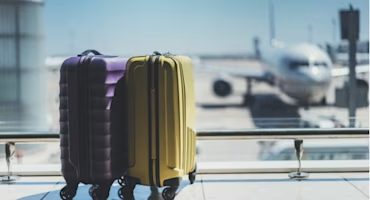
Baggage insurance is a type of cover that’s usually included as part of a standard travel insurance policy. It helps protect your belongings while you travel, covering items in your luggage if they’re lost, stolen or damaged during your trip.

According to SITA, an organisation which tracks and traces airline baggage, the baggage mishandling rate dropped to 6.3 bags per 1,000 passengers in 2024, down from 6.9 the previous year.

If something happens to your possessions and you weren’t at fault, your travel insurance policy may pay out compensation to help cover some or all of the cost of replacing them. Exactly how much you can claim depends on the baggage cover limit in your policy.

Although baggage cover is typically included in travel insurance, you can often increase your cover level or add extra protection for high-value items. For example, some policies allow you to add optional cover for gadgets such as phones, laptops or cameras, or additional protection for important items like your passport.

With MoneySuperMarket, you can choose how much baggage cover you want as part of your travel insurance policy. If you’re travelling with valuable electronics, you can also add gadget insurance to your policy for extra protection, as well as passport cover.

What does baggage insurance cover?

Travel insurance policies vary, so what’s included in baggage cover can differ between providers. The points below give a general overview of what is usually covered and not covered.

Always read your policy documents carefully so you understand exactly what protection your travel insurance provides before you travel.

  • Usually covered

    • Theft – If your belongings are stolen, report it to the local police as soon as possible. With a crime reference number, you can make a claim through your travel insurance to help cover the cost of the stolen items.

    • Damage – If your luggage or personal belongings are damaged during your trip, your policy may reimburse you. Taking photos of valuable items before you travel can help support a claim.

    • Loss – If your baggage goes missing, your insurance may cover the value of your belongings. If the airline was responsible, report it at the airport before leaving baggage reclaim and obtain a property irregularity report (PIR).

    • Baggage delay – If checked luggage is delayed (often 12–24 hours), your policy may provide a small allowance for essential items like toiletries or basic clothing.

  • Usually not covered

    • Damage or loss that is your fault – Claims may be rejected if belongings were left unattended or handled carelessly.

    • Items over the single-item limit – Most policies set a maximum claim per item. If something is worth more than this, you may only receive compensation up to that limit unless extra cover was added.

    • Money and passports – Cash, travel money and passports are not always included in standard baggage cover and may require additional protection.

    • Items in the care of an airline – If baggage is lost, damaged or delayed by an airline, the airline is typically responsible for compensation first.

    • Theft not reported promptly – Insurers usually require theft to be reported within 24 hours and supported by a police report or crime reference number.

Can I buy baggage insurance on its own?

Baggage insurance is usually included as part of a standard travel insurance policy. It’s designed to protect your belongings while you travel, alongside other types of cover such as medical expenses, cancellations and travel delays.

Because of this, baggage cover is rarely bought on its own. Most travellers get it automatically when they take out travel insurance,.

At MoneySuperMarket, you can compare travel insurance policies with different baggage cover limits, but we don’t provide quotes for baggage insurance as a standalone product.

If you’re sending luggage or items overseas without travelling with them, you would normally need parcel insurance instead. This is different from travel insurance – it only protects the shipped item itself, rather than covering you or your belongings during a trip.

In some cases, specialist insurers offer standalone luggage or personal belongings policies. These tend to be niche products and may be suitable for people who:

  • Travel frequently with high-value items, such as cameras or professional equipment

  • Want higher single-item limits than those available through standard travel insurance

  • Already have travel insurance but need extra protection for specific belongings

packing suitcase

Is baggage insurance worth it?

The amount of baggage cover you need depends on how much your belongings are worth and what you plan to take with you. Travel insurance policies can offer very different baggage limits, with cheaper policies sometimes including lower cover amounts.

Typical baggage cover limits

Many travel insurance policies offer total baggage cover ranging from around £1,000 to £3,000, although some premium policies may offer more. However, policies also usually include a single-item limit – the maximum you can claim for one possession.

For example, a policy might include:

  • £1,500 total baggage cover

  • £300 single-item limit

This means you could claim up to £1,500 in total, but no more than £300 for any one item unless you have additional cover.

When might I need higher baggage cover?

It may be worth choosing a policy with higher baggage limits if you:

  • Are travelling with expensive electronics, such as cameras, laptops or tablets

  • Plan to take designer clothing, jewellery or accessories

  • Are going on a longer trip and packing more items

  • Want higher single-item limits for valuable belongings

In these situations, paying slightly more for a policy with higher baggage cover could provide better protection if something goes wrong.

How do I make a claim on my baggage insurance cover?

If your belongings are lost, stolen or damaged while you’re travelling, you should start the claims process as soon as possible. Most travel insurers require incidents to be reported quickly and claims to be submitted within a set timeframe – often between 30 and 60 days of the event.

Following these steps can help improve the chances of your claim being approved.

  • one icon

    Prepare for your trip

    Before your trip, it’s helpful to document the items you’re taking with you, especially valuable belongings.

    • Take photos of your items in good condition

    • Keep receipts or proof of purchase where possible

    • Note the approximate value of expensive belongings

    This evidence can help your insurer verify the value and condition of items if you need to make a claim.

  • Two icon

    Report the incident immediately

    If something happens to your luggage, report it to the appropriate authority as soon as possible – ideally within 24 hours.

    • Theft: report it to the local police and obtain a crime reference number

    • Lost or delayed luggage: report it to the airline or airport baggage desk before leaving the airport and request a Property Irregularity Report (PIR)

    • Damage: notify the airline, hotel or transport provider responsible

    Failing to report incidents promptly can make it harder to claim.

  • three icon

    Gather the required documents

    Your insurer will usually ask for evidence to support your claim. This may include:

    Your policy number and travel details

    • A crime reference number (for theft)

    • A Property Irregularity Report (PIR) from the airline (for luggage lost in transit)

    • Photos of damaged items

    • Receipts or proof of value for lost belongings

    • Receipts for essential items bought during baggage delays

    Having these documents ready can help speed up the process.

  • four icon

    Submit your claim

    You can normally submit a claim online, through an app, or by completing a claim form provided by your insurer.

    Include all the requested evidence and details about what happened. Once submitted:

    • The insurer will review your claim and supporting documents

    • They may contact you for additional information if needed

    • If approved, you’ll receive a payout based on your policy limits, minus any excess

    The time it takes to process a claim varies, but many insurers aim to assess claims within a few weeks once all documents have been provided.

Frequently asked questions

What impacts the cost of baggage insurance?

Baggage cover is usually included within a travel insurance policy, so the price you pay will depend on several factors linked to your trip and the level of protection you choose.

  • Destination - Where you’re travelling can affect the price of your policy. Trips to destinations considered higher risk – for example due to higher crime rates, expensive healthcare, or extreme weather – may increase the overall cost of travel insurance.

  • Level of cover - The amount of baggage cover you choose can affect the price. Policies with higher total baggage limits or higher single-item limits usually cost more than basic policies with lower cover.

  • Length of your trip - If you’re buying single-trip travel insurance, longer trips typically cost more to insure because your belongings are covered for a longer period of time.

  • Your age - Age is one of the factors insurers use to calculate travel insurance premiums. In general, younger travellers tend to pay less, while prices often increase as you get older.

  • Optional add-ons - Adding extra protection – such as gadget cover for phones, laptops or cameras – can also increase the overall cost of your policy, but may be worthwhile if you’re travelling with valuable items.

Do airlines cover lost baggage?

Yes. Airlines are usually responsible for compensating passengers if checked luggage is lost, delayed or damaged while in their care. This means you should normally report the issue to the airline first, before making a claim through your travel insurance.

Most international flights are covered by the Montreal Convention, which sets the rules for airline compensation. Under these rules, airlines can compensate passengers for lost, delayed or damaged baggage up to a maximum limit (currently around 1,288 Special Drawing Rights, which is roughly £1,300–£1,400, depending on exchange rates).

What should I do if my luggage is delayed?

If your luggage is delayed, you should report it to the airline as soon as possible. Airlines are usually responsible for locating delayed bags and arranging compensation if needed.

1. Report it at the airport - Go to the airline’s baggage desk before leaving the airport and complete a Property Irregularity Report (PIR).

2. Keep receipts for essentials - If you need to buy items such as toiletries or basic clothing, keep your receipts in case you need them for a claim.

3. Check your travel insurance - Some travel insurance policies include baggage delay cover, which may provide a small allowance for essential purchases if your bag is delayed for a set period (often 12–24 hours). Others may not include this cover, as delays are usually the airline’s responsibility.

4. Claim if needed - If your luggage remains delayed or is declared lost, you may be able to claim compensation from the airline, and possibly from your travel insurance depending on your policy.

What should I do if my luggage is stolen?

If your luggage is stolen during your trip, you should report the theft to the local police as soon as possible. To make a travel insurance claim, you’ll usually need a crime reference number as proof that the incident was reported.

Most insurers also have strict time limits for reporting theft. In many cases, you’ll need to notify the police and your insurer within 24 hours for your claim to be considered.

For more help, read our guide on how to make a travel insurance claim.

What is unattended baggage?

Unattended baggage is any luggage or personal belongings that are left out of your sight or control.

Most travel insurance policies consider baggage unattended if it is not within your immediate reach or supervision, such as:

  • Leaving your bag unattended in a public area (e.g., airport, train station, café)

  • Leaving luggage unlocked in a hotel lobby or common area

  • Leaving belongings in a vehicle without proper security

If items are stolen while unattended, your insurer may refuse a claim, so it’s important to always keep your baggage with you or secured in a safe place.

Should I use a smart tracker for my baggage?

Using a smart tracker in your luggage can be a useful way to keep an eye on your belongings while travelling, especially if you’re carrying valuable or essential items.

Benefits of smart trackers:

  • Real-time location updates: Know where your bag is at all times.

  • Peace of mind: Helps reduce stress if your luggage is delayed or misplaced.

  • Easier claims: If your bag is lost, having tracking data can support your insurance claim.

However, tracking your luggage is not a substitute for travel insurance.

Do airlines cap the limit they will pay for lost luggage?

Yes. Airlines usually set a maximum compensation amount for lost, delayed, or damaged baggage. This limit is often determined by international agreements, such as the Montreal Convention for international flights.

  • Under the Montreal Convention, airlines can pay up to around 1,288 Special Drawing Rights (roughly £1,300–£1,400, depending on exchange rates) per passenger.

  • For domestic flights, airlines may have their own lower limits.

Even if an airline compensates you, travel insurance may cover the remaining costs or provide additional support for essentials if your luggage is delayed.

Our expert says…

Look out for single-item limits when looking at baggage cover. This is a limit to how much you can claim for an individual item. Some policies may apply this limit to item sets as well. If you're bringing any expensive items with you on your travels that cost more than your policy's single-item limit, you may need to add extra cover.

Most providers offer optional gadget cover to cover expensive tech, which is great for protecting mobile phones and laptops. For other valuables like jewellery or expensive clothes, some insurers may provide additional cover as long as you declare these items when buying your policy.”

Ryan Nizzar Travel, Business & Landlord Insurance Expert

Why compare baggage insurance with MoneySuperMarket?

Whether you need worldwide cover, a single trip, or a multi-trip policy, at MoneySuperMarket, we’re here to make sure your holiday planning is a breeze. Here’s what you’ll get:

  • thumbs up icon

    Rated 4.9/5 on Feefo

    We're also the UK's most recommended price comparison website^

  • Pound Coin icon

    Save money

    Compare quotes from the UK's leading travel insurers and filter through a range of policies that suit your budget

Trusted Service Awards Winners

MoneySuperMarket has won the Feefo Platinum Trusted Service Award, an independent seal of excellence, which recognises businesses that consistently deliver a world-class customer experience.

img-feefo-platinum-trusted-service-award-2026

Here's what our travel insurance customers say:

See all reviews
  • Cheapest we could find and easy to book. 100%

  • Purchased online travel insurance.. didn’t have to use it but it was a great deal, excellent price and peace of mind that I had it! Will use again

  • Very useful, value for money and user-friendly

  • Easy and with a reward too. Will update once travelled!

What is baggage insurance excess?

A baggage insurance excess is the amount you are responsible for paying towards a claim before your insurer covers the rest.

Voluntary vs compulsory excess

  • Voluntary excess: You choose this amount when buying your policy. Selecting a higher voluntary excess can reduce your travel insurance premium, but it also means you’ll pay more out of pocket if you make a claim.

  • Compulsory excess: This is set by the insurer and cannot be changed. It applies to certain claims regardless of the policyholder’s choice.

How excess affects claims

For example, if your policy has a £100 excess and you make a claim for £500 worth of lost or damaged belongings:

  • Your insurer pays £400

  • You pay the remaining £100

  • Choosing the right balance between voluntary excess and premium cost helps ensure your policy is affordable while still providing adequate protection.

Will my baggage insurance cover me for multiple trips?

Whether your baggage insurance covers multiple trips depends on the type of travel insurance policy you choose. Different policies have different limits and durations.

Single-trip travel insurance - Covers one trip only. Your baggage insurance starts when you leave home and ends when you return. Once the trip is over, the cover finishes.

Annual travel insurance - Covers any trips you take within a 12-month period. Each trip may have a maximum duration limit, so check your policy if you plan longer stays.

Backpacker travel insurance - Designed for extended trips to multiple destinations, often covering several months or even a year. This type of policy is ideal if you’re travelling continuously and want baggage protection throughout the journey.

Choosing the right type ensures your belongings are covered for the trips you plan, whether it’s a short holiday or a long backpacking adventure.

Which countries will my baggage insurance cover?

The countries covered by your baggage insurance depend on the type of policy you choose. When applying for travel insurance, you’ll usually select from options such as:

Important restrictions - Travel insurance does not cover destinations where the FCDO (Foreign, Commonwealth & Development Office) advises against travel. These countries can change depending on worldwide events.

Some insurers may also maintain their own list of excluded countries.

Always check your policy documents before travelling to make sure your destination is included and your baggage is protected. This helps avoid unexpected gaps in cover and ensures you can claim if something happens abroad.

Can I compare travel insurance for a specific destination?

You can compare travel insurance policies based on the country or region you’re visiting. Your destination affects the level of baggage cover and the cost of your policy because insurers assess the risk of theft, loss, or damage differently depending on where you travel.

For example:

  • Higher-risk destinations – areas with higher crime rates or frequent travel disruptions – may lead to higher premiums or lower automatic baggage limits.

  • Low-risk destinations – countries with strong security and reliable transport systems – may allow higher coverage at lower cost.

By choosing a policy tailored to your destination, you ensure that your

How does MoneySuperMarket create and review the content on the website?

At MoneySuperMarket, we want to give you clear, accurate and trustworthy information so you can make confident financial decisions for your circumstances.

Every page on our website goes through a careful editorial process before it is published. It’s written or reviewed by one of our experienced experts, checked for accuracy, and updated regularly to reflect the latest information.

We do use AI tools to support our research and drafting, but a human editor is always in the loop to review, fact-check and approve everything before it’s published, so you can trust that what you’re reading is both reliable and up to date.

You can read more in our editorial guidelines.

How does MoneySuperMarket make money?

We get paid by the companies we work with, but the payment we get doesn’t have any bearing on the information we provide. We get paid in different ways, depending on the type of product or service you buy through us. Our goal is to search deals from as wide a range of companies as possible, but we only show results from our partner providers.

Our comparison service is, and will always be, free to use.

You can find out more about how we make money here.

Why should I use a price comparison website?

One of the best ways to get the lowest prices and best deals is to compare quotes from different companies. We do the work for you, comparing quotes side-by-side and giving you all the information you need so you can choose the right deal for your needs and your wallet.

We don’t give recommendations or financial advice, but we give you clear information so you can choose financial products that suit your circumstances.

Does MoneySuperMarket work with all the providers on the market?

No, not every company can be included in our service. This is because some companies don’t want their products included on comparison sites, and some decide that they would rather not pay a fee. There are also a few smaller providers who can struggle to cope with the volume of customers that can find their products if they appear on MoneySuperMarket.

Our goal is to search deals from as wide a range of companies as possible so that you can choose the deal that suits you.

Is travel insurance eligible for SuperSaveClub and rewards?

Yes, you can earn SuperSaveClub rewards when you buy travel insurance through MoneySuperMarket.

This includes:

  • Up to £5^ , which you can withdraw as a pre-paid Mastercard or a gift card for brands like Sainsbury's and Amazon.co.uk

  • Free Days Out pass (worth £180), which gives free entry to a range of UK attractions (you must download our app to get this)

  • Cashback of up to 10% when you spend at brands including eBay, Just Eat and Argos

To earn SuperSaveClub rewards on purchases you must:

  1. Sign up to SuperSaveClub (it's free)

  2. Be signed in to your account when you make the purchase

More information can be found on our SuperSaveClub homepage.

Is travel insurance eligible for Price Promise?

Yes, travel insurance is included in our Super Save Price Promise.

If you buy through us then find the same deal for less we will:

  • refund the difference

  • give you a gift card worth up to £20

Terms and conditions apply. More information can be found on our Price Promise page.

Reviewed on 2 Apr 2026 by

Page reviewer's profile picture

Ryan Nizzar

Senior Commercial Manager

SuperSaveClub restrictions and T&Cs apply. Click here for details.

YouGov Survey 1st July 2024 to 30th June 2025. Net Recommend score derived from “Which of the following online service websites would you recommend to a friend or colleague, or tell them to avoid?” Base: Current Customers of (MoneySuperMarket n=18,382, Compare the Market n=16,802, Go.Compare n=10,162, Confused.com n=8,229, Uswitch n=528).

Selected providers. SuperSaveClub restrictions and T&Cs apply. Click here for details.