

Property elevation
Homes built on higher ground or raised foundations are at lower risk, which can reduce premiums.
Save up to £190

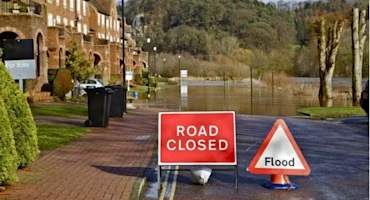
Flood insurance provides cover for costs resulting from flood damage, typically caused by heavy rainfall, overflowing rivers, or surface water. It helps pay for repairs to your home and replacement of belongings after a flood event.
Many standard home insurance policies include some form of flood cover, but the level of protection can vary depending on the flood risk in your area. For high-risk homes, insurers may require specialist flood insurance or limit the cover provided.
In the UK, the Flood Re scheme helps homeowners in high-risk areas access affordable flood insurance. It works alongside private insurance, capping premiums and making cover more accessible for properties that have been flooded in the past.
Buildings cover protects the structure of your home, including walls, floors, and permanent fixtures.
Contents cover protects your personal belongings, furniture, and appliances inside the property.

You should consider flood insurance if:
Your home is in a high-risk flood area.
Your property has experienced flooding before.
You want protection for both the building and your contents in case of flood damage.
Even if you are not in a high-risk area, flood insurance can provide peace of mind against unexpected extreme weather events.

Flood damage is normally covered by a standard home insurance policy but can affect both the structure of your building as well as the contents within.
Premiums for home insurance are generally higher for properties with a history of flooding or in areas prone to heavy rainfall or river overflow.
According to our data, if your property has flooded in the past, your home insurance could cost up to £29.75
Key factors that influence premiums include:
Homes built on higher ground or raised foundations are at lower risk, which can reduce premiums.

Properties protected by local flood barriers, levees, or home-specific measures like flood gates or raised electrical systems often attract lower rates.

Insurers use detailed flood maps to assess the likelihood of flooding in your area; properties in high-risk postcodes usually pay more.

Previous flood claims can increase your premium because the property is seen as a higher risk.

Older homes or those with basements may cost more to insure against flooding.
There are a few things you can do to try and reduce your home insurance premiums.
Try:
Increasing your voluntary excess – choosing a higher excess can reduce your premium, as it shows insurers you’re less likely to make small claims. Just make sure the amount you choose is affordable if you ever need to make a claim.
Paying annually instead of monthly – paying in one go usually costs less overall.
Reviewing your level of cover – avoid over-insuring your home by accurately calculating your rebuild costs and the value of your possessions.


According to the Environment Agency, around 5.5 million homes and businesses in England—about 1 in 6 properties—are at risk of flooding. While this may sound alarming, the good news is that home insurance can help cover the costs of flood damage, giving you peace of mind.
When getting a quote, insurers may ask if your property is more than 400 metres from a body of water. This helps them assess your flood risk, so it’s important to answer accurately to ensure your cover remains valid.
You can check your property’s flood risk using the Environment Agency’s free online tool or local council flood maps. Knowing your risk allows you to take preventative measures and choose the right insurance cover.
Even if your home is in a higher-risk area, simple steps like flood barriers, raised sockets, and regular maintenance can reduce damage and help keep premiums manageable.
David McDermottroe Insurance & Personal Finance Expert
Home insurance is generally still available even if you live in an area with a high risk of flooding, thanks to the government-backed Flood Re reinsurance scheme.
Flood Re helps homeowners in high-risk flood areas access affordable insurance. To qualify, properties must generally be:
Built before 1 January 2009
In council tax bands A–H
Used for residential purposes
Insured individually
Owner-occupied homes, holiday homes, and buy-to-let properties are usually eligible if they meet these criteria. Ineligible properties include newly built homes, commercial properties, and large leasehold blocks.
Designed to ensure home insurance remains affordable for even those worst affected by flooding, Flood Re is funded by insurers and is used to pay flood claims made by high-risk customers – allowing insurers to offer cover at a lower price than they could otherwise.
More than 660,000 households have benefited since Flood Re began. According to Flood Re figures, premiums for high-risk homes can drop dramatically thanks to the scheme, e.g. from £4,800 to around £188 per year.
Whatever cover you’re looking for, the easiest way to find the best policy is by comparing quotes online. You can compare policies in one simple search on MoneySuperMarket.

We're trusted by our customers. We only work with insurance providers authorised and regulated by the Financial Conduct Authority (FCA).

Avoid auto-renewing and compare tailored quotes for free to find the cheapest insurance for you. Buy through us and get unlimited access to free days out (on our app) and much more with SuperSaveClub.

Comparing quotes remains one of the best ways to save money and time. Storing your details allows you to refresh your quotes in seconds.
Flood insurance is designed to protect your home and belongings from damage caused by natural water events, such as heavy rain, overflowing rivers, or surface water flooding.
It does not typically cover everyday leaks like burst pipes, which are handled under standard home insurance.
The flood insurance offered with standard buildings cover includes:
Drying out your home
Restoring fittings and fixtures
Removing debris
Legal and/or rebuilding costs
The flood insurance offered with standard home contents cover includes:
Furniture, including carpets, sofas, and tables
Electrical goods such as TVs and computers
Other personal belongings, generally up to a single-item value limit
Valuables such as jewellery, if named on your policy
Flood insurance policies vary, but some common exclusions exist because insurers view them as separate risks or less predictable. Understanding these helps you plan for optional cover if needed.
Most policies don’t automatically pay for temporary housing while your home is being repaired. This is because it’s considered a separate living cost, not direct flood damage.
You can often add home emergency or temporary accommodation cover for an extra premium.
Damage from leaking or burst pipes is usually excluded from flood cover because it’s classified under “escape of water,” which is a separate section of your home insurance.
If you want full protection, make sure your policy includes both flood and escape of water cover.
Standard flood policies often exclude outbuildings and boundary features since these are considered non-essential to the main property structure.
Optional add-ons can extend cover to include these items.



MoneySuperMarket has won the Feefo Platinum Trusted Service Award, an independent seal of excellence, which recognises businesses that consistently deliver a world-class customer experience.

Most likely, yes, but it depends on your policy. Many standard home insurance policies, including both buildings and contents cover, automatically include protection against flooding from natural causes such as heavy rain, river overflow, or surface water.
However, there are important exceptions:
Damage caused by burst pipes or leaking plumbing usually falls under “escape of water,” not flood cover.
Some policies may exclude fences, gates, or outbuildings unless you add optional cover.
Alternative accommodation costs while your home is repaired may not be included by default.
Always check your policy wording carefully to understand exactly what is covered, including any limits or exclusions. If needed, you can add optional cover to protect items like outbuildings, fences, or temporary living costs.
In insurance terms, flood damage is damage caused by flooding from ‘natural sources’, such as excessive rain or a river bursting its banks.
In insurance terms, a flood is water damage caused by natural sources, rather than plumbing or household issues. According to the UK government and the Environment Agency, this includes:
Heavy or prolonged rainfall that overwhelms drainage systems.
Rivers or streams bursting their banks, flooding nearby homes and land.
Surface water or runoff that collects on streets or fields and enters properties.
Coastal or tidal flooding, where high tides or storm surges push seawater inland.
It’s important to note that flooding from household sources, such as a burst pipe or leaking boiler, is classified separately as an “escape of water” and is covered under a different section of your home insurance policy.
By understanding this distinction, homeowners can ensure they have the correct flood or escape-of-water cover for their property.
Groundwater flooding occurs when excess rain saturates the soil and underlying rock, causing the water table to rise. If the water table becomes too high, it can overwhelm sewers, drains, and natural barriers, causing water to flow into homes and properties.
For example, after several weeks of heavy rainfall, a low-lying property may experience flooding from the ground beneath, rather than from rivers or surface water. Basements and ground floors can be particularly affected.
If your property is at risk, it’s important to check with your insurer to confirm whether your home insurance covers groundwater flooding. Many standard policies may include it, but specialist cover could be needed for high-risk areas.
If you live in a high-risk area you could consider:
Installing sump pumps or French drains to redirect water.
Ensuring proper drainage around your home.
Keeping gutters and soakaways clear to prevent water build-up.
Monitoring local flood alerts and prepare an emergency plan.
You can check your property’s risk and find guidance from the Environment Agency.
You can enter your postcode to check your flood risk according to the government’s flood map. Alternatively, you can sign up for the free flood warning service or ask the Environmental Agency for more information about a property’s flood history.
You can also check the risks your home may face by using the Home Protect home risk calculator.
In most cases, making a flood claim will increase the cost of your home insurance. Our research indicates that premiums are on average 8.65%
Flood claims can feel overwhelming, but insurers deal with them regularly. Acting quickly, keeping good records, and staying in communication with your insurer greatly improves your chances of a smooth process.
Contact your insurer immediately – most policies ask that you report damage as soon as possible, ideally within 24–48 hours of discovering the flood. Early notification helps speed up inspections and payments.
Document the damage thoroughly – take clear photos and videos of flooded areas, damaged furniture, appliances, and structural issues. This evidence supports your claim and reduces delays.
Speak to your insurer before cleaning or repairing – only carry out emergency measures to prevent further damage (like turning off electricity or moving items to safety). For major repairs, wait for your insurer’s guidance or an inspection.
Keep receipts for emergency costs – temporary accommodation, pumping out water, or professional drying services can often be reimbursed if documented.
Consider professional help if needed – if you disagree with the payout, an independent loss assessor can review your claim and help negotiate a fair settlement.
As a tenant, your landlord is usually responsible for insuring the building itself. This means structural damage from flooding—such as walls, floors, or the roof—should be covered under their flood insurance policy.
However, your personal belongings are your responsibility, so it’s wise to take out a contents insurance policy. This protects your furniture, electronics, clothes, and other possessions against flood damage, as well as risks like theft or fire.
Shared homes or joint tenants:
In properties with multiple tenants, each person is typically responsible for their own belongings.
Some policies allow joint contents cover, which can simplify protection for shared furniture or communal areas.
Discuss responsibilities with your housemates to ensure all possessions are adequately covered and avoid gaps in protection.
Not living near a river, lake, or the coast doesn’t mean your home is safe from flooding. Heavy rainfall can overwhelm drainage systems, causing surface water or “pluvial” flooding, even miles from the nearest natural water source.
Examples of inland flooding:
Streets and low-lying areas become submerged after a sudden downpour, with water entering homes and basements.
Runoff from nearby fields or hills collects around properties, flooding gardens or ground floors.
Because of this, it’s still wise to have flood insurance, especially in areas prone to surface water flooding.
Before a flood
Preventative measures: Keep sandbags, flood boards, and plastic sheeting to block doors, air bricks, sinks, and toilets.
Emergency kit: Include insurance documents, torch and radio, waterproof clothing, blankets, bottled water, non-perishable food, medication, first-aid kit, phone chargers, and supplies for babies or pets.
Pre-flood photos: Take pictures of your home and possessions for insurance records.
During a flood
Listen for warnings: Follow local alerts via radio, TV, or Government flood warnings.
Turn off utilities: Shut off mains electricity, gas, and water if safe to do so.
Secure your home: Close windows and doors to limit water entry.
Evacuate vulnerable people and pets before flooding starts.
Move vehicles and valuables: Relocate cars to higher ground and place important items on elevated surfaces.
After a flood
Document damage: Take photos and videos to support insurance claims.
Prevent further damage: Arrange professional drying, clean debris, and avoid major repairs until your insurer advises.
Review and improve: Consider long-term flood prevention measures such as barriers, drainage improvements, or moving valuables to safer locations.
We get paid by the companies we work with, but the payment we get doesn’t have any bearing on the information we provide. We get paid in different ways, depending on the type of product or service you buy through us. Our goal is to search deals from as wide a range of companies as possible, but we only show results from our partner providers.
Our comparison service is, and will always be, free to use.
One of the best ways to get the lowest prices and best deals is to compare quotes from different companies. We do the work for you, comparing quotes side-by-side and giving you all the information you need so you can choose the right deal for your needs and your wallet.
We don’t give recommendations or financial advice, but we give you clear information so you can choose financial products that suit your circumstances.
No, not every company can be included in our service. This is because some companies don’t want their products included on comparison sites, and some decide that they would rather not pay a fee. There are also a few smaller providers who can struggle to cope with the volume of customers that can find their products if they appear on MoneySuperMarket.
Our goal is to search deals from as wide a range of companies as possible so that you can choose the deal that suits you.
Yes, you can earn SuperSaveClub rewards when you buy home insurance through MoneySuperMarket.
This includes:
Up to £15, which you can withdraw as a pre-paid Mastercard or a gift card for brands like Sainsbury's and Amazon.co.uk
Free Days Out pass (worth £180), which gives free entry to a range of UK attractions
Cashback of up to 10% when you spend at brands including eBay, Just Eat and Argos
To earn SuperSaveClub rewards on purchases you must:
Sign up to SuperSaveClub (it's free)
Be signed in to your account when you make the purchase
More information can be found on our SuperSaveClub homepage.
Yes, home insurance is included in our Super Save Price Promise.
If you buy through us then find the same deal for less we will:
refund the difference
give you a gift card worth up to £20
Terms and conditions apply. More information can be found on our Price Promise page.
Reviewed on 19 Mar 2026 by
Data based on the median premium of contents insurance policies sold through MoneySuperMarket in January 2026.
Data based on the median premium of building and contents insurance policies sold through MoneySuperMarket in January 2026.
Data based on the median premium of buildings insurance policies sold through MoneySuperMarket in January 2026.

