Does car insurance cover storm damage?


Key takeaways
Comprehensive cover usually protects against storm damage, including falling trees, flying debris and flooding, subject to policy terms and exclusions
Drive carefully in severe weather. Ignoring warnings or driving through flood water could affect your ability to claim
Think before claiming. You may have to pay an excess, and your premium or no-claims bonus could be affected

Does my car insurance cover storm damage?
Yes, comprehensive car insurance will usually cover storm damage to your car, although you should check your policy for exclusions and any excess you’ll need to pay. For example, some policies may not pay out if you took unnecessary risks.
Third-party insurance generally covers damage you cause to other people’s vehicles, while third-party, fire and theft also covers your car if it is stolen or damaged by fire. Neither would normally cover storm damage to your own vehicle.
If you’re considering switching to third-party cover to save money, think carefully about the potential cost if a storm damages your car. Although the premiums may be cheaper, you could end up paying hundreds or even thousands of pounds for repairs or a replacement vehicle yourself.
You may also be able to claim if your car is damaged by someone else’s property, such as a roof tile blown off in a storm or a tree falling from a neighbouring garden. Depending on the circumstances, you could potentially claim against the property owner’s liability insurance or your own comprehensive cover.
Does driving in a weather warning void my car insurance?
No, driving during a weather warning does not automatically void your car insurance.
However, you could find yourself uninsured if you ignore official warnings, drive recklessly or fail to take reasonable care. Your insurer may look at whether your driving contributed to an accident, so if conditions are dangerous, it is sensible to avoid travelling unless your journey is necessary.
What is storm damage?
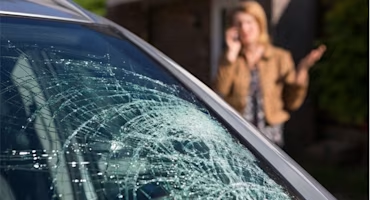
Storm damage is when your car is damaged as a direct result of extreme weather. Storms are typically defined as periods of bad weather with strong winds, often with heavy falls of rain, snow, or hail – though these on their own could also be classed as storms.
💡 Top tip: During a storm, try to park your car away from trees and ideally in a garage to protect it from water or hail damage.
How to drive safely in a storm
Check your tyres: Make sure they are correctly inflated and have plenty of tread. Replace worn or damaged tyres before driving in severe weather
Check your wipers: Make sure blades are in good condition and your screenwash is topped up so you can keep your windscreen clear
Use your lights: Turn on dipped headlights when visibility is poor and use fog lights only when visibility is seriously reduced
Take it slowly: Reduce your speed and leave a bigger gap between you and the vehicle in front
Keep control: Avoid sudden braking, steering or acceleration, particularly in strong winds or standing water
Watch for hazards: Be alert for fallen branches, flooding, debris and sudden gusts, and avoid driving through deep or fast-moving floodwater
Will I be covered if my car is hit by an object?
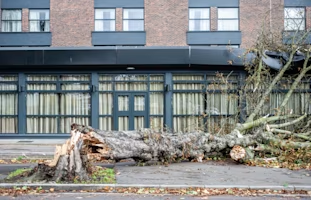
A fully comprehensive policy should cover you if your car is damaged from flying or falling debris, such as a roof tile or a tree. Make sure you don’t remove the debris until you have photographic evidence of the damage, or when your insurer tells you it’s fine to do so.
If your car is damaged by a larger object, such as a fallen tree, seek professional help to get it removed properly to prevent any further damage or accidents.
What about flood damage?
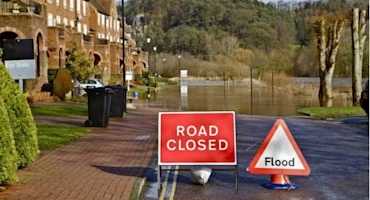
Comprehensive car insurance will usually cover flood damage to your car, including damage to the upholstery and in-car entertainment system, although the exact cover depends on your policy. Personal belongings left inside the car may not be covered, so check your policy documents for exclusions and limits.
Flood water can cause serious damage, affecting the engine, electrical systems and interior, as well as leading to rust. If you suspect your car has suffered flood damage, do not start the engine, as this could make the damage worse. Arrange for a professional to inspect the vehicle and contact your insurer as soon as possible.
Be aware that some insurers may refuse a claim if you deliberately drive through flood water when it is unsafe to do so. This could be considered avoidable damage, particularly if you ignored warnings or drove through a road that was clearly flooded. Never risk driving through flood water – it can be deeper or faster-moving than it appears.
How do I claim for storm damage to my car?
If your car has been damaged after a storm and you wish to claim on your insurance, then contact your insurer as soon as possible after the storm has occurred. Make sure you have your policy number to hand.
Insurance companies will usually ask you for the details of the damage and it can be helpful to show photos of the damage to your vehicle, both inside and out. If it’s valid, you may also want to ask your insurer about getting any temporary repairs to stop the damage from worsening, but make sure they are happy for you to proceed. Otherwise, you may invalidate your claim.
📣 Did you know? According to the insurer Ageas, the South East of England has the highest proportion of claims involving trees falling on cars, accounting for approximately 21%[1] of claims recorded between 2020 and 2025.
Will claiming for storm damage increase my car insurance costs?
Yes, claiming for storm damage could increase your car insurance premium or affect your no-claims bonus, although this will depend on your insurer and policy. Some insurers offer no-claims bonus protection for certain claims, so check your policy documents to see whether this applies to storm damage.
You may also have to pay the policy excess – the amount you contribute towards the cost of a claim. If the damage is relatively minor, it’s worth weighing up the cost of repairs against the excess you would pay and the potential impact on your future premiums.
Storm damage is often treated as an at-fault claim because the insurer cannot recover the costs from another driver responsible for the incident. Even if the damage was caused by an unavoidable weather event, making a claim could still affect your insurance costs at renewal.
Does car insurance cover Acts of God in the UK?
Some insurance companies will cover ‘Acts of God’ which generally relate to unexpected weather events such as hurricanes, earthquakes or extremely bad weather. The actual term is less common now, and usually insurance companies will list out exactly what is and isn’t covered. You may be covered for damage related to strong winds or falling trees, for example, but claims related to heavy rainfall or hailstones could be excluded.
That’s why it’s important to check the details to see what you can claim for.
Where can I buy car insurance with storm damage cover?
You can compare car insurance quotes on MoneySuperMarket in a matter of minutes. Simply pop in a few details about yourself and your vehicle; once you’ve found the right deal, you can apply directly to the provider in just a couple of clicks. If you want to ensure your car is covered for storm damage, look at fully comprehensive policies, and if you require further information, contact the provider before buying your policy.
Author
Emma Lunn
Personal finance expert
Emma has written about personal finance for almost 20 years, with a career spanning several recessions and their inevitable consequences. Emma’s main focus is helping people learn to manage their...

Reviewer
Beth Leslie
Senior Insurance Content Editor
Beth is an experienced writer and editor who specialises in financial and economic content. She is currently the Senior Insurance Content Editor for MoneySuperMarket. Beth is passionate about making...