9 boiler maintenance tips that can help save you money

Key takeaways
Regular boiler maintenance is crucial for safety and financial well-being, preventing costly repairs and dangerous situations.
An annual service by a Gas Safe-registered engineer is essential to ensure all parts are functioning correctly and to catch potential issues early.
Regular checks for warning signs, maintaining proper ventilation, insulating external pipes, and using a carbon monoxide detector are vital for safe boiler operation.

Why do I need to maintain my boiler?
When it comes to household maintenance, your boiler might not always be at the forefront of your mind, but it should be. The importance of boiler maintenance extends far beyond just ensuring you have hot water and a cosy home; it's about safety and financial well-being. Regular maintenance is not only cost-effective, but it can also prevent life-threatening situations. Neglecting the care of your boiler can lead to dire consequences, yet simple steps can ensure its efficient and safe operation.
The benefits of a well-maintained boiler are twofold: safety and financial savings. An efficient boiler doesn't just keep you warm; it reduces your energy bills and your carbon footprint. To help you maintain your boiler, MoneySuperMarket provides a range of boiler cover policies that can keep your boiler running smoothly and safely.
9 tips for maintaining a boiler
1. Book an annual service
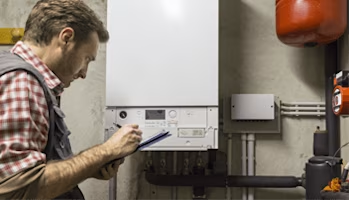
Your boiler should be serviced once a year by an engineer listed on the Gas Safe Register, even if it seems to be in working order. The engineer will usually check all the parts and clean the components, ensuring everything is functioning as it should. This annual check-up is crucial for catching any potential issues before they escalate into costly repairs or dangerous situations.
It's advisable to schedule your boiler servicing before the winter months roll in. This proactive approach prevents the inconvenience and discomfort of a boiler breakdown during the coldest time of the year when you need it the most.
2. Turn the heating on
It might seem counterintuitive, but running the heating for 10-15 minutes occasionally during the summer can prevent your boiler from seizing up. This keeps the boiler active and helps to avoid issues that might arise from long periods of inactivity.
3. Regularly check the pressure
Boilers can lose pressure over time, which leads to inefficiency and poor performance. It's essential to regularly check the pressure gauge and adjust it as necessary. Maintaining the correct pressure is key to improving your boiler's performance and ensuring it operates at its best.
4. Bleed the radiators
If you've noticed that your radiators are colder at the bottom than at the top, it's likely that air has become trapped inside them. Bleeding the radiators is a simple maintenance task that maintains efficiency and reduces the strain on your boiler.
To bleed your radiators, you'll need to turn off the heating and use a radiator key to release the trapped air. After bleeding the radiators, you might need to re-pressurise your boiler. This is a task that homeowners can do themselves and it significantly improves the heating performance of your system.
5. Know the warning signs
Regular checks of your boiler can reveal warning signs that shouldn't be ignored. Leaks, cracks, unusual noises, and sooty marks are all indicators that something isn't right. Addressing these issues promptly can prevent further damage and mitigate safety risks. Additionally, ensure that external vents are clear to maintain proper ventilation.
In cases where your boiler is experiencing irreparable problems, it may be necessary to invest in a new boiler. While this might seem like a significant upfront cost, new boilers can offer long-term savings and enhanced safety benefits.
6. Look for the blue flame
A healthy boiler will have a blue flame. If you notice a yellow or smoky flame, this could indicate the presence of carbon monoxide, a dangerous gas that requires immediate attention from a Gas Safe-registered engineer.
7. Clear any clutter around your boiler
Boilers need adequate ventilation to operate safely and efficiently. It's important to keep the area around your boiler tidy and accessible, not just for maintenance or repairs, but also because a cluttered space can be a fire hazard and impede proper ventilation.
8. Lag the pipes
External condensate pipes are susceptible to freezing, which can cause your boiler to shut down. Insulating these pipes or keeping your heating on a low setting can prevent freezing. If a pipe does freeze, pouring warm water over it can thaw it out, but prevention is always the better strategy.
9. Install a carbon monoxide alarm
Carbon monoxide from faulty boilers is a silent killer, undetectable by human senses. It's imperative to have a carbon monoxide detector with an alarm in your home, and you should put it near the boiler and check it every month to make sure it’s working. Our guide on How to be Gas Safe goes into more detail on protecting your home from carbon monoxide.
The carbon monoxide detector is a critical safety device that should be checked monthly. This simple check can be a lifesaver.
Regular boiler maintenance might seem like a chore, but it's a small investment for significant safety, efficiency, and cost savings. By following these tips and watching for warning signs, you can ensure the reliability of your boiler. Proper care of your boiler is not just about saving money—it can be lifesaving.
Sometimes, despite our best efforts, problems with boilers cannot be fixed, and a new boiler becomes necessary. When that time comes, remember that the investment in a new, efficient boiler can continue to provide safety and savings for years to come. In some instances, the problem can't be fixed – in which case, you should get a boiler replacement.
Author
Ashton Berkhauer
General Manager • Commercial
Currently the General Manager for Home Services and Mortgages, Ashton observes the markets and, along with his team, strives to get the best possible solutions for consumers. The products within his...