The true cost of Christmas: How much are UK families expected to spend?

Reviewed by
Alicia Hempsted
Updated: 16 Sep 2026
Research from MoneySuperMarket estimates that UK households will spend an average of £1,681.12 on Christmas this year – more than half of the estimated average monthly UK household income – but a little early planning could go a long way.
Key takeaways
UK households are expected to spend an average of £1,681 on Christmas, equivalent to more than half of the average monthly household income.
Food, drink, gifts, energy bills and often-overlooked extras such as wrapping paper, batteries and tech protection all contribute significantly to festive costs.
MoneySuperMarket expert Kara Gammell recommends budgeting early, shopping strategically, using rewards schemes, and automating savings to reduce financial stress.
The 100-day countdown to Christmas is officially underway, but for many households, so is the worry about how they’ll pay for it.
Research from MoneySuperMarket* estimates that UK households will spend an average of £1,681.12 on Christmas this year. That is equivalent to more than half (54%) of the estimated average monthly UK household income.1
The hefty sum includes £144.43 on groceries, £76.85 on festive drinks and £80.58 on travel expenses, showing how the cost of Christmas quickly adds up long before December 25th.
With household budgets already under pressure, consumers are searching for ways to make Christmas more affordable.. Google searches for “how to afford Christmas” have increased by 261% year on year2, highlighting the financial concerns households may have as the festive season approaches.
Christmas spending broken down
MoneySuperMarket’s 2026 Christmas Shopping List breaks down the projected seasonal spend across everything from gifts and groceries to energy bills, insurance and pet care.
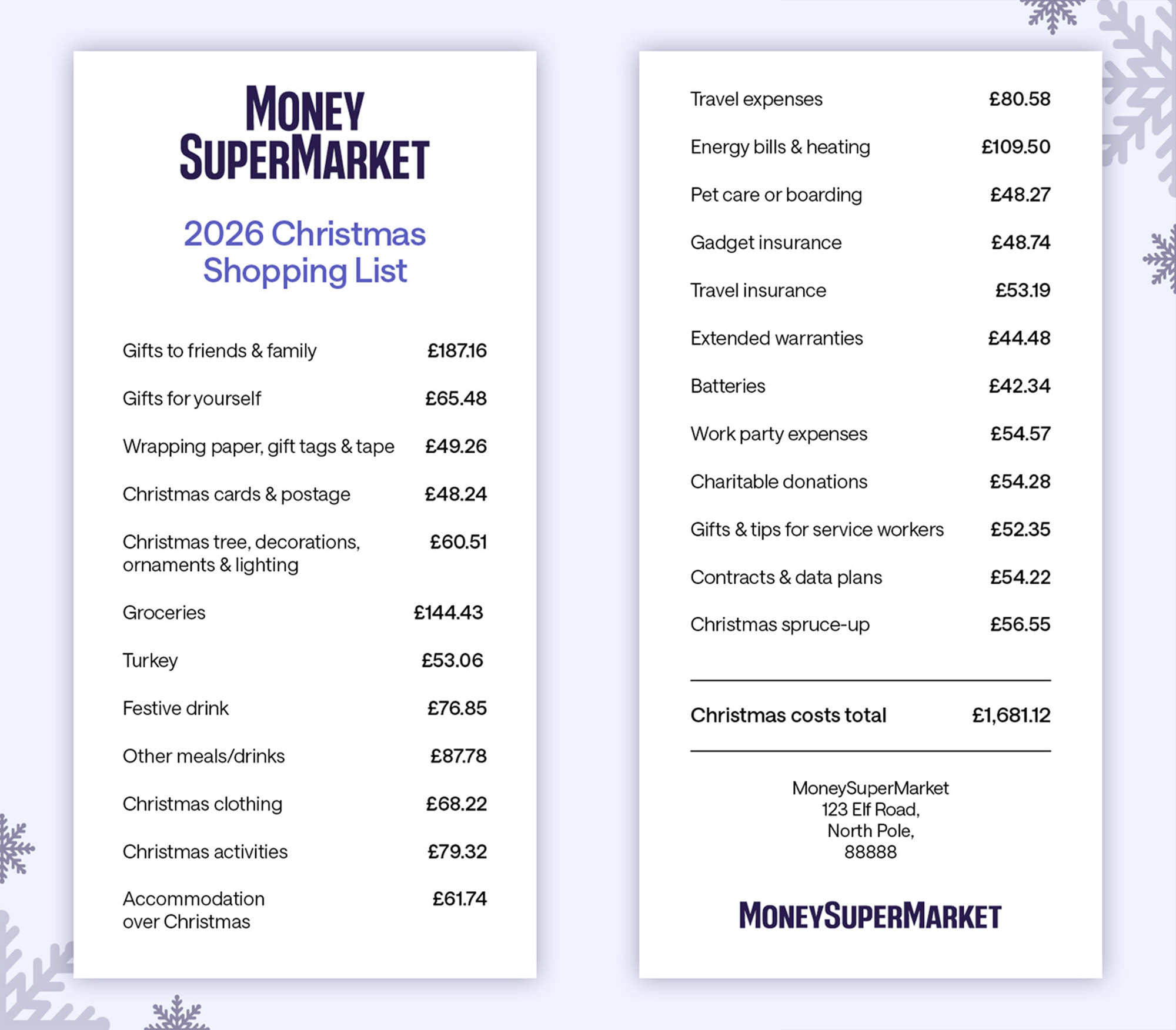
Gifting remains a major part of Christmas spending, with UK households expected to spend an average of £187.16 on presents for family and friends. But it’s not just about giving, many are also planning to treat themselves too, budgeting £65.48 on self-gifting.
Households are also setting aside an average of £54.28 for charitable donations and £52.35 for tips, according to the analysis.

The true cost of hosting
Hosting over the festive season can add significantly to household costs. With groceries (£144.43), turkey (£53.06), meals and drinks (£87.78), and festive tipples (£76.85) all on the menu for most households, Brits are expected to splash out over £360 on food and drink alone.
The research also flags rising pressure on energy costs, with the average household expecting to spend £109.50 just to keep their home warm and well-lit over the Christmas period.
The small costs that quickly add up
When it comes to festive budgeting, it’s often easy to overlook the smaller spends that quietly stack up. With batteries (£42.34), wrapping paper and gift tags (£49.26), plus cards and postage (£48.24) all in the mix, Brits are facing spending an extra £134.78 on essentials that rarely get planned for.
Technology-related costs also form part of the projected Christmas bill and the costs don’t end at checkout. Households are reportedly budgeting £48.74 for gadget insurance, £54.22 for data plans, and £44.48 for extended warranties, showing how tech protection is quietly inflating festive spend.

Kara Gammell
Personal Finance & Insurance Expert
Personal Finance & Insurance Expert
Why now Is the smartest time to start saving
While Christmas might still feel like a distant date on the calendar, by starting early, you can spread the cost, protect your credit score and avoid the pre-Christmas panic that can leave budgets spiralling long after the festive season has ended.
Kara's top tips to prepare for the cost of Christmas
1. Make a plan
Use the 100-day countdown as a chance to set aside time to create a clear budget ahead of the festive season. This can help you stay in control of your spending when the festivities roll around, while highlighting areas where you may need to cut back.
By setting a clear budget for what you want to spend on gifts for friends and family, you can go shopping with that figure in mind, helping you avoid panic buying or spending more than you can afford.
Planning early also means you may want to suggest spending limits to others like gifts or festive nights with friends - something they’ll probably thank you for too.
2. Set a 100-day bargain challenge
In September you can often find some great end-of-summer bargains on things like clothes and homeware.
Keeping a list of who you need to buy for along with a budget for each person means you can snap up a gift when you spot a good deal, rather than waiting until the last minute when you have less time to bargain hunt.
Not only could this help save you money, it also takes the pressure out of last-minute Christmas shopping.
You could go one step further and make it fun by creating a Christmas budget bingo. Ticking off little wins such as, “found a gift under £10”, “used a voucher”, or “skipped a takeaway” is a great way to celebrate the small wins that can quickly add up.
3. Check for VAT-free alternatives
Small changes in where you shop within the store could help cut costs. Some foods, such as dried fruit or plain nuts sold for baking, may be VAT-free, while similar products marketed as snacks can attract VAT. Comparing like-for-like items across different aisles could help you pay less for essentially the same product.
4. Save with SuperSaveClub and loyalty rewards
If you're planning your Christmas shopping early, it's worth making the most of any rewards and loyalty schemes available to you.
MoneySuperMarket's SuperSaveClub offers members access to rewards and perks like free days out and cashback on spending at brands like Just Eat, eBay and Argos, while supermarket loyalty cards can unlock member-only prices, personalised discounts and money-off vouchers.
Combining these savings opportunities with a shopping list and a clear budget can help keep festive spending under control and make your money go further.
5. Automate Your Savings and Stay in Control
Setting up a standing order to transfer money into a savings account on payday ensures that you’re prioritising your financial goals before discretionary spending kicks in.
Some bank accounts even offer round-up features that automatically save spare change from everyday purchases.
If your current bank doesn’t offer this feature, consider switching to one that does - some providers offer cash bonuses of as much as £240 for new customers.
Methodology
* The cost of Christmas 2026 was predicted using the Bank Of England Inflation Calculator to estimate how much the average cost a UK household spent on Christmas 2024 would increase for 2026. The cost of Christmas 2024 was determined by a Censuswide survey of 1500 adults.
Sources
1. According to the Department for Work and Pensions (DWP) UK household net disposable income in 2025 was approximately £3,115 per month. With the research from MoneySuperMarket revealing that UK families will spend an average of £1,681.12 on Christmas in 2026, the festive period could account for over half (54%) of the average household’s monthly income.
2. Google trends data, retrieved and accurate as of 2.09.2026
Reviewer
Alicia Hempsted
Insurance Expert
Alicia is MoneySuperMarket's editorial content manager and deputy spokesperson. She specialises in insurance and personal finance, with a background in copywriting, digital marketing, and insurance...