Ten tips to weather-proof your home for autumn

Written by
Kara Gammell

Reviewed by
Alicia Hempsted
Updated: 10 Sep 2025
The Met Office is predicting a wet and windy start to September. To help you prepare, insurance expert Kara Gammell shares ten tips to weather-proof your home.
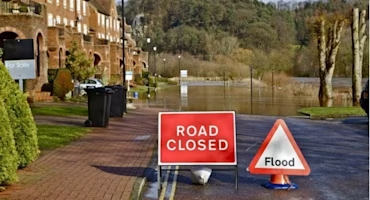
1 in 5 UK homes now at risk of flooding in the UK
A common misconception is that your home is only at risk from flooding if you live beside the water, when in fact, a quarter of flooding occurs in areas that are formally designated as being outside of flood risk zones.
Figures suggest that there are 6.3 million properties at risk of flooding in the UK.1 With the average cost of flooding to a home estimated at around £30,000, if you don’t have insurance, the financial cost could be life changing.2
Kara’s top 10 tips to prepare your home for Autumn:
Clear the way: remove fallen leaves, moss, and debris to prevent blockages that can lead to water damage and a potential denied claim, due to lack of maintenance.
Garden gnome test: If your garden gnome topples over in a light breeze, consider it a warning. Secure furniture, trampolines and plant pots that could be blown away by winds or damaged by rain.
Check your insurance: make sure your policy is up to date, ensuring your cover aligns with your current possessions and their value.
Get snappy: snap photos of your home and garden now, while they’re in good condition. It can act as proof against weather-related disputes later.
Look for signs of damp or leaks: inspect ceilings, walls and loft spaces for early signs of water ingress. Fixing small problems now can prevent bigger damage later.
The toilet roll draft detector: hold a strip of loo roll near windows and doors. If it flutters, you’ve got a drought. Filling air gaps not only keeps you warm, it can also ward off damp and mould.
Radiator rattle routine: tap your radiators with a spoon before firing up the heating, as strange gurgles may mean there is trapped air or sludge. A simple bleed now, saves you from frozen pipes or leaks later.
The kettle steam test: boil a kettle in a closed room. If condensation clings immediately to windows, you need better ventilation. Poor airflow can lead to mould - and insurers may deny a claim for something seen as preventable.
Keep records: keep a simple home maintenance diary - anything from scribbles on a wall calendar to a notes app will do. It shows you’ve taken steps to maintain your property.”
Keep an eye on weather warnings: sign up for local alerts and Met Office warnings, so you can prepare in advance for severe weather.

How much flood risks could add to your premium
MoneySuperMarket data shows that home insurance premiums have increased by 4% (£23) in the last year for those living more than 400m away from water and 12% (£38)3 for those nearby, so if you’re looking for home insurance, make sure you compare policies to find the right cover at the best value for your home.
While flood insurance is included in most home insurance policies, it can increase the cost of your policy if your home is judged to be at a high risk of flooding. Flood Re is a government-backed insurance scheme set up to help people in high-risk flood areas obtain more affordable home insurance.
Sources
1. Calculation: ONS data estimates that there are 28.4 million homes in the UK. The Climate Change Committee report (CCC) indicates 6.3 million homes are at risk which equates to 1 in 5 households.
2. GovUK: Flood Action Week 2023
3. Based on home insurance policies sold through MoneySuperMarket between January and August 2025
Author
Kara Gammell
Personal Finance & Insurance Expert
Kara Gammell is an award-winning financial journalist with nearly two decades of experience writing for national newspapers and magazines such as the Daily Telegraph, the Sunday Times, Good...

Reviewer
Alicia Hempsted
Insurance Expert
Alicia is MoneySuperMarket's editorial content manager. She specialises in insurance, with a background in copywriting, digital marketing, and insurance advice. Since joining MoneySuperMarket in...