

Theft
✔ Covers you if your electric two-wheeler is stolen, so you can get a replacement.
📌 For example, you might lock your e-bike outside the station, but despite using a heavy-duty lock, it’s stolen. Insurance can cover the cost of a new bike.
There are three main types of e-bikes:
An e-bike (short for electric bicycle) is a bicycle that has an integrated electric motor to assist with pedalling or, in some cases, provide power without pedalling.
In the UK, e-bikes are officially called “electrically assisted pedal cycles” (EAPCs) and are legally treated as standard bicycles if they meet certain rules – for example, the motor must not provide assistance above 15.5 mph (25 km/h), and the motor’s maximum continuous power output must not exceed 250 watts.
The motor only activates when the rider pedals, providing a natural cycling feel.
Assistance levels can usually be adjusted (eco, normal, high power), allowing the rider to balance effort with battery use.
Uses a throttle on the handlebar to engage the motor without the rider needing to pedal.
In the UK, only older models with type approval are road-legal; new throttle-only bikes are generally classed as mopeds and must be registered, insured, and taxed.
Provides assistance up to 28 mph (45 km/h).
Legally considered mopeds in the UK, requiring registration, insurance, a helmet, and a licence.
This can be mounted in the hub (front or rear wheel) or mid-drive (near the pedals).
Usually lithium-ion, mounted on the down tube, rear rack, or integrated into the frame. The battery capacity will affect the bike’s range – typically 25 to 100 miles depending on terrain, assist level, and rider input.
This includes sensors, a display, and electronic controls.
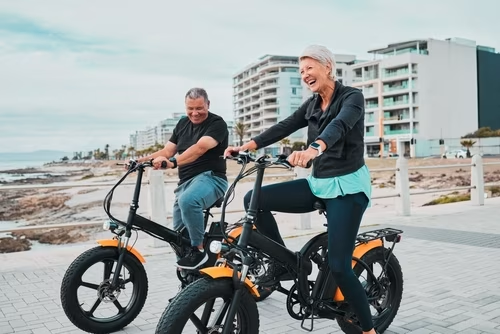
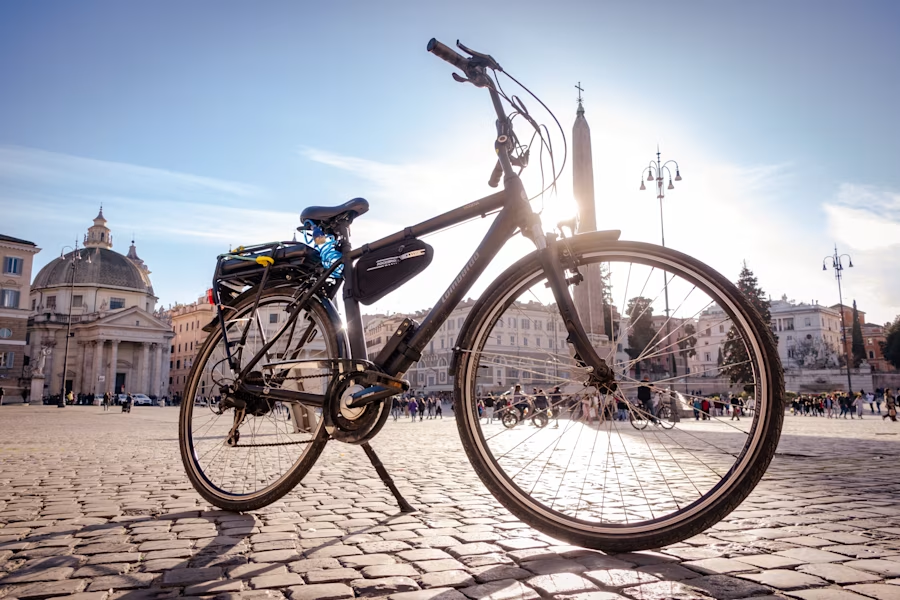
If your e-bike can reach 15.5mph, it could be classed as a moped. E-bikes must comply with the electrically assisted pedal cycles – EAPC – (Amendment) Regulations 2015. This states that they must have:
Pedals capable of propelling the bike
A max power that doesn’t exceed 250W
A max speed, with power assistance, of 15.5mph: you can go faster, but only under your own pedal power
If your bike is classed as a moped, then you’ll have to pay tax on it and take a compulsory basic training (CBT) course. Mopeds are required to have insurance by law, so you’d have to pay for that too.
It’s not compulsory to insure an e-bike in the UK, but policies covering theft, damage, injury, and personal liability can give valuable protection.
Theft insurance covers the cost of replacing your e-bike if it’s stolen from your home, workplace, or a secure location.
Accidental damage protects against repair or replacement costs if your e-bike is damaged in a crash, fall, or vandalism.
Personal injury provides financial cover if you are injured while riding, helping with medical expenses or loss of income.
Third-party liability covers you if you cause injury to someone else or damage their property while riding.
E-bikes also come with fire safety and battery risks
E-bike battery safety is an increasing concern. In 2024, the Office for Product Safety and Standards (OPSS) received reports of 211 fires involving e-bikes or e-scooters, with 175 of these incidents were reported by the London Fire Brigade.
The OPSS has also issued warnings about dangerous batteries in circulation.
Because of these risks, some insurers also offer battery fire and replacement cover, or require proof that your e-bike battery meets UK safety standards.
Cover for e-bikes under standard home insurance is often limited and can leave gaps.
Many contents policies will cover your e-bike if it’s stolen from inside your home or a locked outbuilding/garage.
However, high-value bikes may need to be listed separately as “specified items” to be fully covered.
Standard policies rarely include cover if you damage the bike while riding – you usually need to add optional “accidental damage” cover, and even then it may not apply to e-bikes.
Some policies extend cover if your e-bike is stolen outside your property, but this often has certain stipulations such as the bike being locked with an approved lock, and proof of secure storage if left unattended for longer periods.
With the rise in e-bike battery fires, some insurers may exclude or restrict cover for damaged batteries.
Specialist e-bike insurance can offer more comprehensive protection covering real-world risks like theft on the street, crashes, and liability.
There are pros and cons to this specialist cover:
Pros:
✔ Covers theft both at home and in public places, provided you use an approved lock.
✔ Includes accidental damage while riding, collisions, and vandalism.
✔ Offers personal injury and third-party liability cover, which home insurance rarely does.
✔ Some policies also cover battery replacement, roadside assistance, and international travel.
Cons:
✖️ Additional monthly/annual cost compared to relying on home insurance.
✖️ May still have excess charges and security requirements (e.g., specific lock standards).
An annual e-bike insurance policy is usually paid monthly or annually, with annual payments often working out cheaper.
Report theft or damage to your insurer (police crime number needed for theft).
Provide documents like proof of purchase, lock/security details, and repair quotes.
Insurer may cover repairs, replace the bike, or pay out its value.
Comprehensive – covers theft, damage, personal injury, and third-party liability, plus extras like battery or roadside cover.
Basic cover – cheaper, but usually theft and damage only.
Personal injury and liability – protects you if you’re injured or cause harm to others; sometimes included, sometimes separate.
Theft (home & away): Essential for high-value e-bikes – check if the policy requires an approved lock and secure storage.
Accidental damage: Covers crashes, falls, and vandalism, not just theft.
Battery cover: Some policies replace or repair faulty/damaged batteries – useful given fire risks and high replacement costs.
Personal injury: Pays out if you’re injured while riding, helping with medical bills or lost income.
Third-party liability: Protects you if you injure someone or damage property while riding.
Overseas cover: Handy if you take your e-bike on holiday or cycle abroad.
Accessories cover: For expensive kit like helmets, lights, panniers, or GPS devices.
Roadside assistance: Recovery service if your e-bike breaks down away from home.
Improper security: Claims may be rejected if the bike wasn’t locked with an insurer-approved lock or left in an unsecured place.
Wear and tear: Standard battery ageing or tyre wear isn’t covered.
Racing/competition use: Most policies exclude organised racing or stunt riding.
Value limits: Some insurers cap payouts unless the bike is listed as a “specified item.”
Unapproved modifications: Altering the motor or battery beyond UK legal limits can void cover.
E-bike insurance can provide cover for the following:
✔ Covers you if your electric two-wheeler is stolen, so you can get a replacement.
📌 For example, you might lock your e-bike outside the station, but despite using a heavy-duty lock, it’s stolen. Insurance can cover the cost of a new bike.

✔ Covers the cost of replacing your bike or repairing any damage caused by vandalism.
📌 For example, you hit a pothole on your commute, damaging your wheel and battery, or return to find your e-bike kicked over and scratched. Insurance helps with repair or replacement.

✔ If you accidentally injure someone or cause damage while on your e-bike, you’re covered.
📌 For example, you clip a pedestrian when swerving to avoid traffic, or your e-bike rolls into a parked car and dents the door. Liability cover takes care of their claim against you.

✔ Pays a lump sum if you suffer a serious accident or injury while riding your e-bike.
📌 For example, you’re knocked off your e-bike and suffer a broken leg that keeps you off work for months. Personal accident cover provides financial support during recovery.
🚩 E-bike insurance policies also give you the option to add various optional extras – but you should watch out for policy exclusions.
Most e-bike insurance policies include core cover – things like theft, accidental damage, third-party liability, and personal accident protection. Beyond that, insurers often offer optional extras that you can tailor to your needs.
👇 The following list compares core cover and extras.
Theft – covers your e-bike if stolen
Accidental damage – repairs or replaces your bike after an accident or vandalism
Third-party liability – covers injury or property damage caused to others
Personal accident – lump sum if you suffer a serious injury
Overseas cover
Cycle hire cover
Roadside assistance
Legal expenses cover
Competition cover
Accessories cover
Battery cover
Clothing cover
Peace of mind when taking your e-bike abroad
Keeps you riding while yours is being repaired/replaced
Gets you and your e-bike home if it breaks down mid-ride
Helps cover costs if you need to make or defend a claim
Protection if you use your e-bike in events or organised rides
Insures panniers, lights, GPS units, child seats, etc.
Covers expensive battery replacements or failures
Protects cycling kit damaged in an accident
If you’ve taken out e-bike insurance, make sure you know the policy exclusions to prevent voiding your cover or the rejection of a claim.
🚩 The most common exclusions are:
If you use your bike for monetary gain, such as being a cycle courier
Any loss where you cannot prove you own the bike, so be sure to keep the receipt
Such as scratches and dents that don’t affect how the bike rides
Damage to things like GPS or lights may not be covered unless you take out additional cover
Theft of your bike when you have not secured your bike properly
Any accidents that may happen under the influence of drugs or alcohol
The cost of insuring an e-bike in the UK depends on several factors:

Living in areas with higher theft rates or urban centres can increase premiums because insurers see a higher risk of your bike being stolen.

Expensive or high-end e-bikes cost more to replace, so premiums rise accordingly.

Using your e-bike in racing or events increases risk, which can increase premiums or require special coverage.

Younger or less experienced riders may face higher premiums due to perceived higher accident risk.

Using approved locks and storing your bike securely can lower your premium.

Previous claims may indicate higher risk and lead to increased costs.

Basic theft/damage cover is cheaper, while comprehensive policies with personal accident, liability, and battery cover cost more.
E-bike insurance tends to cost more than standard push-bike cover due to several factors:
E-bikes are particularly attractive to thieves because of their value and portability.
The Crime Survey for England & Wales (year ending March 2024) reports 66,960 bicycle thefts in 2023/24, up from previous years, although this figure includes all bike types.
In London alone, around 20,000 bikes are stolen each year, highlighting the higher risk in urban areas.
Standard e-bikes start at around £1,000, but premium models can cost £10,000 or more.
This makes insurance more expensive because insurers must factor in the potential payout for theft or damage.
E-bikes contain costly components such as motors and batteries.
A replacement motor can cost up to £300, while a replacement battery may run as much as £800, adding to repair and replacement costs.
Urban postcode or high-crime area, competitive use, and the rider’s claim history can further increase premiums.
Security measures, age of the rider, and the level of coverage chosen (basic vs. comprehensive) also influence costs.
The level of protection your e-bike insurance policy provides varies between insurers and their products, but you’ll generally be able to find cheaper cover if you:

Compare deals from various insurers to find the best option for you

Secure your bike with a sturdy lock and preferably in a locked garage or shed

If you can afford to, paying a higher excess can reduce the price of your premium
We compare quotes from e-bike insurers such as:








With e-bike theft on the rise, it’s worth considering whether you could afford to replace or repair your bike if it were stolen or damaged. If not, an electric bike insurance policy can cover these costs.
Recent data shows that the average settled claim for theft between August 2023 and August 2024 was £4,803.66—far higher than the average annual contents insurance premium of £72.37
^ . This highlights how expensive e-bikes can be to replace without dedicated cover.It’s a good idea to compare a standalone e-bike policy with adding your bike to your existing home insurance to see which option is more cost-effective. As always, check the terms and conditions carefully so you understand exactly what is and isn’t covered before committing to a policy.
Emma Lunn Personal finance expert
You can also add additional cover to your E-bike insurance for extra protection, such as:

Covers your electric bike if it were to break down when you're out and about

Covers things like GPS or lights that could get lost, stolen, damaged or vandalised

Covers you if you choose to cycle on roads in countries other than the UK

Covers accidents that damage property, or if you injure another person while you're riding your bike
Provides a cash pay-out to you or your family if you were to fall off or get injured or die while riding your bike
Can help with the cost of legal support to recover losses incurred in an accident where the other party was uninsured or at fault
Ensures that if your bike is stolen, you can claim the cost of a replacement. Also provides cover for stolen parts
MoneySuperMarket has won the Feefo Platinum Trusted Service Award, an independent seal of excellence, which recognises businesses that consistently deliver a world-class customer experience.

You can. And it's a very good idea to get specialist electric bicycle cover, especially if you rely on your e-bike for your commute or you've got an expensive model. And remember: while home contents insurance will likely provide some cover your bike in the event of theft, it's unlikely to cover you if your bicycle is stolen away from your home.
When you're parking any type of bike, it's important that you leave it a secure location, lock it up (best practice is to use multiple locks) and consider getting a bike alarm. With e-bikes, it's also a good idea to take your battery with you.
Yes, you can. There's no need for a licence to ride an e-bike in the UK. You only need to be over 14 and own or use a bike that complies with regulations.
There's also no obligation for you register, tax or insure an e-bike.
If you're banned from driving, you're still legally permitted to ride an electric bicycle. That's because an electric bike is classified as a bicycle and there's no requirement to hold a licence to ride one.
Insurance is available for electric mountain bikes. If you're worried about accidents or injury, you may want to add extra cover for these.
Yes – storing your e-bike indoors can often lower your insurance premium.
Insurers see secure storage as a key factor in reducing risk: a bike kept inside a locked home, garage, or shed is less likely to be stolen than one left outside, even if chained. Because the likelihood of a claim is lower, insurers may reward this with a reduced premium.
Yes – but coverage for batteries and motors can vary depending on the policy:
Always check the policy wording to confirm if partial damage to a battery or motor is covered, and whether fire or electrical failure is included. Some insurers also have rules about charging and storage, which can affect claims.
Generally, standard e-bike insurance does not cover use for work.
Riding your e-bike as part of a job where you earn money, such as being a cycle courier or food delivery rider, is usually excluded from personal insurance policies.
Insurers consider this higher risk, as the bike is being used more frequently and in busier environments, increasing the chance of theft or accidents.
Some insurers offer specialist business or commercial e-bike policies that cover professional use.
We get paid by the companies we work with, but the payment we get doesn’t have any bearing on the information we provide. We get paid in different ways, depending on the type of product or service you buy through us. Our goal is to search deals from as wide a range of companies as possible, but we only show results from our partner providers.
Our comparison service is, and will always be, free to use.
One of the best ways to get the lowest prices and best deals is to compare quotes from different companies. We do the work for you, comparing quotes side-by-side and giving you all the information you need so you can choose the right deal for your needs and your wallet.
We don’t give recommendations or financial advice, but we give you clear information so you can choose financial products that suit your circumstances.
No, not every company can be included in our service. This is because some companies don’t want their products included on comparison sites, and some decide that they would rather not pay a fee. There are also a few smaller providers who can struggle to cope with the volume of customers that can find their products if they appear on MoneySuperMarket.
Our goal is to search deals from as wide a range of companies as possible so that you can choose the deal that suits you.
Yes, you can earn SuperSaveClub rewards when you buy home insurance through MoneySuperMarket.
This includes:
Up to £15, which you can withdraw as a pre-paid Mastercard or a gift card for brands like Sainsbury's and Amazon.co.uk
Free Days Out pass (worth £180), which gives free entry to a range of UK attractions
Cashback of up to 10% when you spend at brands including eBay, Just Eat and Argos
To earn SuperSaveClub rewards on purchases you must:
Sign up to SuperSaveClub (it's free)
Be signed in to your account when you make the purchase
More information can be found on our SuperSaveClub homepage.
Yes, home insurance is included in our Super Save Price Promise.
If you buy through us then find the same deal for less we will:
refund the difference
give you a gift card worth up to £20
Terms and conditions apply. More information can be found on our Price Promise page.
Reviewed on 3 Apr 2026 by
YouGov Survey 1st July 2024 to 30th June 2025. Net Recommend score derived from “Which of the following online service websites would you recommend to a friend or colleague, or tell them to avoid?” Base: Current Customers of (MoneySuperMarket n=18,382, Compare the Market n=16,802, Go.Compare n=10,162, Confused.com n=8,229, Uswitch n=528).
The annual premium that 51% of our customers paid in February 2026 where the cover type purchased was contentsinsurance.

