

Comprehensive
A comprehensive insurance policy covers damage, repairs, certain medical expenses, fire damage and theft, as well as damage done to someone else, their vehicle or their property
Motorhome insurance is designed to protect you financially if something happens to your motorhome. A comprehensive motorhome insurance policy can help if:
You accidentally injure someone or damage their property while driving your vehicle
You're involved in a collision and need to cover the cost of repairs
Your motorhome is stolen, or damaged during an attempted theft
Your motorhome is broken into and damaged
Your motorhome is damaged by fire

The cost of motorhome insurance is influenced by a wide range of factors:
Details about yourself, such as your age, driving experience, no-claims discount, and job make a major difference to the cost of motorhome insurance
Motorhomes come in many shapes and sizes, and an insurer will consider the make, model and size along with the potential costs of any repairs when working out your premium
Insurers assess every postcode in the country for its level of crime, accident statistics and claim rate
Vehicles parked off the street or in a garage tend to be cheaper to insure, and security features like alarms and immobilisers could help cut insurance costs
Driving more miles each year can bump up your premiums as the risk of an incident increases, but try to estimate accurately, so you don’t risk invalidating your policy
Some insurers may offer lower premiums if you have access to another vehicle for everyday journeys, meaning you use your motorhome less frequently
Adding an additional driver to your policy could affect your premium – an experienced driver with a clean driving history could actually bring it down
The type of policy you choose, from comprehensive, third-party, fire and theft, or third-party only affects your premiums as well as your voluntary excess and add-ons
A comprehensive insurance policy covers damage, repairs, certain medical expenses, fire damage and theft, as well as damage done to someone else, their vehicle or their property

Third-party, fire and theft policies offer cover for other people, their vehicles and their property, as well as protection for your own vehicle if it's stolen or damaged by fire

Third-party only is the least comprehensive level of cover, and the minimum legal requirement you must meet to drive on UK roads. It will only cover injury to someone else or damage to someone else's property
When comparing motorhome insurance quotes, it's important to look at more than just the price. Also consider:
Check whether the policy offers comprehensive, third-party fire and theft, or third-party only insurance.
Compare how much you'll need to pay towards a claim.
See whether your possessions are covered against theft, loss or damage, and check for any limits or exclusions.
If you're planning to travel abroad, check which countries are covered and how long you can stay.
Find out whether roadside assistance and recovery are included or available as optional extras.
Make sure the policy's mileage limit is enough for your planned journeys.
Check whether you can add features such as windscreen cover, legal expenses cover or protection for awnings and other equipment.
Read the policy terms carefully to understand what isn't covered, including any restrictions on how you use or store your motorhome.
If your motorhome is stolen or written off, your insurer will usually pay the motorhome's market value immediately before the incident, minus your excess. However, some policies offer new-for-old replacement, where your motorhome is replaced with a brand-new equivalent, or agreed-value cover, where you receive an amount agreed with your insurer when you took out the policy.
If you're still paying off your motorhome, the insurance settlement may go towards your outstanding finance first.
Always check your policy to understand what's covered and how your settlement will be calculated.
Yes, how you use your motorhome affects your risk profile, which is why insurers need to know this information when giving you a quote. You may be asked to choose between the following usage types:
SD&P cover allows you to use your motorhome for day-to-day driving like shopping trips, visiting friends and journeys not related to work
This covers you for everything SD&P does and also for your journey to a single place of work.
This covers work journeys beyond a daily commute, including driving to different work sites, visits to clients and other business activity
Common exclusions and restrictions to motorhome cover include:
Some insurers will cover your motorhome for trips out of the British Isles, but others may charge extra to add this on or limit the level of cover. Always check with your insurer before you travel
Most insurance policies have standard wear-and-tear clauses, so you can't claim for damage to your motorhome or its interior that's the result of everyday use, ageing, or deterioration
Motorhome insurance usually won't cover the cost of fixing mechanical or electrical problems, unless caused by something your policy covers, such as an accident or fire
You’ll generally need to pay for separate breakdown cover if you want roadside repairs and recovery
Motorhome insurance may not cover damage caused by pests, insects, or rodents. However, some insurers may cover certain types of accidental damage caused by animals, so read your policy documents
Most motorhome insurance will generally not cover you if you live in the vehicle all the time. If you plan to use your motorhome as your main home as you may need specialist insurance
You won't be able to claim for theft or loss if the vehicle or its contents are stolen if you left it unlocked, with a window open, or with the keys in the ignition

It is a legal requirement to insure your motorhome – much like any other vehicle on the road – but standard car or van insurance won't cover it. You need a specialist motorhome insurance policy to cover a motorhome if you haven't declared it off the road. You also need to declare to your insurance company if you use your motorhome for business, otherwise you may invalidate your cover.
Sara Newell Motor & Home Insurance Expert
No, motorhomes cannot usually be insured with a van insurance policy. Motorhomes and vans serve very different purposes, so each of them needs their own insurance. Van insurance policies have a choice of add-ons and policy types that are specific to vans, such as haulage cover, courier cover, or fleet cover for businesses.
If you've converted a van into a campervan, you'll need to tell your insurer about the modifications. Standard van insurance may no longer provide suitable cover, so you might need specialist campervan insurance to protect the vehicle and its fitted living equipment.
Motorhomes are also distinct from caravans, which do not legally require separate insurance. Because motorhomes can travel without being towed, they are classed as road vehicles and are legally required to be insured on UK roads. Caravans don't generally need a separate caravan insurance policy, although it cannot protect against risks such as theft, accidental damage and fire.

Paying annually for your motorhome insurance can work out cheaper than paying by monthly instalments

If you avoid making claims on your motorhome insurance, you may be able to build up a no-claims discount over time, which could help reduce your premiums

Upgrading your alarm system and adding a tracking device could give insurers more confidence that your vehicle won’t be stolen

Driving fewer miles may reduce your premium slightly, but you must be honest with your insurer about how many miles you really drive

Premiums may reduce if your vehicle is stored in a locked garage or kept on a Caravan Storage Site Owners’ Association (CASSOA) registered site

Taking an advanced driving course could demonstrate to your insurer that you’re a safe driver and you may be offered a lower premium as a result, although this isn’t guaranteed

Some motorhome owners’ clubs may have partnerships with specialist insurers who offer discounts to members

By comparing motorhome insurance quotes with MoneySuperMarket, you can find the best value policy to suit your needs
We’re here to help you find motorhome insurance quotes effortlessly.

Pop in a few details about yourself, your motorhome, and any extra cover that you might need

We’ll scour the market to find you our cheapest motorhome insurance that offers the cover you need
Pick the provider that suits you best and buy online or over the phone, then relax knowing you’re covered
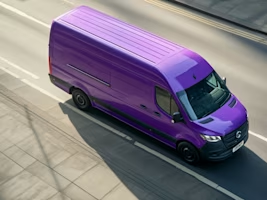

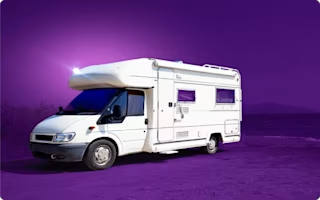
A motorhome or a campervan is a recreational vehicle (RV) which offers mobile living space, has an engine and can be driven around on its own.
Motorhomes are specifically designed to stay in while on the road, with sleeping areas and dedicated cooking and even washing facilities. Campervans tend to be smaller and may be more basic.
Motorhomes are distinct from caravans, which can only move if they are being towed. Different types of motorhomes are available, including coach-built motorhomes that tend to be taller and more spacious than van conversions or self-built motorhomes. If you’re looking for campervan insurance, you may be able to insure smaller campervans on regular car insurance or van insurance – but if you do this, you miss out on certain features you get with dedicated motorhome insurance.
Most insurers will require you to buy dedicated insurance for a motorhome. Certain insurers might let you take out a standard car insurance policy on a smaller motorhome, but the larger the vehicle is, the more likely you are to need specialised motorhome insurance.
Some home insurance policies may cover personal belongings you take into your motorhome or campervan, particularly if you have cover for possessions away from home. However, there may be limits on what you can claim for, and you might need to list certain high-value items separately.
Home contents insurance generally won't cover belongings that are permanently kept in your motorhome, such as TVs, bedding and kitchen equipment. Some specialist motorhome insurance policies offer contents cover for these items, either as standard or as an optional extra.
Some motorhome insurance policies include comprehensive cover for trips abroad, while others may offer more limited protection or charge extra for extended cover.
UK motor insurance generally provides minimum third-party cover in EU countries, but check your policy before travelling.
You might also want to consider taking out travel insurance to protect yourself against things like medical emergencies, cancellations and lost belongings. However, travel insurance won't usually cover damage to or theft of your motorhome, so make sure your vehicle insurance provides the protection you need overseas.
If you're travelling to Europe, you could also consider taking out European breakdown cover, in case your motorhome breaks down abroad.
Whether or not you can drive a motorhome on your regular driving license relies on two factors: the weight of the vehicle and when you qualified for your license.
If you passed your driving test before 1 January 1997, you are generally entitled to drive vehicles in category C1 - those which weigh between 3,500kg and 7,500kg. This means you can drive most motorhomes without a special license.
Anyone who passed their driving test after 1 January 1997 is generally entitled to drive vehicles in categories B. This means you can drive a motorhome that weighs up to 3,500kg.
Many smaller motorhomes are designed to weigh less than 3,500kg for this reason, but people who qualified to drive after 1 January 1997 will usually need to obtain category C1 entitlement to drive motorhomes weighing over 3,500kg and up to 7,500kg. To get this, you'll need to apply for a provisional C1 licence, pass a medical examination and complete the relevant theory and practical driving tests. For motorhomes over 7,500kg, a category C licence is generally required.
Yes, motorhome insurance is a legal requirement if you want to drive your motorhome on public roads in the UK. If you keep your motorhome off the road, you can declare this to the DVLA with a Statutory Off Road Notification (SORN) and waive insurance. You will need to buy insurance if you later want to drive on public roads.
Yes, many insurers will allow you to add additional drivers to your motorhome insurance policy, provided they have the right driving license and qualifications. This can be temporary or permanent. Check with your insurer to find out more.
Yes, depending on the motorhome insurance policy you choose, you are likely to be able to add additional policy features.
These might include cover for personal belongings or windscreen cover, for example. If you're planning on travelling to Europe, you might also need extended European cover for the time you'll be away. For trips further afield, check whether your insurer offers cover for the countries you're visiting.
First check what is listed as standard with your policy and then decide what extra features you want and how much they will add to your premium.
Estimating your mileage isn’t always straightforward if you’re unsure exactly how much you’ll be driving your motorhome. However, you should have some idea of what you plan to use it for and how often you’ll be using it. Use this as a benchmark, remembering to factor in any long trips you have in mind for the UK summer, for example. If you find you are driving it far more than you originally thought, contact your insurer to let them know as it could affect your cover.
Yes, but if you use your motorhome as your main or only home, you'll usually need specialist full-time motorhome insurance, as standard policies may not cover permanent residential use.
What counts as full-time living depends on the insurer. Some consider whether your motorhome is your main residence, while others set limits on how many months you can live in it each year.
Specialist policies may offer cover for full-time living, including protection for your belongings and fitted equipment. Always tell your insurer how you plan to use your motorhome and check that your policy covers your living arrangements.
You work hard to earn your money, and we don’t think you should waste a penny of it paying over the odds on your household bills. That’s why at MoneySuperMarket, we’re on a mission to save Britain money.
Whip your credit score into shape with Credit Score
Super save over and over again with Energy Monitor
There are always more ways to save with MoneySuperMarket
So how do we make our money? In a nutshell, when you use us to buy something, we get a reward from the company you’re buying from.
You might be wondering if we work with all the companies in the market, or if our commercial relationships with our partners might make us feature one company above another. We’ve got nothing to hide, and we want to give you clear answers when it comes to questions like these, so we’ve pulled together everything you need to know on this page.
Reviewed on 17 Nov 2026 by
YouGov Survey 1st July 2025 to 30th June 2026. Net Recommend score derived from "Which of the following online service websites would you recommend to a friend or colleague, or tell them to avoid?" Base: Current Customers of (MoneySuperMarket n=17,883, Compare the Market n=16,193, Go.Compare n=8,523, Confused.com n=7,918, Uswitch n=514)


