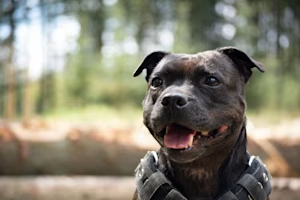
Dog fouling and UK law


Key takeaways
Always carry poo bags and clean up after your dog. Leaving dog mess in a public place can lead to a fine, and in some areas you can even be fined for not having the means to clean it up
Dog fouling rules and fines vary across the UK. England and Wales use local Public Spaces Protection Orders, while Scotland and Northern Ireland have their own laws. Check your local council’s rules so you know what applies where you live
Dog mess isn’t just unpleasant – it can be a health risk. Picking it up promptly, disposing of it safely and keeping your dog regularly wormed can help protect people, other animals and your dog from potentially serious infections

What are dog fouling laws in the UK?
It is illegal not to pick up after your dog in public areas in the UK.
Dog fouling is an “environmental crime”. The law allows Environmental Crime Enforcement Officers to give anyone seen not clearing up after their dog an on-the-spot fine called a fixed penalty notice (FPN).
According to Keep Britain Tidy, 4% of dog owners admit to not picking up after their dog.
A fine for dog fouling isn't something pet insurance or third-party liability insurance will pay, as fines and penalties are generally excluded.
You won’t be offered a pass if you say you didn’t know, and not having any bags is not an acceptable excuse either, so make sure you have some with you when you leave your home.
What is the fine for not cleaning up dog mess in England or Wales?
In England and Wales, councils can use local Public Spaces Protection Orders to make dog fouling an offence in designated areas. You can receive an on-the-spot Fixed Penalty Notice (FPN) of £100. If you refuse to pay or the case goes to court, the fine can increase up to £1,000.
What is the fine for not cleaning up dog mess in Scotland?
Scotland has a specific law – the Dog Fouling (Scotland) Act 2003. If you're in charge of a dog, you must clean up after it in a public open place. The standard fixed penalty is £80, rising to £100 if it isn't paid within 28 days.
What is the fine for not cleaning up dog mess in Northern Ireland?
In Northern Ireland, allowing a dog to foul in a public place can result in an £80 on-the-spot fine. Councils can prosecute if the fine isn't paid. There are some exemptions for people with certain disabilities.
Where is it required by law to clean up dog mess?
Dog fouling in public is covered in the Anti-social Behaviour, Crime and Policing Act of 2014 for England and Wales. Areas protected by a Public Space Protection Order (PSPO) will be decided by your local council. Places covered by the Public Space Protection Order usually include:
Parks, playing fields, and playgrounds
Town centres, shopping centres and car parks
Footpaths, pavements and roads
It’s worth noting that councils can and sometimes do implement district-wide bans on dog fouling. You can find out more and see maps on your local council website.
Are there any exemptions?
The main legal exemption applies to owners who are registered blind or use a trained assistance dog.
Rules are often relaxed on specific rural or agricultural lands, such as deep woodland, marshland, or high-speed roads (over 50mph), though cleaning up is still strongly advised.
What are the health risks of dog mess?
As well as being generally unpleasant, dog excrement can present the very serious risk of toxocariasis - an infection caused by the eggs of the Toxocara worm. Symptoms include breathing issues, seizures, and blindness, with children being more susceptible due to the increased likelihood of them playing in areas with contaminated mud or grass.
This is why it’s important to act as a responsible dog owner. This means cleaning up dog mess immediately, getting your dog wormed regularly as well as keeping up with its vaccinations. This ensures safety for you and your dog as well as the public in general.
How should I dispose of dog mess?
You can buy biodegradable or compostable dog poo bags from pet shops, supermarkets and online retailers. Just make sure you check how they should be disposed of, as “compostable” doesn’t necessarily mean they can go in your household food-waste bin.
Once you’ve picked up your dog’s poo, put the tied-up bag in a dog waste bin if there’s one nearby. If not, you can usually put it in a public litter bin.
If you’re at home, check your local council’s rules. In many areas, dog waste can go in your general household waste bin, but it shouldn’t normally go in your food waste or recycling bin.
Always use a poo bag and tie it securely before putting it in a bin. And don’t leave a bag of dog mess hanging from a tree or fence – even if you plan to come back for it later.
You might be able to get a free poop scoop from your local council - it’s worth contacting them to find out.
Can I be fined if I don’t have a dog poo bag with me?
Yes, in some areas. Under local rules called Public Spaces Protection Orders (PSPOs), enforcement officers can stop dog walkers and ask to see poo bags. If you cannot show you have the means to clean up waste, you can be fined even if your dog has not made a mess.
What should I do about a dog mess issue?
If you have an issue with public places being repeatedly soiled or someone who does not clean up after their dog, you can report it to the local council. You’ll need to provide details about the event, such as when and where it occurred and a description of the dog and owner if possible.
You can use the UK government’s local services website to find your relevant local council if you aren’t sure who to report the incident to.
If you have an issue with a neighbour’s dog leaving mess in your garden or on your property and the owner will not take responsibility, you can report them to your local council. While they won’t be legally required to pick it up as it isn’t public land, the council can send someone around to look into it.
Author
Emma Lunn
Personal finance expert
Emma has written about personal finance for almost 20 years, with a career spanning several recessions and their inevitable consequences. Emma’s main focus is helping people learn to manage their...

Reviewer
Alicia Hempsted
Insurance Expert
Alicia is MoneySuperMarket's editorial content manager and deputy spokesperson. She specialises in insurance and personal finance, with a background in copywriting, digital marketing, and insurance...