How to keep your home safe while you're on holiday


Key takeaways
Boost your home security by making sure all potential entry points to your home, including all doors and windows, are locked
Make use of burglar alarms, motion sensors, and timers for lights and alarms
Turn off the main water supply and unplug electrical devices to prevent damage and save energy
Ask neighbours or friends to keep an eye on your home while you’re away
Don't advertise that you're away from home on social media

How can I protect my home when I go on holiday?
Keep burglars out
Before you depart for your holiday, ensure your home is secure by checking all doors and windows are locked. You should also lock pet doors and other less obvious, potential points of entry.
For added security, consider upgrading to stronger locks on your front door and back door or patio door to deter opportunistic burglars. Security cameras and security lights can deter break-ins too.
Make sure any garages, sheds or outbuildings are secure too.
Make it look like someone's home
A simple way to make it look like you're home is use light timers or smart lights to turn your lights on and off at predetermined or random times.
If you live in a block of flats and your post is left in the hallway or communal area, ask a neighbour to take it in or put it through your letterbox. Make sure you stop any regular deliveries, such as items on subscription.
Finally, to maintain the illusion you're home, it's wise to keep some curtains or blinds open too. If you have smart blinds, you can open and shut your blinds remotely.
Protect your valuables
It's important to take steps to protect any valuables you leave at home. You should store items like jewelry, important documents, car keys and expensive electronics in a secure, hidden place—ideally a locked safe that is bolted down.
Get a burglar alarm
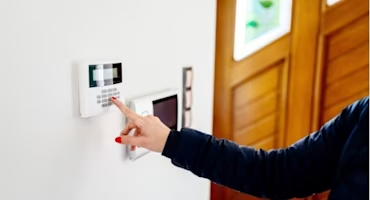
A burglar alarm can be a strong deterrent to criminals when you are on holiday because it increases the risk of being caught.
Most alarms are equipped with motion sensors which activate loud sirens and flashing lights that activate when unexpected entry is detected. This sudden noise can scare off intruders before they manage to steal anything.
Additionally, many modern alarm systems are connected to security companies or mobile apps, alerting either the police or the homeowner instantly.
Think about where you keep your keys
Don’t leave spare keys under a doormat or plant pot - these are obvious places. If you want to stash a spare set somewhere, leave them with a trusted friend or family member, or invest in a key safe (check your home insurance policy to see if this will have any implications).
It can also be worth hiding your car keys if your car is on your drive. In the event of a burglary or break-in, burglars might look to steal your car too.
Make sure your home insurance is fit for purpose
Before you head off, check your home insurance is still valid and that it offers sufficient cover for your belongings and valuables in the event of a break-in.
If you own a house, you’ll need buildings insurance and contents insurance. If you own a flat, or rent a property, you will normally only need contents insurance.
Be sure to pay attention to details of your policy regarding longer-term absences too. Some policies will only cover you for absences up to a certain period of time, typically 30 days.
If your trip exceeds 30 days, speak to your insurer and see if there are options to amend this part of your policy.
Some more top tips
Invest in smart home security
Investing in a smart home security system for real-time monitoring can be worth the money. These systems allow you to monitor your property from anywhere in the world, providing peace of mind while you're away.
As well as alerting you to intruders, smart systems can also monitor your home for leaks or smoke.
Ask neighbours to check on your property
Ask a trusted neighbour or friend to regularly visit your home while you're away.
Going away for a longer trip? It could be worth hiring a house sitter or pet sitter.
Turn off the water and unplug all electricals
Homeowners can guard against water damage from floods or burst pipes by turning off the main water supply.
To reduce the risk of electrical fires caused by power surges, you should also unplug appliances and disconnect gadgets. Not only will this keep your home safer, it'll save on your electricity bill.
Don't advertise your absence
We know it's tempting, but try to resist the urge to post your holiday itinerary or updates on social media. Even a beach photo can be a tell-tale sign of an empty house a few hundred miles away.
Author
David McDermottroe
Head of Commercial
Reviewer
Emma Lunn
Personal finance expert
Emma has written about personal finance for almost 20 years, with a career spanning several recessions and their inevitable consequences. Emma’s main focus is helping people learn to manage their...