MOT Checklist: What do I need to take?

Key takeaways
You usually only need to take your vehicle to an MOT test, but you may need your V5C logbook for a first MOT or new registration
Simple checks on tyres, lights, wipers, mirrors and number plates can help you avoid an easy MOT fail
Book your MOT before it expires so you have time to fix any problems

What do I need to take to my MOT?
You usually only need to take the vehicle itself. If it is your car’s first MOT, or the vehicle has a new registration number, you may need to take the V5C logbook - this is the document that shows the registered keeper and vehicle details.
You do not usually need to take your old MOT certificate because test centres can check MOT records online.
Do I need my V5C logbook for an MOT?
You may need your V5C logbook if it's your vehicle’s first MOT or it has a new registration number. Your V5C includes important vehicle details, such as the registration number, make, model and registered keeper - if you've lost your V5C, you can get a replacement V5 via the government website for a £25 fee.
For most repeat MOTs, you should not need to bring it.
When should I book my MOT?
Book your MOT before your current certificate expires - you can get an MOT up to one month, minus a day, before it runs out and keep the same renewal date for next year. Booking early gives you time to fix any issues before your old MOT expires, and if you aren't sure when your MOT is due you should check the date before booking.
How much does an MOT cost?
The maximum MOT fee for a car is £54.85, but garages can charge less than the maximum fee, so prices may vary. The maximum MOT fee for a standard motorcycle is £29.65.
Repairs are not included in the MOT test fee, so if your vehicle fails you may need to pay separately for repairs and, in some cases, a retest.
Where should I take my car for an MOT?
You should take your car to an approved MOT test centre - approved centres display the official blue sign with three white triangles. You can use a local garage, dealership or council MOT centre.
A council MOT centre usually only tests vehicles and does not carry out repairs, which can be useful if you want an independent test, but less convenient if your car fails and needs work.
What should I check before my MOT?
Check the simple things before your MOT, as small faults can still cause a fail:
Tyre inspection: Ensure a minimum tread depth of 1.6mm. Use a 20p coin or a gauge to measure.
Exhaust and leaks: Visible smoke or leaks could lead to a fail.
Secure fuel cap: It should fit snugly without any leaks.
Visible number plates: Make sure your vehicle registration number is clean and readable.
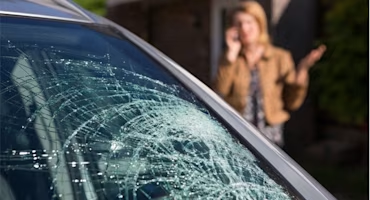
Windscreen and wipers: Check for significant chips or cracks and ensure the wipers are in good condition.
Functioning lights and electrics: Have someone help you test all lights and signals.
Fluid levels: Top up screen wash, brake fluid, and oil.
Working horn: It needs to be loud enough to alert other drivers.
Keep it clean: A cluttered or dirty vehicle can be a cause for refusal. A clear view for the driver is essential.
These checks do not replace proper maintenance, but they can help you spot obvious problems before the test.
How should I check my tyres before an MOT?
You should check your tyre tread, pressure and overall condition - the legal minimum tread depth for cars is 1.6mm across the central three-quarters of the tyre and around the full circumference. You should also look for cuts, bulges, uneven wear or anything stuck in the tyre.
Make sure your tyres are inflated to the right pressure - you can usually find this in your vehicle handbook, inside the fuel cap or on the driver’s door frame.
How should I check my lights before an MOT?
Try to check every light before your MOT, including headlights, brake lights, indicators, hazard lights, fog lights, reversing lights and number plate lights. Ask someone to stand outside the car while you test them or use a reflection in a window or garage door - then replace any blown bulbs before the test if you can do so safely.
How should I check my windscreen and wipers before an MOT?
You should check that your windscreen is clear, your wipers work and your screen wash is topped up. Windscreen chips or cracks can cause problems if they affect the driver’s view, while wipers should clear the screen properly without smearing or leaving large gaps.
Remember to top up your screen wash before the test, as an empty washer bottle can cause an MOT fail.
Should I clean my car before an MOT?
Yes, it is worth clearing clutter before your MOT as the tester needs safe access to parts of the vehicle, including seats, seatbelts, mirrors and the boot area if relevant. Your number plates, lights and windows should also be clean enough to inspect - you do not need a full valet, but a tidy, accessible car can help avoid unnecessary problems.
What are common MOT failures I can avoid?
Some MOT failures are caused by simple issues you can check before the test. Common avoidable problems include faulty lights, worn tyres, damaged wipers, low screen wash, unreadable number plates, broken mirrors and warning lights on the dashboard.
If you notice strange noises, poor braking, steering problems or smoke from the exhaust, get the car checked before the MOT rather than waiting for the test to find the fault.
What happens during an MOT?
Here's a breakdown of the MOT process:
Booking: You need to book your MOT at an authorised testing centre.
The Test: A qualified technician will thoroughly examine your vehicle, checking various components.
Checks: The test covers a wide range of parts, including brakes, lights, steering, suspension, tyres, exhaust system, seatbelts, windscreen wipers, and emissions.
Results: You'll receive an MOT certificate if your car passes. If it fails, the certificate will detail the necessary repairs.
Re-test: You have one month to fix the issues and retake the MOT.
Important to note:
An MOT doesn't cover the condition of the engine, clutch, or gearbox.
A passed MOT doesn't guarantee your car is in perfect condition. Regular servicing is essential for maintaining your vehicle's health.
What happens if my car fails its MOT?
If your car fails its MOT, you'll be told which faults caused the fail and what needs fixing. Dangerous and major faults mean your car has failed its MOT - dangerous faults must be repaired before the car is driven again. Minor faults do not cause a fail, but you should fix them as soon as you can.
Ask the garage whether a partial retest is free or discounted if repairs are done quickly.
What should I do with MOT advisories?
You should ideally treat MOT advisories as early warnings - they mean your car has passed, but the tester has spotted something that may need attention later. It could be worn tyres, ageing brake parts, corrosion or another issue that is not yet serious enough to fail.
Keep the advisory notes and plan repairs before the problem gets worse or causes a future MOT fail.
Should I service my car before an MOT?
A service is not required before an MOT, but it can help spot problems early. An MOT checks minimum safety and environmental standards, while a service looks more closely at maintenance, wear and performance, such as oil, filters, fluid levels and parts condition.
If your car is due a service, getting it done before the MOT may help identify issues that could lead to a fail.
Compare insurance quotes
An MOT does not automatically make insurance cheaper, but keeping your car roadworthy can help avoid claim problems. When comparing quotes, check the level of cover, excess and optional extras.
MoneySuperMarket can help you compare car insurance quotes from different providers and find cover that suits your car and budget.
Author
Mehdi Punjwani
Insurance specialist
Mehdi is a financial writer and editor with over six years of experience in personal finance. He has written for organisations and publications including Equifax, The AA, and USAToday, covering a...