

Environmentally friendly
Green energy is called ‘renewable’ for a reason – it comes from sources that don’t run out and which don’t produce emissions that cause climate change
Green energy, sometimes called clean energy, is electricity which is generated by natural, renewable sources such as the wind, solar energy, or the tides – as opposed to using fossil fuels like coal or oil.
Green energy is called ‘renewable’ for a reason – it comes from sources that don’t run out and which don’t produce emissions that cause climate change

Because more people want green energy and because the technology is always improving, green energy is priced similarly to other energy tariffs – so it doesn’t cost the earth

The UK generates more green energy every year. In 2022, the UK generated 40% of its energy from solar, wind, biomass and hydropower according to academics from Imperial College, London.
Do your bit for the planet by simply opting for green home energy. You can buy your gas and electricity from a specialist green energy company, or you can ask your current supplier to increase the amount of energy from green sources your household uses by switching to a green tariff.
Green energy suppliers include the likes of Green Star Energy, Ecotricity and Octopus. These companies encourage app-based account management and may offer paperless billing by default. Some green suppliers produce 100% of their electricity from zero-carbon sources.
Mainstream suppliers also offer green energy tariffs, which guarantee that some, most or even all of your energy comes from ecologically-friendly sources. You can check how much renewable electricity a supplier produces by looking at its ‘fuel mix’ information. This shows how much of the power they sell has come from coal, gas, nuclear, renewable and other sources, so you can see how green they really are.

By comparing energy tariffs with us, you can also sign up for Energy Alerts so you will hear about new deals and exclusive tariffs as they appear.
Green energy is a catch-all term for energy generated from eco-friendly sources. There are quite a few renewable electricity sources, but they all work in the same way in the end: by turning turbines to generate electricity as they rotate. Common sources of green energy include:

Large windmills attached to turbines are placed in windy areas to generate electricity as they turn

The moon’s gravitational pull is incredibly strong, and power is generated as the tides change

Special photovoltaic (solar) panels are set up in hotter places, and turn the sun’s energy into electricity

Burning biological material or biomass such as plant matter and waste food as a fuel source is efficient, though it does generate emissions

Dams built over large rivers can be used to control the flow of water, directing it through generators with gravity

Captured heat coming up from deep within the earth can generate electricity by heating water into steam to drive turbines
Better for the environment helping decrease your carbon footprint
Increasing number of providers means better value for customers
More information is available around energy mix, so it's easier to see who is greenest
Green energy bills tend to be slightly higher
You have fewer providers and tariffs to choose from
Rules surrounding green tariffs remain opaque, so it’s not a level playing field

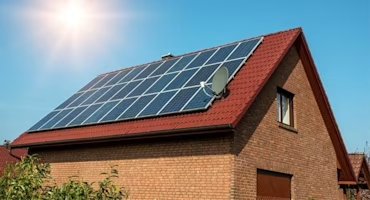
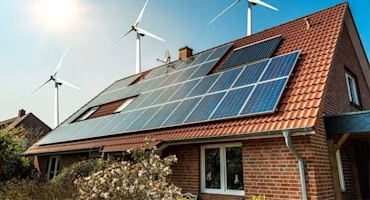
Green – or renewable – energy is any energy generated from natural sources. In practice, this means anything that isn’t a burning fossil fuel like coal, oil, or gas, and isn't producing greenhouse gases.
Green energy is often known as renewable because it is generated without using finite resources. Whether your renewable energy is generated from the wind, the tides, or the heat of the sun, it’s much more abundant than fossil fuel, of which there is a finite supply.
However, not every renewable source is carbon-neutral. Burning biofuels still puts out emissions, even though they tend to be cleaner in comparison to fossil fuels.
While nuclear energy is a low-carbon source of energy because it has an extremely limited impact on climate change, it is not considered ‘green’ ‘green’, ‘renewable’, or 'clean energy.
Nuclear power is still generated with fuel, commonly uranium or plutonium, that exists in finite amounts on Earth. It also leaves behind very dangerous waste which can be lethal for thousands of years, and which is very expensive to deal with. That said, it’s much less bad for the environment than coal or oil.
Green energy tariffs are now becoming more competitive as the technology improves and more people start asking for renewable energy. This will only continue, especially as solar panels fall in price and increase in efficiency.
Of course, fossil fuel prices fluctuate too, so it’s hard to say which fuel source is the absolute cheapest. What’s clear, though, is that you won’t be paying through the nose to go green compared with tariffs from other energy sources.
Under normal circumstances, switching energy suppliers to get an eco-friendly tariff is simple thanks to the Energy Switch Guarantee, which automates the process for customers and allows you to move provider with no interruption to service.
At times when switching is unavailable, you may be able to contact your current supplier and ask them to switch you to a green tariff – which can be as easy as giving them a call.
Green energy comes from renewable resources which do not deplete, such as the sun, wind, geothermal sources and hydro power. They’re also considered an overall positive for the planet.
Most, but not all, are also considered sustainable. Sustainable energy is defined as coming from a source that can be replenished faster than they can be used. Solar energy is an example. On the other hand, while tidal energy is sustainable, for instance, it isn’t seen as green due to its impact on marine life.
The major benefit of green energy is the fact that it’s completely renewable and does minimal damage to the planet compared with the burning of fossil fuels.
By opting for a green tariff, consumers can show the market that there is growing demand for energy to come from such sources, vital in our bid to curb rising temperatures and prevent the worst effects of climate change.
Wind, solar, hydro power and geothermal power can all lay claim to being eco-friendly. Picking a winner can be hard though, as each has an environmental impact.
Solar farms are excellent but may take vital space for growing crops; and wind farms can disrupt ecosystems, as can hydroelectric dams.
However, the harm they cause is considered minimal compared with the burning of coal and oil.
Wind power is the most used green energy source in the UK. According to the National Grid, it accounted for almost 27% of the UK’s energy as of November 2022.
At the time of writing, we've taken the decision to suspend energy switching on our site.
But under normal circumstances, we're a great place to switch because we can help you compare prices from all the energy suppliers in the UK, so you can find the right deal for your needs
It only takes a few minutes to compare. All you have to do is answer some simple questions, and we'll show you tariffs and offers from all the energy companies.
When switching returns to the market, we'll be able to help you switch to tariffs from most companies directly through MoneySuperMarket. Just click the green button, answer a few more questions, and you’re done.
If you’d prefer to talk to someone, you can call us on 0800 177 7087. We can answer any questions you might have, and even switch you to a new deal over the phone.
MoneySuperMarket gives you lots of clever ways to save a lot, by doing very little.
Take control of your credit score by checking and improving it for free with Credit Score
Never overpay again with Energy Monitor, our energy monitoring service
So how do we make our money? In a nutshell, when you use us to buy a product, we get a reward from the company you’re buying from.
But you might have other questions. Do we provide access to all the companies operating in a given market? Do we have commercial relationships or ownership ties that might make us feature one company above another?
We commit to providing you with clear and informative answers on all points such as this, so we have gathered the relevant information on this page.
Reviewed on 16 Jun 2026 by

