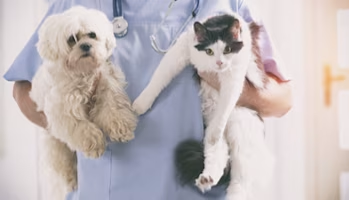
Nearly half of British pet owners share a bed with their pets

Reviewed by
Alicia Hempsted
Updated: 08 Jan 2026
New MoneySuperMarket research reveals that nearly half (44%) of British dog and cat owners share their bed with their pets, and many are regularly woken up during the night as a result.
Key takeaways
Almost half of British pet owners share their bed with their pets, and one in three lose sleep because their pets wake them at least once a night.
Frequent night waking in pets can indicate health issues such as arthritis, anxiety, or urinary tract infections, which should be checked by a vet.
Pet insurance and regular vet checks can help manage costs and protect both pet health and owners’ wellbeing.
The survey of more than 1,000 pet owners1 found that one in three (32%) lose sleep because their pets wake them at least once a night.
Among parents with one child, a quarter say they’re disturbed multiple times nightly, and 22% of 25–34-year-olds face the same struggle.
While it can be quite normal for pets to wake throughout the night, in some cases this can be a sign of something more concerning.
Why pets wake us up
Adult dogs typically sleep for 60–80% of the night2, but if your pup is waking you up regularly, it could be more than just a bad dream. Health issues like kidney disease or diabetes can disrupt their rest – and yours as a result.
Cats, meanwhile, are naturally crepuscular, meaning they’re most active at dawn and dusk. Their instinct can mean an early morning miaow or paw to the face, but it can still leave you feeling groggy.

When is night-time pet behaviour a cause for concern?
While occasional wake-ups are to be expected, frequent wake-ups can be a red flag.
Frequent night waking or sudden clinginess in pets can sometimes be a sign of pain, anxiety or an underlying health issue like arthritis, dementia or a urinary tract infection3.
These conditions can disrupt your pet’s sleep, and in turn, yours too. Broken sleep can take a toll on owners’ wellbeing and relationships as well as well as a pet's health. That’s why it’s so important to get unusual behaviour checked by a vet early.
Pets can disrupt couples’ sleep - and relationships
Our research found that pets don’t just impact their owner's rest; they can affect their owners’ relationships too. Forty per cent of cohabiting couples and 33% of married couples said they’re regularly woken by their cat or dog at least once a night.

Kara Gammell
Life insurance expert
Life insurance expert
Sleep matters
If your furry friend is restless at night, it could be a sign of an underlying health issue, and that can have a knock-on effect on your own sleep and stress levels.
A good night’s rest is vital for emotional resilience and even relationship satisfaction4, so it’s worth checking in with your vet if something seems off.
Pet insurance can help cover the cost of consultations and treatment, giving you peace of mind and helping to protect both your pet’s health and your household harmony.
Prevention is better than cure
Unusual behaviour could result in a costly vet visit, so having the right pet insurance can help cover treatment costs. But prevention is always better than cure.
Regular vet checks, a healthy diet, and daily exercise can protect both your pet’s wellbeing and your finances.
Sources
1. Research conducted by YouGov in August 2025. 2,193 people were surveyed of which 1,115 were pet owners.
2. Sleep Foundation
3. Pets Care
4. Psychology Today
Reviewer
Alicia Hempsted
Insurance Expert
Alicia is MoneySuperMarket's editorial content manager. She specialises in insurance, with a background in copywriting, digital marketing, and insurance advice. Since joining MoneySuperMarket in...