Will Japanese knotweed affect my home insurance cost?


Key takeaways
Japanese knotweed is a fast-spreading plant that can cause significant damage to properties
The presence of the Japanese knotweed does not typically increase home insurance premiums, as it’s not covered by insurance
You can be held liable if you have Japanese knotweed on your property and it damages a neighbour's property
You can buy Japanese knotweed indemnity insurance if you are worried about the plant growing on your property

What is Japanese knotweed?
Japanese knotweed is also known as ‘fallopia japonica’ and is a fast-spreading, invasive plant that's native to Japan, Taiwan, and northern China.
It was introduced to the UK in the 19th century as an ornamental plant.
Japanese knotweed can tower over two meters in height, with roots that extend up to seven meters horizontally and spread seven meters in all directions. This plant can damage your home and surrounding properties.
However, most home insurance policies do not cover the havoc wrought by Japanese knotweed.
What is the legal situation with Japanese knotweed?
The UK Government says:
“You must stop Japanese knotweed on your land from spreading off your property. Soil or plant material contaminated with non-native and invasive plants like Japanese knotweed can cause ecological damage and may be classified as controlled waste.
You do not legally have to remove Japanese knotweed from your land unless it’s causing a nuisance, but you can be prosecuted for causing it to spread into the wild.”
If you have Japanese knotweed on your land and it spreads into the wild you could face a fine of up to £5,000.
What does Japanese knotweed look like?
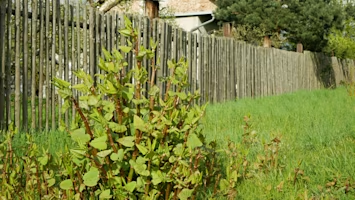
Japanese knotweed has spade-shaped leaves, zigzag stems, and creamy white flowers. In the spring, it appears as red or purple shoots that resemble asparagus spears.
You usually need an expert to correctly identify Japanese knotweed. It can be tricky to identify due to its resemblance to several other plants. However, there are certain features you can look for:
Red or purple shoots that emerge in early spring
Hollow, bamboo-like stems that become brown as autumn approaches
Large, spade-shaped leaves
Creamy white flowers that bloom from July to October
You can check if you have Japanese knotweed by sending a photo to the Royal Horticultural Society.
How can Japanese knotweed damage my property?
The extensive damage caused by Japanese knotweed is primarily due to its aggressive root system.
These roots can infiltrate drainage systems and compromise building foundations, leading to expensive repairs.
Additionally, if the plant spreads to neighbouring properties, you could be held liable. The Royal Institution of Chartered Surveyors views knotweed as a potential risk if found within seven meters of your house.
How can I get rid of Japanese knotweed?
You shouldn’t treat knotweed yourself unless you have the appropriate skills and experience. You can find companies that specialise in treating knotweed.
Experts will normally use glyphosate-based weed killers to treat knotweed and stop it spreading.
It usually takes at least 3 years to treat Japanese knotweed. Knotweed rhizome can remain dormant in the soil for many years and will regrow if disturbed or if the soil is relocated.
Japanese knotweed requires careful disposal due to legal regulations surrounding the plant, as Japanese knotweed is classified as ‘controlled waste’ under the Environmental Protection Act 1990.
Does my home insurance cover Japanese knotweed?
Most buildings insurance policies exclude damage caused by Japanese knotweed. If the knotweed problem originates from your garden, any claim is likely to be refused, as this is considered negligence.
Conversely, if your home is affected by Japanese knotweed from adjacent land, your insurer may pursue the landowner for the costs.
Do I need to tell my insurer I have Japanese knotweed?
You're not obliged to tell your insurance provider if there's Japanese knotweed on your property unless it specifically asks you about it.
You need to answer any questions your insurer asks you honestly. Failing to disclose the presence of the plant when asked could invalidate your policy.
Will Japanese knotweed increase my insurance premiums?
The presence of Japanese knotweed typically does not affect insurance premiums as it’s not covered by home insurance.
However, insurers expect homeowners to manage and control the plant to prevent damage.
Will Japanese knotweed affect the value of my home?
Yes, Japanese knotweed can reduce the value of your home. It is often detected during surveys for potential buyers. Its presence can deter purchasers and mortgage lenders, and may lead to negotiations on the selling price.
Will Japanese knotweed affect my mortgage?
Yes, Japanese knotweed can affect a mortgage or remortgage application. It will also affect the mortgage application of any buyer for your home.
Mortgage companies are concerned about Japanese knotweed because, over the course of a mortgage’s life, it could cause substantial damage if not controlled.
Getting a mortgage with Japanese knotweed on the property isn’t impossible but you will usually need to have a comprehensive plan for its removal in place.
Can I get Japanese knotweed insurance?
If you are buying a property and are concerned about the risk of knotweed, it may be worth considering indemnity insurance. Your conveyancing solicitor can normally advise about this.
A Japanese knotweed indemnity insurance policy is specifically designed to insure against the discovery of Japanese knotweed at your property.
Japanese Knotweed Indemnity Insurance is available for those properties not known to be affected, to provide protection against the future infestation of Japanese knotweed anywhere on the property.
Policies generally cover a survey by a specialist company, the cost of all treatment of regrowth over the insured period and the cost of repairs to damage caused by knotweed on the insured property up to a pre-set limit. It can also cover the cost of legal defence from claims made by third parties.
What happens if my Japanese knotweed damages my neighbour’s house?
If Japanese knotweed from your property damages a neighbour's house, you can be held liable. In such cases, legal expenses cover in your home insurance may assist with the costs associated with disputes over the plant.
Compare home insurance
Although home insurance doesn’t cover damage due to Japanese knotweed, it covers may other problems with your home.
When it comes to protecting your home, finding the right insurance policy is paramount. Comparing home insurance with MoneySuperMarket is a great way to save money on your quote. Just provide a few details about yourself and your property, and you'll be presented with the best deals the market has to offer.
Author
Emma Lunn
Personal finance expert
Emma has written about personal finance for almost 20 years, with a career spanning several recessions and their inevitable consequences. Emma’s main focus is helping people learn to manage their...

Reviewer
Collette Shackleton
Content Writer
Collette Shackleton is a highly skilled Content Writer who has over nine years’ experience creating helpful and engaging personal finance content for consumers. Collette shares her experience as a...