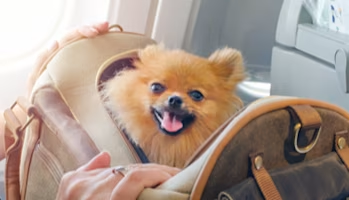
Pet expert says 'buckle up your pup this summer'

Written by
Kara Gammell

Reviewed by
Alicia Hempsted
Updated: 21 Jul 2026
With more pet owners hitting the road this summer, safe travel for dogs is becoming a growing concern. Simple precautions can help keep pets and passengers protected while avoiding legal and financial complications if an accident occurs.
Key takeaways
Searches for “driving with dogs” have risen 269% as more Brits plan pet-friendly staycations and road trips.
Dogs should be secured using a seat belt harness, crate/carrier, or dog guard, depending on their size and travel needs.
Failing to restrain a dog can lead to penalties, increase accident risks, and potentially invalidate insurance claims for vet bills.
As Brits prepare for summer staycations and road trips with their pets, experts are warning drivers not to overlook one crucial safety step: properly securing dogs in the car.
Searches for “driving with dogs” have surged by 269% over the past year, highlighting just how many owners are planning journeys with their four-legged companions in mind.1
However, failing to properly restrain dogs could have serious consequences - not only putting pets at risk of injury in an accident, but potentially leaving owners facing hefty vet bills if insurers refuse to pay out
How should dogs be secured when travelling?
There are a number of safe ways to secure your dog while keeping them safe and comfortable while travelling. This includes:
Seat Belts & Harnesses: Designed to attach to a vehicle’s seat belt system, these provide a secure and comfortable way to keep dogs safely restrained during journeys.
Crates & Carriers: Best suited for smaller dogs, these should be securely positioned in the boot or rear of the vehicle and allow enough room for pets to stand up, lie down and turn around.
Dog Guards: Ideal for larger dogs, these metal or mesh barriers are fitted in the boot to prevent pets from entering the passenger area.

How important is it to secure your dog before travel?
Under Rule 57 of the Highway Code, dogs must be suitably restrained when travelling in a vehicle.
While there isn’t a specific fine for not doing so, drivers can still face penalties such as ‘driving without due care and attention’ or ‘careless driving’, which may result in fines or points on your licence.
If a dog is injured in an accident and hasn’t been properly secured, insurers may see this as negligence. That means vet bills could be refused, leaving owners to cover the cost themselves.
Beyond the financial impact, an unrestrained dog can distract the driver or be thrown forward in a collision, increasing the risk of serious injury to both pets and passengers.
Taking a few extra moments to secure your dog properly can make a real difference to everyone’s safety.
Sources
1. Google Search data, retrieved and accurate as of 07.05.26
Author
Kara Gammell
Personal Finance & Insurance Expert
Kara Gammell is an award-winning financial journalist with nearly two decades of experience writing for national newspapers and magazines such as the Daily Telegraph, the Sunday Times, Good...

Reviewer
Alicia Hempsted
Insurance Expert
Alicia is MoneySuperMarket's editorial content manager and deputy spokesperson. She specialises in insurance and personal finance, with a background in copywriting, digital marketing, and insurance...