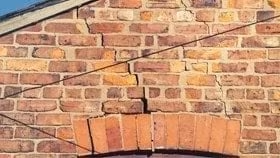
Are cracks in the walls covered by my home insurance?


Key takeaways
Cracks in walls can be caused by wear and tear, moisture, leaks and foundation damage
Cracks more than 25mm wide should be examined by a professional
If a crack is a result of subsidence, you’ll need to contact your home insurance provider

When should I be worried about cracks in the walls of my house?
It’s relatively normal for a house or flat to have a few cracks in the walls. Most cracks are cosmetic and only need redecorating. But in certain situations cracks may require more work – and possibly a home insurance claim.
When assessing the cracks in your home, consider their size and location:
Minor: Hairline cracks under 1mm are common and can usually be fixed by redecorating
Slight: Cracks that are 1mm to 5mm wide may require filler or re-pointing if they are exterior
Moderate: Cracks ranging from 5mm to 15mm should be looked at by a builder
Severe: Cracks up to 25mm wide might indicate structural damage and might need professional repair
Very severe: Any crack over 25mm is likely a sign of serious structural issues, potentially requiring underpinning and rebuilding
If you are worried about a crack in your home, consult a building professional or structural engineer. Always get multiple quotes before committing to any repairs.
Do cracks mean subsidence?
Cracks don’t necessarily mean your home has subsidence. While cracks in a building can be a sign of subsidence, this won’t always be the case.
Subsidence is when the ground beneath a building sinks, which can cause damage to the structure.
Often, smaller or ‘hairline’, cracks aren’t a major issue and may be caused by ‘blown plaster’ – this is when the plaster has lost contact with the wall. You can check for this by ‘knocking’ on the plaster – if there’s blown plaster, there’ll be a hollow sound.
If you think your property has subsidence, it’s best to contact your buildings insurance provider. Most standard buildings insurance will cover damage to your home because of subsidence, as long as your property hasn’t had subsidence before.
Are cracks in walls covered by my home insurance?
It depends on the cause. Cracks due to subsidence are generally covered by buildings insurance if there's no history of subsidence.
However, cracks resulting from poor workmanship, faulty materials, or inadequate foundations are not usually covered. Settlement cracks in new-builds are often considered maintenance issues and not covered by insurance.
What are the causes of wall cracks?
Cracks in your walls can appear for a variety of reasons, ranging from the benign to the structurally significant.
Here are some common causes of wall cracks:
Wear and tear: It's normal for a house to settle a bit over time, and this minor settling can lead to small cracks, especially above doors and windows. These are often due to ground shifts and changes in the weather.
Moisture: The wood used in your home's construction may have contained moisture. As this wood dries out over time, it can shrink slightly, leading to small cracks in the walls.
A leak: If you notice discoloured cracks with brown or yellow stains, this could suggest water damage. Leaks can lead to softened drywall, which may crack as it weakens.
Foundation damage: Large cracks that are more than 25mm wide could be a sign of serious foundation issues. These types of cracks often require the attention of a professional.
Are cracks in the ceiling different than cracks in walls?
Ceiling cracks can occur for similar reasons as wall cracks, often due to structural damage or settling.
While normal settling might not be covered by home insurance, structural damage typically is. It's important to check with your insurance provider to understand exactly what your policy covers
What about cracks in plaster?
Plaster cracks are usually a result of building shifts and are not a major concern if they are hairline cracks. However, wider cracks, those 5mm to 15mm, might require more significant repairs.
How can I avoid cracks in walls?
To prevent cracks from becoming a major issue, consider the following:
Spot the crack early: Acting quickly can prevent a small crack from becoming a big problem.
Contact professionals: For cracks over 5mm, it's best to seek professional advice.
Keeping on top of maintenance: Regularly filling small cracks and redecorating can keep your walls in good condition.
Compare home insurance today
For peace of mind regarding your home, compare home insurance with MoneySuperMarket. Provide details about yourself and your home to find a policy that offers the right balance of cost and cover, ensuring you're neither under-insured nor overpaying.
Author
Emma Lunn
Personal finance expert
Emma has written about personal finance for almost 20 years, with a career spanning several recessions and their inevitable consequences. Emma’s main focus is helping people learn to manage their...

Reviewer
Beth Leslie
Senior Insurance Content Editor
Beth is an experienced writer and editor who specialises in financial and economic content. She is currently the Senior Insurance Content Editor for MoneySuperMarket. Beth is passionate about making...