Does car insurance cover flood damage?


Key takeaways
Fully comprehensive car insurance typically covers flood damage, but third-party policies generally do not
Flood water can severely damage a car's electrical system, brakes, and engine, even from a small amount of water
To avoid damage, it's best to not to drive through flood water and if your car stalls, don’t restart it to prevent further damage

Does my car insurance cover flood damage?
Whether your insurer will cover the cost of damage to your car as a result of flooding depends on the level of cover you have and the circumstances.
If you have basic third party insurance or third party fire and theft you’re unlikely to be covered. Fully comprehensive insurance, on the other hand, should include flood damage but it’s important to check the terms and conditions of your policy documents carefully.
Insurers tend to categorise flood damage as:
Unavoidable: For example, your car was parked in your driveway when a flash flood happened.
Avoidable: For example, if you drove through floodwater and found it was deeper than you expected
📣 Did you know? If they consider the circumstances avoidable they may not pay out, even if you have a comprehensive car insurance policy.
How do I make an insurance claim for flood damage?
To make a claim for flood damage you should contact your insurer as soon as possible
Take photos of the scene and any flood damage to the interior and exterior of your car as evidence, if you can
Your insurer will advise you on the next steps but they will usually send an approved mechanic to assess the damage
How likely is flood damage?
Each year year breakdown providers rescue thousands of vehicles which have been driven through or are stuck in flood water.
Figures from ONS and FloodRE reveal that there may be more homes in the UK at risk of flooding than burglary.
A total of 6.3 million properties in England are in areas at risk of flooding from one or a combination of rivers, the sea and surface water, according to the Environment Agency.
What damage can flood water do to a car?
Serious damage to your vehicle can occur from just an egg cup full of water being sucked into your engine, according to The AA.
The engine’s air intake is often low down, which makes it susceptible to water damage.
Your car’s electrical system, brakes and engine could all be damaged by flood water.
There could also be damage to your car’s upholstery or entertainment system.
What should I do if I think my car has been damaged by flood water?
If you can’t start your car or it starts briefly and stops again it might have water in it. Other signs to look out for are a strong smell of petrol, especially near the exhaust pipe and a fast cranking sound or whirring when you turn the key in the ignition, The AA says.
If you’ve driven through flood water and suspect it has caused damage it’s best to get a mechanic to look at it or call your breakdown provider, if it’s not being assessed by your insurer.
You should also avoid drying the car out yourself before a professional has looked at it.
Will my car be written-off if it has flood damage?
If your car has flood damage it’s not an automatic write-off (also known as a total loss) it depends on whether water got into the engine and how much.
If your insurer does class it as a write-off then the pay-out you receive will usually be based on the market value of your vehicle before it was written off, unless you have taken out new for old car insurance that pays you the amount you would need to buy a new version of the same make and model.
Unhappy with what your insurer has offered? You can dispute the amount by finding other similar cars being sold for a higher price.
Alternatively, if you have GAP insurance, the pay-out from that could be used to pay off any outstanding finance on your car.
📣 Did you know? Fully comprehensive insurance may also cover the child car seats and, if you have personal possessions cover, any belongings which have been damaged too.
How to drive safely in heavy rain and through flood water
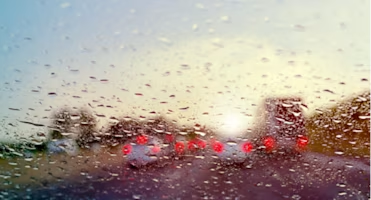
If there’s heavy rain or a flood warning it’s best not to travel and move your vehicle to higher ground. But if you have no choice there are steps you can take to deal with difficult driving conditions:
Firstly, turn your headlights on to improve visibility and keep your air conditioning on to stop your windows from misting up
Drive at an appropriate speed and remember to increase your stopping distance to at least double because your tyres will have less grip on a wet road
If you feel your car aquaplaning avoid slamming on the brakes and ease off the accelerator to slow down gently instead
If you see flood water ahead it’s best to turn around and take a different route, if possible. Otherwise, you need to assess how deep it is. If it’s more than 10cm (four inches) deep or the water is moving you shouldn’t enter it, The AA says
Even if the water appears shallow enough to drive through there could be potholes or dips in the road so take extra care
It’s best to drive in the middle of the road as this is the highest point
Keep your car in first gear and drive slowly, about 1-2mph as you enter the water and then accelerate to around 3-4mph. Keep the engine revs higher than usual
After you exit the water, test your brakes by lightly pressing them
If your car stalls after driving through flood water, don’t restart it in case you cause further damage. If you break down you also shouldn’t open the bonnet as you risk water getting into the electrics.
Compare quotes for flood damage cover
You can compare car insurance quotes on MoneySuperMarket in a matter of minutes. Simply pop in a few details about yourself and your vehicle; once you’ve found the right deal, you can apply directly to the provider in just a couple of clicks. If you want to ensure your car is covered for flood damage, look at fully comprehensive policies, and if you require further information, contact the provider before buying your policy.
It’s also a good idea to compare breakdown cover should you be stranded in a flooded area.
Author
Sarah Tooze
Car & Van Insurance Expert
Sarah Tooze has been a motoring journalist for more than 15 years, specialising in company cars and vans, and has won a number of awards during her career, including the Newspress ‘Automotive...

Reviewer
Beth Leslie
Senior Insurance Content Editor
Beth is an experienced writer and editor who specialises in financial and economic content. She is currently the Senior Insurance Content Editor for MoneySuperMarket. Beth is passionate about making...