Even hands-free phone calls are a risk for drivers

Reviewed by
Alicia Hempsted
Updated: 03 Sep 2026
Many motorists assume hands-free calling is both safe and private, but that's not always the case. From legal and insurance risks to unexpected privacy concerns, drivers may want to think twice before taking their next call behind the wheel.
Key takeaways
Hands-free calls can still distract drivers, with mobile phone offences carrying fines, penalty points and potential insurance consequences.
Research found 18% of UK drivers admit using their phone while driving despite knowing it is illegal.
Drivers should also be aware that calls made through car speakers may be far less private than they realise.
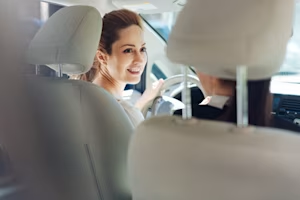
While many people use their time driving to make hands-free phone calls – whether catching up with friends and family or dialling into work – a habit many drivers see as harmless could be both illegal and less private than they think.
Research from MoneySuperMarket found that 18% of UK drivers admit to using their phone while driving, despite knowing it’s illegal; that’s the equivalent of around 7.5 million motorists.
So, we're urging drivers to understand exactly what's at stake before they next reach for the phone behind the wheel.
What does UK law say about hands-free phone calls?
The UK law says it's legal to make and receive phone calls while driving with a hands-free system, but there are special requirements to ensure you aren't distracted.
You can't hold the phone in your hand or handle it while at the wheel, even when you are stopped at a red light, so before you hit the road you should have your phone already set up for hands-free phone calls.
It's also a requirement that your phone doesn't cause a distraction while you're driving. This means your phone shouldn't obstruct your view of the road at all and you shouldn't need to keep looking away from the road to interact with it.
Preferably, your phone will be set up to use voice commands so you don't have to press any buttons or keep looking at the screen.
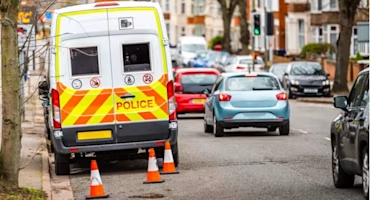
But even if you are technically following these guidelines, police can still stop you and prosecute you if they think you're distracted or not in control of the vehicle.

Alicia Hempsted
Insurance Expert
Insurance Expert
Hands-free doesn't mean foolproof
Putting a call on loudspeaker via an in-car speaker system isn't automatically safe just because it's hands-free. These calls can still cause distractions, and for drivers who prop up a handheld phone to use loudspeaker mode, or interact with the screen mid-call, the same penalties apply as for any other phone use.
The standard penalty for using a hand-held mobile while driving is a £200 fine and six penalty points. Repeat offences or being caught while driving without due care and attention, can result in higher fines, more points or even a driving ban.
Even legal hands-free systems can reduce drivers’ attention and reaction times, as the brain can be processing the conversation rather than what is on the road. Cognitive distraction doesn’t disappear just because a call is on loudspeaker.
Drivers should consider the car insurance implications too; any driving offences from mobile phone use must be declared to insurers and can have a significant impact on premiums for some time after.

The privacy risk drivers should consider
When a car is parked, and the windows are rolled up, drivers might assume hands-free loudspeaker conversations are safe to have and private, but that’s often not the case.
Car speakers are designed to project sound throughout the cabin and, in most cases, vehicles aren’t soundproof, meaning anyone passing by can potentially hear both sides of your conversation.
Multiple Reddit threads have called people out for these loudspeaker conversations, with one user saying “I was walking through a parking lot when a lady was doing this, it was a phone call with her bank. She read off her card number to them and everything.” and another catching a call intended to be private, “a co-worker was having an interview right outside the door for another job on his car's Bluetooth.”
If you’re having a call about a sensitive topic, whether it's a confidential work call, a medical appointment or a private matter with friends and family, be aware that these calls are less private than you think.
Tips for safer, more private in-car conversations
Pull over safely and switch off the engine before taking a call that requires focus or privacy
If your car is parked, turn off Bluetooth auto-connect so calls don't broadcast through the car speakers unexpectedly
Where possible, let calls go to voicemail and return them once parked
Be mindful of your volume and what you say when making a phone call in your car or in public as sharing sensitive or personal information could put you at risk
Reviewer
Alicia Hempsted
Insurance Expert
Alicia is MoneySuperMarket's editorial content manager and deputy spokesperson. She specialises in insurance and personal finance, with a background in copywriting, digital marketing, and insurance...