

What is public liability insurance?
Public liability insurance is one of the main types of business insurance
Employers' liability cover is a type of business insurance. It covers legal fees and compensation claims if an employee becomes ill or injured because of their work.
Employers can be held responsible if harm is caused by unsafe working conditions, inadequate training, poor equipment, or failures in health and safety processes.
You must have this cover in place if you employ any staff, including volunteers, temporary staff and some types of contractor. There are a couple of exceptions, such as if you employ family members.
Premiums are tailored to individual businesses, and will vary depending on factors like your size, industry and number of employees, as well as your claims history and safety record.
10% of our customers pay this for a employers' liability insurance policy.
The average price paid is £16.97
Compare quotes from different insurers
Improve your workplace safety measures to reduce risk
Bundle cover with other business insurance policies
Choose a higher voluntary excess
Employer’s liability insurance covers claims made against an employer if an employee is injured, becomes ill, or dies as a result of their work and the employer is found responsible. It protects workers against business negligence.
It typically won’t cover injuries that happen outside of work, incidents caused by employee misconduct, or claims that fall outside the policy period or legal time limits.
Non-fatal workplace injuries occurred in the UK in 2024.
Workplace accidents, for example if an electrician isn’t supplied with a hard-hat while working on a building site and sustains a head injury, or if an employee isn’t given training on how to operate a machine and becomes injured while using it
Workplace-related injuries, such as a shoulder injury from performing repetitive tasks over a long period of time
Illness resulting from the job, such as respiratory problems from long-term exposure to chemicals
Fatalities in the workplace, for example if a roofer fell from poorly-constructed scaffolding and died
Covers the costs of settling or defending claims made by employees.
For example, paying an out-of-court settlement to a warehouse worker injured on the job, or the cost of a defending a claim made by an office worker alleging that their computer set-up caused repetitive strain injury.
Covers the costs of medical treatment for sick or injured employees.
For example, if a supermarket worker suffered a broken leg after a heavy box fell on them while stacking shelves they could claim for the cost of medical care and physiotherapy.
If you end up losing a claim in court, compensation will also be covered.
For example, if an employee at a cleaning company sustained chemical burns after being regularly exposed to toxic cleaning chemicals without being supplied with masks or gloves, they could take their employer to court and win a large settlement.
These policies will also cover any income employees lose while they’re unable to work.
For example, if a shift worker who was paid on an hourly basis was unable to work due to an injury sustained in the workplace, they could sue their employer for the hours they would have otherwise worked.
If someone is an employee of your business (i.e. they have an employment contract and their National Insurance and income tax contributions are arranged by the business) they’ll usually be covered by employee’s liability insurance, even if they’re a part-time or casual worker.
Freelancers and contractors might not be covered by employers’ liability insurance depending on the policy, but can still claim against a business if its actions cause them harm and injury. If you work with freelancers or contractors, it’s always worth checking your policy to be sure you’re covered.
A good employers’ liability policy should cover claims up to £10 million.
Employers’ liability insurance works by providing cover for compensation claims made by employees who suffer injuries, illnesses, or accidents in the workplace due to their job.
The insurance claims process involves several stages.
Make an official record in the company’s accident book or log as soon as the incident happens, or as soon as the employee reports the incident.
Gather evidence of the incident, including collecting witness statements and photographs, and accessing any video footage of the accident
If the injured party wants to make a claim they will usually contact a personal injury lawyer. If the lawyer advises proceeding they will send a Letter of Claim to the employee or insurer.
If you are informed a claim is being made, you should contact your insurer to notify them.
The insurer may investigate the claim. They can request further evidence, interview witnesses, and review health and safety procedures.
Solicitors representing the claimant and the insurance company will then negotiate to determine if an out-of-court settlement is an option. If a settlement is reached, the insurer will cover the payout.
If a settlement can’t be reached, the case will proceed to court.
The insurer will pay any compensation ordered by the court, along with any legal costs.
Almost 9 in 10 of business insurance claims made by MoneySuperMarket customers were accepted last year.
All insurance has conditions and exceptions, so you should read your policy documents carefully to make sure you know what is and isn't covered.
💡 Top tip: You can check the government guidelines to see what counts as an employee.
Your business is located in the UK and employs one or more members of staff
You deduct National Insurance contributions and income tax from worker wages
You provide most of your workers' equipment and materials
You control when, where, and how your employees can work
You have the right to claim any profit made by your employees
You need staff to perform the job you employ them for, and if the employee is unable to work they can’t find a substitute
You work alone: sole traders and self-employed workers with no staff do not need employers liability
You hire only family members: small businesses where all employees are close family members are exempt
Your employees are based abroad: e.g. employees on secondment. (But check the law of the country they are based in)
Your one employee owns more than 50% of the shares: limited companies with this set up are exempt
You are a public body: many public organisations, health services, and government bodies are insured in a different way
Yes, you need employers' liability insurance for temporary staff such as agency and seasonal workers. The UK law requires employers’ liability insurance for employees working under your control, regardless of contract length.
Temporary workers
Part-time staff
Students and interns
Volunteers
Contractors and some subcontractors
It depends on their classification.
You will need employers' liability insurance if you hire labour-only subcontractors.
A subcontractor is labour-only if your business supervises their work and provides them with the tools and materials they use for the job.
You usually do not need employers liability insurance for bona-fide subcontractors.
Bona fide subcontractors work independently from you and provide all their own tools, materials and equipment. They are likely to have their own contractor liability insurance.
The cover level is the maximum amount your policy would pay if an employee successfully claims compensation against you.
The right level of cover usually reflects the size and risk profile of your business.
You must have at least this level of cover by law. Smaller, low-risk businesses may find it sufficient for their needs.
Many businesses take out this amount of cover or more, because claims for serious injury or long-term illness can be very costly.
The right level of cover usually reflects the size and risk profile of your business, including:
number of employees, as more staff increases the likelihood of a claim
payroll size (indicates scale of operations and potential compensation values)
the type of work carried out, with higher-risk activities needing higher limits
use of subcontractors or agency staff, where responsibility may still sit with you
past claims, which can suggest future exposure
Businesses in higher-risk industries - such as construction, manufacturing and engineering, and transport and logistics - tend to need higher levels of cover.
Some organisations set their own minimum levels of employers’ liability insurance. These groups include:
public sector bodies
industry regulators and trade bodies
large corporate clients
The required level of cover is often written into contracts, framework agreements or tender documents, especially for higher-risk work or large projects.
If your cover does not meet the stated requirement, you may be unable to bid for work, sign a contract, or continue working with that client.
Regularly evaluate potential hazards in the workplace, identifying high-risk areas and tasks to prioritise preventive actions.
Train all employees on relevant safety procedures, including proper use of equipment, emergency response, and reporting procedures.
Regularly inspect and maintain all machinery and tools to ensure they are in good working order and comply with safety standards.
Develop and clearly communicate written safety policies that outline expectations for employee conduct and adherence to safety procedures.
Foster a positive workplace culture where safety is prioritised, encouraging employees to report hazards and concerns without fear of repercussions.
Provide appropriate PPE to employees where necessary and ensure they are properly trained on its use and fit.
Conduct thorough investigations into any workplace accidents or near misses to identify root causes and implement corrective actions.
Keep detailed records of safety training, inspections, incidents, and corrective actions taken to demonstrate proactive risk management.
Encourage employee participation in safety initiatives and provide opportunities for feedback on safety concerns.
Remain informed about current workplace safety regulations and ensure compliance with all applicable laws.

Employers’ liability insurance is legally required for most businesses in the UK, but it’s also a crucial bit of protection against a range of workplace claims. An employers’ liability insurance policy can help cover medical costs, compensation, and legal fees that result from things like slip-and-falls or health conditions linked to prolonged work environments.
Without having adequate cover in place you could face serious legal and financial consequences, so it’s important to find the best policy for your business to ensure you’re protected. You should also ensure your chosen policy providers at least £10 million in cover, to be certain you have sufficient protection in place.
Jake Edmonds Travel & Commercial Insurance Expert
MoneySuperMarket has won the Feefo Platinum Trusted Service Award, an independent seal of excellence, which recognises businesses that consistently deliver a world-class customer experience.



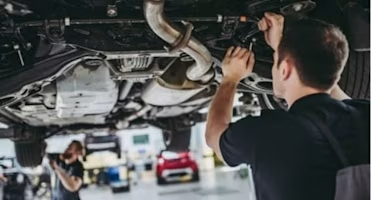
Public liability insurance protects businesses from financial losses arising from third-party claims for damage or injury occurring on their premises or as a result of their business activities.
Product liability insurance offers financial protection for costs arising from illness, injury, or property damage caused by products your business sells, even if not manufactured by you.
Business interruption insurance provides financial protection for at least part of any lost income as a result of an insured event, such as a fire or flood.
Tool insurance protects the tools that you and your employees rely on. It can cover the cost of replacing your tools if they are lost, damaged, or stolen.
Professional indemnity insurance covers claims resulting from losses due to the advice or work your business provided.
Business building insurance covers damage to a business premises as a result of an insured event.
Yes. Under the Employers’ Liability (Compulsory Insurance) Act 1969, most UK employers must have employers’ liability insurance if they employ staff. The law is designed to ensure employees can claim compensation if they are injured or become ill because of their work.
If you do not have the required cover, you can be fined up to £2,500 for each day you are uninsured. You can also be fined up to £1,000 if you fail to display your employers’ liability insurance certificate where employees can see it.
There are some limited exceptions. You may not need employers’ liability insurance if:
you are a sole trader with no employees
you only employ close family members and your business is not a limited company
your company has only one employee and that person owns the majority of the business
Partners in a partnership are not classed as employees, but you will still need cover for anyone you employ outside the partnership.
Because the rules can be nuanced, it is important to check whether an exception applies to your specific business setup before deciding you do not need cover.
Yes, most employers’ liability insurance policies include cover for staff working from home. This usually applies automatically, but you should always check your policy wording to be sure.
Even when employees work remotely, employers still have a duty of care. This means you may need to:
update risk assessments to reflect home-working arrangements
have clear health and safety policies for remote work
make sure work equipment and working practices are suitable and safe
If home working by your staff becomes a long-term or permanent arrangement, telling your insurer can help ensure your cover remains appropriate and avoid issues if a claim is made.
No. The key difference is who is covered.
Employers’ liability insurance covers injury or illness claims made by your employees.
Public liability insurance covers injury or property damage claims made by people outside your business, such as customers, clients or members of the public.
Most businesses with staff will need employers’ liability insurance because it is a legal requirement. Public liability insurance is not legally required, but many businesses need it in practice if they deal with customers, visitors or the public.
You are likely to need both types of cover if you employ staff and interact with clients, customers or the public as part of your work.
Yes. Many insurers offer employers’ liability and public liability cover together as part of a single business insurance policy. This is often called a combined liability policy, where each type of cover sits under the same policy but keeps its own limits and terms.
Beyond cost savings, combined policies can also:
make your insurance easier to manage with one renewal date and insurer
reduce gaps or overlaps in cover
simplify claims if an incident involves both employees and the public
When taking out a combined policy, it is still important to check the cover limits, exclusions and conditions for each section. Employers’ liability and public liability are separate covers, so the level of protection may differ between them.
You can be fined up to £2,500 for every day you were not correctly insured. You can also face an additional fine of £1,000 if you do not display your insurance certificate or show it to an inspector when asked.
Being a sole trader does not necessarily mean you need employers’ liability insurance. What matters is whether you employ anyone.
You will need employers’ liability insurance if you take on staff, even if they are:
part-time or temporary
casual workers or apprentices
helping you regularly, rather than occasionally
You may also need cover if someone works under your direction and control, even if they are not formally classed as an employee.
If you do not employ anyone, employers’ liability insurance is not legally required. However, many sole traders still need other types of business insurance. Public liability insurance is common, especially if you work with customers, clients or the public, or work on other people’s property.
Yes. In the UK, you are legally required to make your employers’ liability insurance certificate available to your employees.
You can display the certificate:
in a physical location, such as a noticeboard in the workplace, or
electronically, for example on an internal website, shared drive or intranet, as long as employees can easily access it
If you display the certificate electronically, employees must know where to find it and be able to view it without needing special permissions.
You must also keep a copy of each employers’ liability insurance certificate for at least 40 years, as some work-related illnesses may develop long after exposure.
Failing to display the certificate correctly can result in a fine of up to £1,000, so it is important to check that your employees can access it at all times.
At MoneySuperMarket, we want to give you clear, accurate and trustworthy information so you can make confident financial decisions for your circumstances.
Every page on our website goes through a careful editorial process before it is published. It’s written or reviewed by one of our experienced experts, checked for accuracy, and updated regularly to reflect the latest information.
We do use AI tools to support our research and drafting, but a human editor is always in the loop to review, fact-check and approve everything before it’s published, so you can trust that what you’re reading is both reliable and up to date.
You can read more in our editorial guidelines.
We get paid by the companies we work with, but the payment we get doesn’t have any bearing on the information we provide. We get paid in different ways, depending on the type of product or service you buy through us. Our goal is to search deals from as wide a range of companies as possible, but we only show results from our partner providers.
Our comparison service is, and will always be, free to use.
One of the best ways to get the lowest prices and best deals is to compare quotes from different companies. We do the work for you, comparing quotes side-by-side and giving you all the information you need so you can choose the right deal for your needs and your wallet.
We don’t give recommendations or financial advice, but we give you clear information so you can choose financial products that suit your circumstances.
No, not every company can be included in our service. This is because some companies don’t want their products included on comparison sites, and some decide that they would rather not pay a fee. There are also a few smaller providers who can struggle to cope with the volume of customers that can find their products if they appear on MoneySuperMarket.
Our goal is to search deals from as wide a range of companies as possible so that you can choose the deal that suits you.
No, at this time business insurance is not an eligible product for unlocking our SuperSaveClub rewards. It is also not included in our Price Promise.
Simply Business is one of the largest insurance brokers in the UK. They work with leading and specialist insurers to provide cover for small business owners, landlords and self-employed workers.
MoneySuperMarket has a commercial partnership with Simply Business. They offer various business and landlord insurance policies from different insurers through our platform, allowing our customers to find affordable quotes and policies that suit your specific needs.
Reviewed on 2 Apr 2026 by
According to Simply Business data, 10% of customers paid £8.55 or less monthly for a employers' liability insurance policy. Figure based on annual quotes purchased between 1st Jan - 31st Mar 2026. The price is for up to £10 million of employers' liability insurance and up to £2 million public liability limit and excludes the extra costs for paying monthly
Simply Business is one of the UK's leading providers of business insurance, serving 1 million customers across 1,500 trades.
The Health and Safety Executive (HSE) found that 604,000 workers sustained a self-reported non-fatal injury in the workplace during the 2023/24 financial year.
The price is the per-month cost for an annual policy of £10 million of employers' liability insurance and up to £2 million of public liability cover – 51% of customers paid this or less annually between 1st Feb - 30th April 2025.
Percentage of business insurance claims made by MoneySuperMarket customers in the last 12 months that were accepted. Data provided by SimplyBusiness.

