BUSINESS ENERGY
Commercial solar panel electricity

Read time: 5 minutes

By Les Roberts, Business Energy Expert
8th January, 2026
Adopting solar panels for businesses can be a game-changing strategy for reducing energy bills and demonstrating environmental responsibility. But before investing, it’s important to understand the long-term benefits, costs, and suitability for your operations.
In this guide to solar panels for business…
- How commercial solar panels work for UK businesses – Understand how PV panels convert sunlight into usable AC electricity, and the role of inverters and battery storage.
- Key benefits of solar panels for businesses – Explore how solar cuts bills, boosts energy independence, reduces carbon emissions and strengthens your green brand credentials.
- Typical costs, system sizes and payback periods – See example UK system sizes from 10kW to 100kW, with average installation costs and estimated break‑even times.
- Grants, incentives and finance options for solar – Learn about schemes like SEG, ECAs, RHI legacy payments, lease‑purchase deals and Salix Finance support.
- Practical considerations before you install solar – Check what to consider around planning permission, roof space, energy needs, budget and whether solar is right for your site.
What are solar panels, and how do they work?
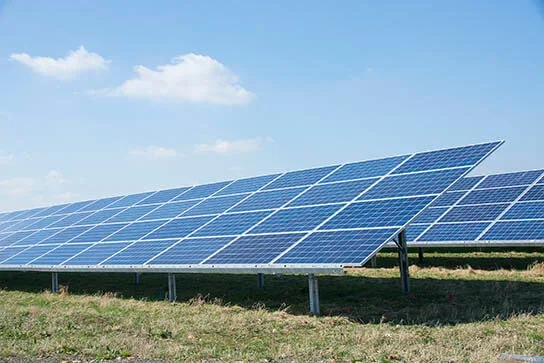
Commercial solar panels are made up of photovoltaic (PV) cells crafted from layers of semiconducting material, such as silicon. When sunlight hits these cells, they produce an electric current that powers your business operations.
- Direct Current (DC) to Alternating Current (AC): Solar panels generate DC electricity, which an inverter converts into AC electricity—used in commercial facilities.
- Energy generation: On average, commercial solar panels produce 200–350W of power under optimal sunlight conditions. Remarkably, these panels can still generate electricity on cloudy days, which is ideal for commercial solar panels in the UK.
Battery storage: Maximising solar energy for business
For businesses seeking a reliable power supply, battery storage is a valuable addition. This system allows you to store surplus energy generated during peak sunlight hours for use after dark or on overcast days. Battery systems enhance the efficiency of your solar power for business by reducing reliance on the grid.
Solar PV vs. thermal panels: What’s the difference?
Solar PV panels convert sunlight into electricity, making them suitable for powering equipment and systems in your business.
Thermal solar panels are designed to capture sunlight to heat water or air, offering a focused solution for energy needs like heating systems.
Both systems can be installed on commercial rooftops and building facades.
What are the benefits of solar panels for businesses?
Cutting your energy bills is the most obvious benefit of installing solar at your business, but there are other plus points too, as outlined below:
1. Lower operational costs
Fitting solar panels for businesses can take a big chunk out of your electricity spend, and with supplier prices averaging around 25p per kWh, generating your own power can translate into meaningful savings.
2. Enhanced energy independence
By installing business solar panels, you're relying less on traditional energy providers and protecting your business against future price volatility.
3. Improved environmental impact
Switching to solar panels for businesses helps cut your carbon footprint, as producing renewable energy on-site reduces demand for power from fossil-fuelled sources.
4. Positive brand image
With more customers actively seeking out greener companies, using solar power for business can strengthen your reputation and make your brand stand out to eco-conscious buyers.
5. Long-term financial savings
Although commercial solar panel costs can feel steep at the outset, once you’ve covered the installation, the electricity you generate is effectively free, freeing up cash you can reinvest back into the business.
What is the cost of commercial solar panels in the UK?
The price of solar panels for businesses depends on several factors, including system size and energy needs. Here’s an average breakdown:
| System size | Average cost | Break-even time |
| 10kW | £13,000 - £15,000 | 5 - 6 years |
| 20kW | £16,000 - £30,000 | 4 - 5 years |
| 50kW | £33,000 - £60,000 | 3 - 6 years |
| 60kW | £39,000 - £75,000 | 3 - 5 years |
| 80kW | £50,000 - £100,000 | 3 - 6 years |
| 100kW | £60,000 - £120,000 | 2 - 5 years |
Most solar panel businesses in the UK require between 30,000–50,000 kWh annually. To calculate your needs and potential savings, consult professional solar installers who specialize in commercial applications.
Are there any incentives and funding options for solar panels?
Several funding schemes and government incentives can make commercial solar panels more accessible:
1. Smart Export Guarantee (SEG)
Under the SEG, businesses can earn money by selling surplus energy back to the grid. Suppliers set their own rates, making it worthwhile to shop around for competitive deals.
2. Enhanced Capital Allowances (ECA)
The ECA scheme allows businesses to claim 100% tax relief on energy-efficient technologies, making it easier to invest in solar panels for businesses.
3. Renewable Heat Incentive (RHI)
While the RHI program is closed to new applicants, businesses with existing installations can still benefit from quarterly payments based on renewable heat output.
4. Lease-Purchase Agreements
These agreements allow businesses to spread the cost of commercial solar panels while earning income from subsidies. Ownership of the system is transferred after the lease is paid off.
5. Salix Finance
This government-backed initiative offers interest-free loans for energy efficiency projects in the public sector, including solar panel installation.
Do you need planning permission for commercial solar panels?
Most solar panel business installations are considered permitted developments and don’t require planning permission. However, it’s wise to consult local authorities, particularly if your business is located in a conservation area or within a listed building.
Are solar panels the right investment for your business?
Investing in solar power for business involves careful planning, but the rewards make it worthwhile. Key factors to consider include:
- Energy needs: Assess your business’s electricity consumption to determine the size of the solar system required.
- Space availability: Ensure you have enough roof or ground space for the desired system size.
- Budget: Explore funding options and incentives to make the investment more affordable.
Take control of your energy future
The adoption of commercial solar panels in the UK is growing as businesses recognise the advantages of renewable energy. By choosing solar panels for businesses, companies not only reduce costs but also future-proof their operations against volatile energy prices.
Solar energy systems deliver consistent, long-term savings while significantly reducing environmental impact. Whether you operate a small enterprise or a large corporation, fitting this technology can position your brand as a leader in sustainability and innovation.
Solar panels are an investment in both your company’s profitability and environmental responsibility. Partner with trusted solar providers to design and install a system tailored to your needs, and watch your business thrive in a greener, cost-efficient energy landscape.
And remember, fixing your rates is another way to take control of your business energy bills and beat price volatility. To start an energy comparison, Call Bionic’s business energy experts on 0800 140 4667 or request a callback.
Solar panels for business FAQs
Still unsure whether solar panels could be a good option for your business? Check out the answers to our most frequently asked questions.
What are commercial solar panels, and how do they work?
Commercial solar panels use photovoltaic (PV) cells to turn sunlight into DC electricity, which an inverter converts into AC power your business can use on site.
Can business solar panels generate power on cloudy days in the UK?
Yes, commercial solar panels still generate electricity on cloudy days, just at lower output than in full sun, which makes them suitable for typical UK weather.
What are the main benefits of solar panels for UK businesses?
Solar panels can cut electricity bills, reduce reliance on the grid, lower your carbon footprint and improve your brand’s environmental reputation.
How much do commercial solar panels cost in the UK?
Typical commercial solar systems range from about £13,000–£15,000 for 10kW up to £60,000–£120,000 for 100kW, with payback periods of roughly 2–6 years.
What size solar panel system does my business need?
Most UK business solar installations are designed to cover annual usage of around 30,000–50,000 kWh, with system sizing based on your bills and roof or ground space.
Are there government incentives for business solar panels?
Yes, businesses can benefit from Smart Export Guarantee payments, tax relief via Enhanced Capital Allowances, legacy RHI income, lease‑purchase options and schemes like Salix Finance.
Do I need planning permission for commercial solar panels?
Most commercial solar panel projects are classed as permitted developments and don’t need planning permission, but checks are recommended for listed buildings and conservation areas.
How can battery storage help my business solar system?
Adding battery storage lets your business store surplus solar power for use at night or on dull days, increasing self‑consumption and reducing grid reliance.
Is it time to compare business energy quotes and switch?
Take the hassle out of sorting your next energy deal. We compare from a panel of suppliers. You choose the rates that are right for your business.
By clicking ‘COMPARE TODAYS RATES’ you agree for us to search your current energy supplier and usage though industry held data. Enter manually
Our experts share essential knowledge on business energy







All related guides
View all energy guides
- A complete guide to business energy for offices
- A complete guide to business energy for restaurants
- A complete guide to business energy for shops
- Average business energy consumption - How much does your business use?
- How to get a business energy audit to save money and boost efficiency
- A complete guide to business energy bills
- Business energy brokers – everything you need to know
- What are no standing charge business energy tariffs?
- Business energy efficiency: how to save energy at your business
- Change of Tenancy - Moving business premises and your energy contract
- Commercial property landlord energy advice
- Energy performance certificate for business
- A complete guide to half hourly electricity meters
- How does the energy market affect the cost of your energy bills?
- How switching to energy efficient lighting can save your business money
- How to pay your business energy bills to save money and avoid late fees
- How your business credit score affects your energy deals
- Compare large and industrial business energy prices
- Prepayment meters for business: The complete 2025 guide for SMEs
- What are renewable energy certificates and REGOs for small businesses?
- Renewable Energy for Business
- Business Smart Meters: Your Guide to Savings, Installation, and Supplier Comparison
- Commercial solar panel electricity
- The nuclear RAB levy explained: what it means for your business
- A business guide to time-of-use energy tariffs
- Business energy tariffs explained
- Everything you need to know about the Smart Export Guarantee (SEG)
- Compare small business & micro business energy prices
- Compare the cheapest business energy suppliers
- What is the Climate Change Levy?
- Business energy meter installation: Your complete guide
- Multi-site meters and business energy management
- How much is VAT on business energy?
- What happens when your energy supplier goes bust?
- What is a letter of authority (LoA) for business energy?
- What is Market-wide Half-Hourly Settlement (MHHS) and how does it work?
- What is business microgeneration?
How to switch business energy suppliers with MoneySuperMarket
We can switch your business to a better energy deal in three simple steps
1
We find your details
Just enter your business address and we'll use industry data to accurately find and understand your energy usage.
2
We talk through your quotes
One of our UK-based energy experts will search our supplier panel and give you a call to talk through your quotes.
3
You choose the deal you want
With all the information to hand, you choose the deal that best suits your business and we’ll handle the switch for you.
Compare today’s business energy rates
By clicking ‘COMPARE TODAY'S RATES’ you agree for us to search your current energy supplier and usage though industry held data. Enter manually

If you don’t complete the form we may use your details to understand what went wrong or to promote our products or special offers. We may contact you by phone or email.
Contact MoneySuperMarket.com at MoneySuperMarket House, St David's Park, Ewole, Flintshire, CH5 3UZ. © MoneySuperMarket.com Ltd 2013.
Moneysupermarket.com Limited is an appointed representative of Moneysupermarket.com Financial Group Limited ©, which is authorised and regulated by the Financial Services Authority (FSA FRN 303190). Moneysupermarket.com Financial Group Limited, registered in England No. 3157344. Registered Office: Moneysupermarket House, St. David's Park, Ewloe, CH5 3UZ. Telephone 01244 665700.
Important Information
Here's some important information about the services MoneySuperMarket provides. Please read and retain for your own records. About our service


We use cookies to ensure you have the best experience on our website. Cookie Policy