BUSINESS ENERGY
Prepayment meters for business: The complete 2025 guide for SMEs

Read time: 5 minutes

By Les Roberts, Business Energy Expert
14th October, 2025
If you've been struggling to pay your business energy bills or just want to keep a tighter rein on how much you spend on energy, you may have had a prepayment meter fitted at your business. Let's face it, rising costs and customers with less money to spend mean cash flow can be tight. Throw in some energy market uncertainty, and the way you manage your energy spend really matters.
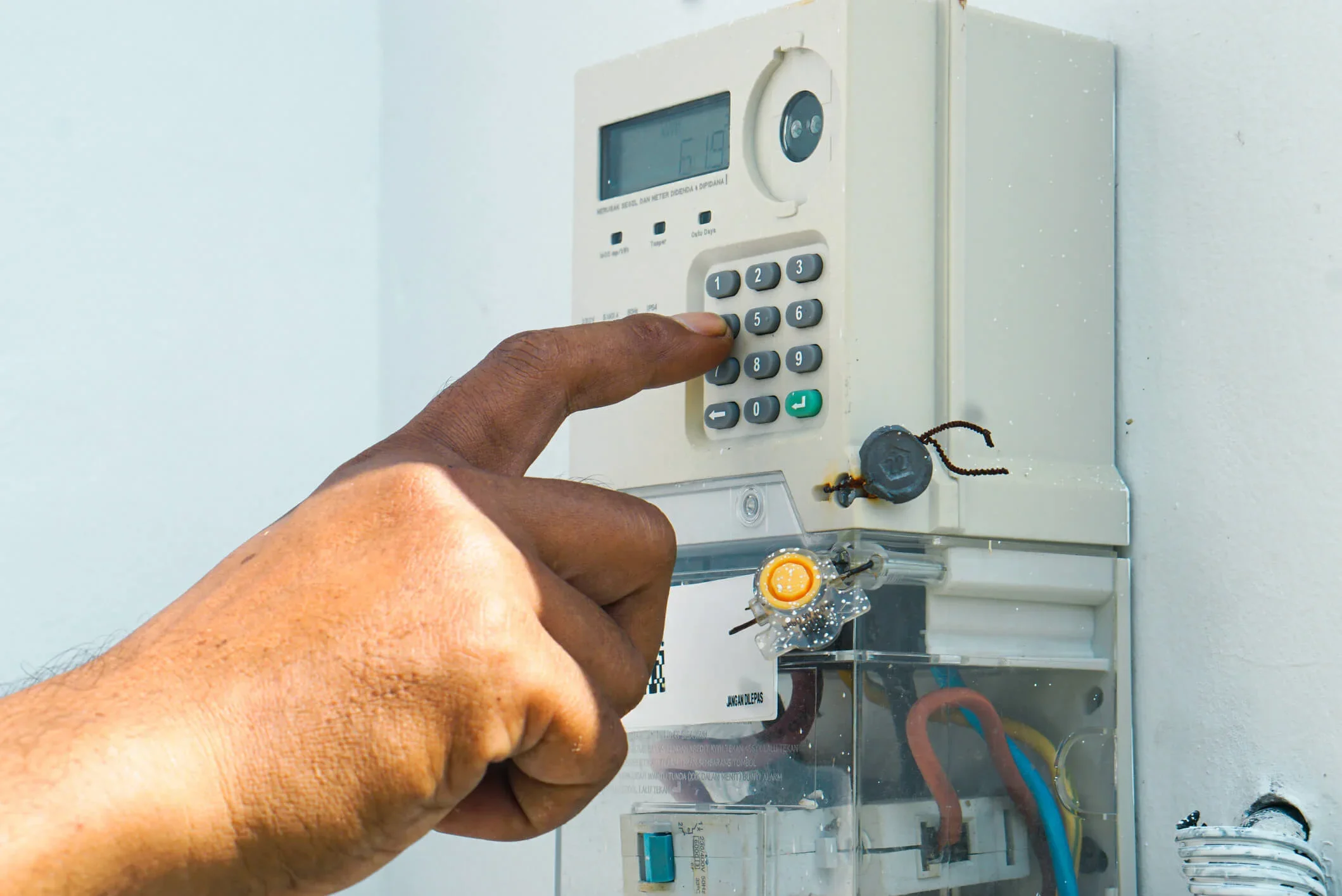
A business prepayment meter offers a pay-as-you-go approach to energy, which can be useful for budgeting. But these meters often come with higher tariff costs, so you need to weigh up the pros and cons before voluntarily installing one (if your supplier insists on you having one, that's another matter, but we'll pick that up later).
Let's take a closer look at everything you need to know about business prepayment meters: how they work, why they matter, all the upsides, pitfalls, and exactly what to check if you’re considering a switch.
What is a prepayment meter for business?
A prepayment meter is a type of energy meter that allows businesses to pay for gas and electricity in advance, instead of getting monthly or quarterly bills. You top up the meter using a key, card, app, or online portal, which helps avoid unexpected bills and provides real-time control over energy costs.
As you can only use what you've budgeted for, this "pay-as-you-go" system can be useful for businesses looking to manage cash flow, prevent energy debt, and track usage. On the flip side, go over budget and you'll need to find money to top up from elsewhere or be left without power.
Why do businesses switch to prepayment meters?
There are broadly two reasons why a business switches from monthly or quarterly billing to a prepayment meter:
- They need to control their business electricity and gas spending as part of budgeting measures
- Their supplier has installed one to help pay down energy debt
If you choose to get a prepayment meter fitted at your business, this is probably to help remove the risk of bill shock or an accumulation of unnoticed debt. With every top-up, you’ll know exactly how much you’ve spent and this can help make you more mindful of how and when you use energy.
If you’re running a tight ship, that’s crucial for planning, especially in quieter periods or when margins are slim.
Your supplier may fit a prepayment meter at your business if there are ongoing unpaid energy debts and other repayment options have failed. This is typically used as a last resort when other repayment solutions have failed.
How do business prepayment meters work?
A business prepayment meter provides a clear digital display, so you can check your remaining credit, view your daily standing charge (the fixed daily cost to cover supply and infrastructure costs), and see how much energy you’re using in real time. Status indicators flag up emergency credit, helping you avoid unexpected shut-offs.
When you need to top up, you use your key, card, or app at a local PayPoint or Payzone retailer, the Post Office, or, if your supplier offers it, directly through an online portal or smartphone app. Funds usually transfer instantly; you’ll see your balance update, and the supply continues running without interruption.
That visibility can help businesses spot high-usage patterns and give a valuable insight into which bits of kit or behaviours are driving the monthly bill.
Can you use a smart meter on prepayment?
If you have a smart meter, this should be able to switch between prepayment and credit payment. This can be done remotely, so your supplier can change the meter between credit billing and prepay mode without a site visit. As part of the Market-Wide Half-Hourly Settlement (MHHS) rollout, smart meters send half-hourly energy consumption data to your supplier, making monitoring even easier.
A common question is whether half-hourly meters used by large businesses with high energy consumption work the same way. They don’t - those HH maters are designed for businesses with peak demands above 100 kVA, and are usually needed in industrial settings. For most SMEs, a smart or prepayment meter covers everything you need.
How do you top up a business prepayment meter?
One thing that’s changed in recent years is the number of ways you can top up your meter. Suppliers now offer some payment flexibility, allowing you to manage your credit on your terms.
You can add credit:
- At PayPoint or Payzone retailers: Look for the yellow or blue symbol.
- At the Post Office: Handy if you’re in a more rural area.
- Online or by app: Most major suppliers now have digital top-up services, accessible round the clock.
- By phone: If you need help out of hours, some suppliers have automated lines.
Once the top-up is complete, you insert your card or key into the meter or sync your app. Credit is transferred, and your supply continues. Many modern systems update in real time, making the process quick and smooth.
For those worried about running out of power, most meters also provide emergency credit. If you can’t get to a top-up point in time or experience a quiet week, this buffer can help to keep your business going until you can pay it back.
What are the benefits of prepayment meters for businesses?
The main benefit is control. You pay for what you use in advance, meaning no more estimated bills or runaway charges. Prepayment meters can be useful for small businesses looking to:
- Manage cash flow with precision: You decide how much to top up and when, so you can align business gas and electricity spend with sales cycles or quieter periods.
- Avoid debt and late-payment charges: Because you pay as you go, the risk of falling behind is virtually eliminated.
- Identify savings opportunities: The clear meter display helps you spot unexpected usage spikes, highlighting equipment or habits that waste energy.
- Relative peace of mind: You’ll never face the stress of a large, unexpected bill landing on your desk.
That visibility means prepayment is often recommended for businesses recovering from debt or for those seeking maximum budget control.
What are the drawbacks of prepayment meters for businesses?
Although useful for cost control, there are some downsides your business needs to consider.
- Less competitive rates: Prepayment rates can, in some cases, be less competitive than standard direct debit tariffs. If you’re on a default, out-of-contract rate, costs can ramp up.
- There’s the risk of running out of credit: If you forget to top up or if a top-up point is inaccessible, supply is paused until you pay, which can disrupt business. While emergency credit prevents sudden shutoffs, funds must eventually be repaid, reducing what’s available for future usage
- Fewer tariff options: Businesses using prepayment meters often have fewer tariff options. For busy owners or multi-site operations, manual management can be an extra administrative headache.
- Hassle with top-ups: Not all suppliers have the same range of top-up or tariff options for prepay customers. Choice has improved, but it’s worth checking before you switch.
What if you’re in credit or debt when changing meters?
If you’ve got credit on your meter, suppliers must return it, usually within 14 working days. If the money doesn’t appear, contact them to work out a suitable resolution.
If you owe money, most providers ask you to clear debts before switching. Some will accept small debts - usually under £500 - and transfer the amount when you change. But supplier policies vary, so get clear details before switching.
What to do if you can’t keep the business meter topped up
Energy costs can be unpredictable, and every business can face a tough month. If you’re struggling, don’t panic - your supplier should understand and offer support.
Emergency credit is the first line of defence. It’s designed to tide you over outside business hours, or until the next top-up is possible.
For longer-term difficulties, speak to your supplier early. They may be able to review your tariff, arrange payment plans, or connect you to grant schemes and government support.
Does a prepayment meter impact your business credit rating?
A common misconception is that prepayment meters affect credit scores. They don’t. Because you pay in advance for energy, there’s no debt and nothing to report to credit reference agencies. However, if your score is poor, suppliers may require a prepayment meter as a way to manage risk.
MoneySuperMarket has a complete guide on how business energy contracts relate to credit ratings.
Can you remove or switch back from a prepayment meter to a credit meter?
Yes. If your business circumstances change, most suppliers will remove the prepayment meter and replace it with a standard credit meter or switch your smart meter to credit mode. You must typically demonstrate good payment history and, in some cases, pass a credit check.
Can your supplier force a prepayment meter installation?
A supplier can fit a prepayment meter without consent, but only under specific conditions and after following strict regulatory processes. This is typically used as a last resort when a business has unpaid energy debts and has not responded to multiple attempts at resolving the arrears.
This means suppliers may fit a prepayment meter if bills go unpaid or if your business struggles to clear debt. Suppliers must work with you on options and take any vulnerability or hardship into account before resorting to prepayment meter installation.
If you can't afford to pay your business energy bills, act quickly and explain your position to your supplier. This can help avoid forced changes if a suitable repayment plan is arranged.
How to pick the best prepayment meter and tariff
As with any business energy deal, you need to weigh up your options before switching. If you want to install a prepayment meter at your premises, consider the following:
- Evaluate your cash flow: Look at historic energy spend to work out if pay-as-you-go lines up with your monthly budget.
- Check top-up convenience: Opt for suppliers that offer digital top-ups for hassle-free management.
- Read your meter regularly: Get to grips with daily standing charges and watch for spikes in usage—these are opportunities to save.
- Compare deals often: Tariff pricing and supplier policies change frequently. MoneySuperMarket offers instant comparisons to ensure you’re never overpaying.
Business prepayment meter FAQs
If you've any further questions about prepayment meters for business, our FAQs section may help.
What is a business prepayment meter?
A business prepayment meter lets you pay in advance for business electricity and gas, avoiding estimated bills and managing costs in real-time.
Do prepayment meters impact my credit score?
No. They don’t affect credit as you pay up front. No debt, no reporting.
Can I remove a prepayment meter later?
Most suppliers allow you to switch back, pending eligibility and payment history.
Are prepayment tariffs always higher?
Unfortunately, prepayment rates are usually higher than with fixed-rate tariffs paid using a credit meter. Always compare prices from a range of suppliers when arranging a new contract or when switching suppliers.
How do I get emergency help if I can’t top up?
Contact your supplier for emergency credit or support schemes before the supply is cut off.
Are prepayment meters more expensive for businesses?
Unit rates and standing charges for business prepayment meters are typically higher than for credit tariffs. The cheapest tariff will still depend on the supplier you choose, location, and business usage, but you can expect to pay more for your energy.
Is it time to compare business energy quotes and switch?
Take the hassle out of sorting your next energy deal. We compare from a panel of suppliers. You choose the rates that are right for your business.
By clicking ‘COMPARE TODAYS RATES’ you agree for us to search your current energy supplier and usage though industry held data. Enter manually
Our experts share essential knowledge on business energy







All related guides
View all energy guides
- A complete guide to business energy for offices
- A complete guide to business energy for restaurants
- A complete guide to business energy for shops
- Average business energy consumption - How much does your business use?
- How to get a business energy audit to save money and boost efficiency
- A complete guide to business energy bills
- Business energy brokers – everything you need to know
- What are no standing charge business energy tariffs?
- Business energy efficiency: how to save energy at your business
- Change of Tenancy - Moving business premises and your energy contract
- Commercial property landlord energy advice
- Energy performance certificate for business
- A complete guide to half hourly electricity meters
- How does the energy market affect the cost of your energy bills?
- How switching to energy efficient lighting can save your business money
- How to pay your business energy bills to save money and avoid late fees
- How your business credit score affects your energy deals
- Compare large and industrial business energy prices
- Non-Commodity Costs & TNUoS/DUoS Charges: What Every UK Business Needs to Know in 2026
- Prepayment meters for business: The complete 2025 guide for SMEs
- What are renewable energy certificates and REGOs for small businesses?
- Renewable Energy for Business
- Business Smart Meters: Your Guide to Savings, Installation, and Supplier Comparison
- Commercial solar panel electricity
- The nuclear RAB levy explained: what it means for your business
- A business guide to time-of-use energy tariffs
- Business energy tariffs explained
- Everything you need to know about the Smart Export Guarantee (SEG)
- Compare small business & micro business energy prices
- Compare the cheapest business energy suppliers
- What is the Climate Change Levy?
- Business energy meter installation: Your complete guide
- Multi-site meters and business energy management
- How much is VAT on business energy?
- What happens when your energy supplier goes bust?
- What is a letter of authority (LoA) for business energy?
- What is Market-wide Half-Hourly Settlement (MHHS) and how does it work?
- What is business microgeneration?
How to switch business energy suppliers with MoneySuperMarket
We can switch your business to a better energy deal in three simple steps
1
We find your details
Just enter your business address and we'll use industry data to accurately find and understand your energy usage.
2
We talk through your quotes
One of our UK-based energy experts will search our supplier panel and give you a call to talk through your quotes.
3
You choose the deal you want
With all the information to hand, you choose the deal that best suits your business and we’ll handle the switch for you.
Compare today’s business energy rates
By clicking ‘COMPARE TODAY'S RATES’ you agree for us to search your current energy supplier and usage though industry held data. Enter manually

If you don’t complete the form we may use your details to understand what went wrong or to promote our products or special offers. We may contact you by phone or email.
Contact MoneySuperMarket.com at MoneySuperMarket House, St David's Park, Ewole, Flintshire, CH5 3UZ. © MoneySuperMarket.com Ltd 2013.
Moneysupermarket.com Limited is an appointed representative of Moneysupermarket.com Financial Group Limited ©, which is authorised and regulated by the Financial Services Authority (FSA FRN 303190). Moneysupermarket.com Financial Group Limited, registered in England No. 3157344. Registered Office: Moneysupermarket House, St. David's Park, Ewloe, CH5 3UZ. Telephone 01244 665700.
Important Information
Here's some important information about the services MoneySuperMarket provides. Please read and retain for your own records. About our service


We use cookies to ensure you have the best experience on our website. Cookie Policy