BUSINESS ENERGY
Non-Commodity Costs & TNUoS/DUoS Charges: What Every UK Business Needs to Know in 2026

Read time: 5 minutes

By Les Roberts, Business Energy Expert
10th March, 2026
Business energy bills are more complex than you might think. You might be familiar with the unit rate and standing charge - also known as the "commodity" costs, these are the two main considerations when switching energy suppliers - but there's another layer of costs underneath that can account for nearly two-thirds of what you pay.
These are called non-commodity costs. They include network charges (TNUoS and DUoS - more on those later), environmental schemes, policy costs, and supplier margins. From April 2026, these charges are set to increase significantly, which means your business energy bill could jump even if your actual energy consumption stays the same.
In this guide, we'll break down exactly what non-commodity costs are, explain how TNUoS and DUoS charges work, show you what's changing in April 2026, and highlight some practical ways to manage your energy use and costs.

In this guide to non-commodity costs on business energy bills...
- Non-commodity costs now account for 64% of UK business electricity bills, including TNUoS and DUoS network charges, environmental levies, policy costs, and supplier margins—far exceeding wholesale energy costs.
- From April 2026, TNUoS charges will increase by approximately 60% (from £16/MWh to £31/MWh), with DUoS varying by region; most of the increase will hit standing charges rather than unit rates.
- TNUoS covers high-voltage transmission "motorways," while DUoS covers local distribution "A-roads". Two similar businesses in different regions can face vastly different bills even with identical usage patterns.
- You cannot avoid TNUoS and DUoS payments, but you can reduce their impact by cutting overall consumption, shifting usage to off-peak times, optimising supply capacity, and considering on-site generation or pass-through tariff structures.
- The Targeted Charging Review (TCR) shifted network costs from usage-based to fixed residual charges, meaning smaller businesses now pay higher standing charges regardless of consumption—making contract comparisons more critical than ever.
What are non-commodity costs?
Non-commodity costs are everything you pay for on your business energy bill that isn't the energy you use. Think of it like this: when you buy a product in a shop, the price includes the item (the commodity) plus delivery, packaging, and the shopkeeper's rent. Energy bills work the same way.
Your total energy cost breaks down into three main components:
- Wholesale energy price: The actual cost of the gas or electricity you use (the commodity)
- Network and transmission costs: Charges for getting energy from power stations to your door (TNUoS, DUoS, BSUoS)
- Taxes, levies, and policy costs: Government schemes, environmental programs, supplier margins, and VAT
Non-commodity costs have grown steadily over the past decade. In 2015, they made up roughly 30% to 40% of an average business electricity bill. In 2026, they account for approximately 64% of the total bill. This shift is driven by:
- Grid upgrades to support renewable energy: More investment is needed in the transmission system
- Environmental policy costs: Renewables Obligation, Feed-in Tariffs, Contracts for Difference
- Network modernisation: Ageing infrastructure replacement and resilience improvements
- The Targeted Charging Review (TCR): A fundamental restructuring of how network costs are allocated
This means that even if wholesale energy prices stay flat, your business energy bills could still rise because of increases to these non-commodity elements.
The main non-commodity cost categories
Let's break down the main components you'll see on your business energy bill:
1. Network Charges: TNUoS and DUoS
These are the highest non-commodity costs for most businesses.
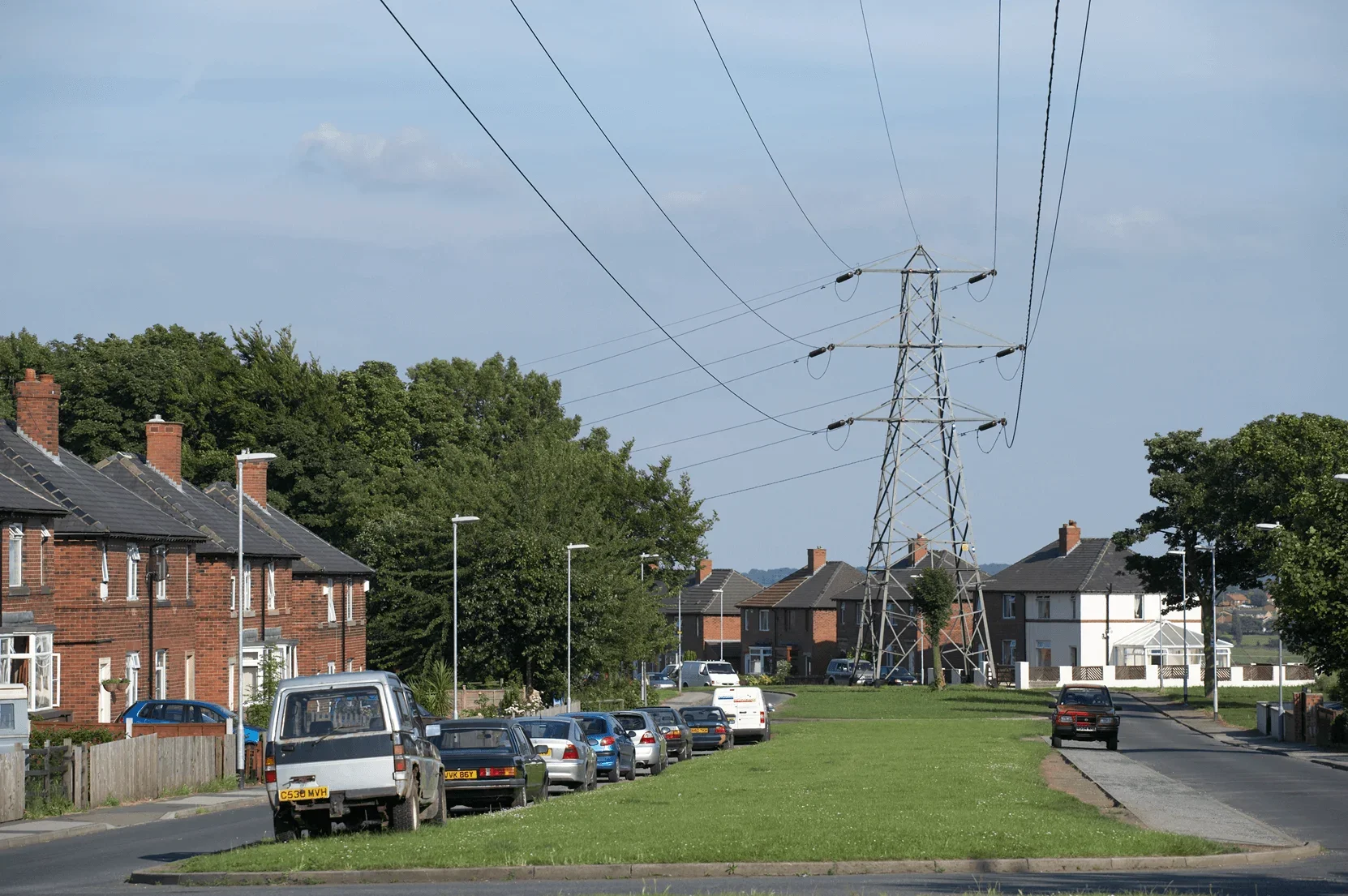
- TNUoS (Transmission Network Use of System) covers the cost of the high-voltage transmission network. This includes the big pylons and long-distance cables that move electricity across England, Wales, Scotland, and offshore from power stations to local distribution points. Think of it as the "motorway" cost for electricity.
- DUoS (Distribution Use of System) covers the cost of local distribution networks. Things like the substations, poles, and underground cables that connect to your premises. This is the "A-road and street" cost for getting electricity to your door.
Together, TNUoS and DUoS can make up between 20-% and 40% of your electricity bill, depending on your location, meter type, and consumption patterns.
2. Environmental and Renewable Energy Schemes
- Renewables Obligation (RO): Requires suppliers to source an increasing proportion of electricity from renewable sources
- Feed-in Tariff (FiT): Supports small-scale renewable generation (solar, wind, micro-hydro, anaerobic digestion)
- Contracts for Difference (CfD): Government support for large-scale renewable energy projects
- Capacity Market (CM): Ensures a reliable energy supply during peak demand periods
3. System Balancing and Levies
- Balancing Services Use of System (BSUoS): Daily cost to balance supply and demand on the grid; fluctuates daily but appears on your monthly bill
- Climate Change Levy (CCL): The Climate Change Levy is a tax on energy use to encourage efficiency (though it's been frozen since 2013)
- RAB Nuclear Levy: From November 2025, approximately 0.35p per kWh will be added to unit rates to fund new nuclear power stations like Sizewell C. As with the energy price cap, the level of RAB Nuclear Levy will be regularly reviewed and amended.
4. Supplier Margins and Administration
- Supplier operating costs (between 3% and 6% of the bill)
- Meter reading and customer service
- Risk management and balancing
- Profit margin
Where Do TNUoS and DUoS Sit on Your Bill?
On a typical fixed-price business energy contract, your supplier bundles all non-commodity costs into two visible components:
- Daily standing charge: A fixed amount you pay every day regardless of consumption. From April 2026, standing charges are rising significantly because much of the TNUoS increase is being recovered through fixed residual charges rather than per-unit rates.
- Unit rate (pence per kWh): What you pay for each unit of electricity or gas. This includes some DUoS charges (which vary by region and time of day) plus wholesale costs and supplier margins.
On pass-through or flexible tariffs, you may see these charges broken out separately, which gives you more transparency but also exposes you to monthly fluctuations.
How does Transmission Network Use of System (TNUoS) work?
TNUoS charges recover the cost of building, operating, and maintaining the UK's transmission network. Historically, these charges were based on your business's consumption during the "Triad" period. These are the three half-hour periods of highest system demand between November and February, typically between 5:00 pm and 6:30 pm.
But from April 2023, the Targeted Charging Review fundamentally changed how TNUoS is calculated. Instead of being based purely on peak consumption, TNUoS charges are now allocated using fixed residual charges based on:
- Your meter type: Half-hourly (HH) metered sites vs. non-half-hourly (NHH) sites
- Your capacity band: How much electricity you're contracted to use
- Your location: Different TNUoS zones across the country have different tariffs
For smaller businesses on standard contracts, you won't see TNUoS broken out separately. Instead, it's bundled into your standing charge and unit rate. But for larger businesses with half-hourly meters, you may see it passed through more explicitly.
What are the April 2026 TNUoS increases?
TNUoS charges will increase by around 60% from April 2026.
- Current rate: Approximately £16 per MWh for average half-hourly sites
- New rate from April 2026: Approximately £31 per MWh
- For gas: An increase of about 40%
But what does this mean in practical terms?
- Small retail unit or office: Standing charge could increase by between £20 and £50 per month
- Medium manufacturing facility: Standing charge could increase by £100 to £300 per month
- Large industrial site: Could see annual TNUoS cost increases of £50,000 to more than £500,000
Much of this increase will come through higher standing charges, not higher per-unit rates. This means even businesses that reduce their consumption may still see significant bill increases.
Why Is TNUoS Increasing?
The primary driver is the UK's shift to renewable energy. Wind farms, solar installations, and offshore wind need grid connections and system upgrades. These massive infrastructure investments are being recovered through higher TNUoS charges.
Additionally, the replacement of ageing transmission infrastructure (some of which dates back up to 50 years) is adding to costs.
How does Distribution Use of System (DUoS) work?
DUoS charges are set and collected by 14 regional Distribution Network Operators (DNOs) across Great Britain. They are:
- Eastern
- East Midlands
- London
- Merseyside & Northern
- Midlands, North Eastern
- North Scotland
- Northern Scotland
- South Eastern
- South Wales
- South Western
- South Yorkshire
- West Midlands
- Yorkshire
Because each DNO has different network layouts, investment needs, and customer densities, DUoS charges vary significantly by region. A business in London might pay very different DUoS charges than an identical business in a rural area.
What are DUoS time bands?
DUoS charges are typically split into three daily time bands:
- Red (peak): These are the highest charges and usually apply on weekday early evenings, between 4 pm and 8 pm or between 5 pm and 9 pm.
- Amber (shoulder): These medium charges usually apply during weekday daytime hours and Saturday mornings.
- Green (off-peak): The lowest charges are usually reserved for late evening, night-time, and all of Sunday usage.
If your business can shift energy-intensive operations to green or amber periods, you can significantly reduce DUoS costs. This is why time-of-use tariffs are becoming increasingly popular for businesses with flexible operating hours.
Why are there regional DUoS variations?
Some DNO areas are significantly more expensive than others. Eastern England, for example, has been experiencing lower DUoS charges due to lower network investment needs, while areas undergoing major grid modernisation may see higher increases.
This is why two businesses of similar size in different regions can face very different energy bills—even on identical wholesale rates.
The Targeted Charging Review (TCR) and what it means for your business
In 2022/23, Ofgem introduced the Targeted Charging Review to help reform how network charges are allocated. The goal was to make charging fairer and prevent larger users from gaming the system by avoiding peak consumption. Here's how things changed.
Before TCR
Network charges were heavily based on how much energy you used and how you used it. Large businesses could predict Triad periods and deliberately reduce consumption during those three half-hour windows to minimise bills.
After TCR
A much larger proportion of network costs are recovered through fixed residual charges allocated by capacity band, and not consumption. This means:
- Standing charges increased significantly for all business sizes
- You can't avoid TNUoS by reducing peak consumption (though you can still save on DUoS)
- Smaller businesses in lower-consumption bands may actually pay more per unit if they use less energy
What this means for your April 2026 bill
Most of the 60% TNUoS increase will come through higher standing charges. Even if you cut energy consumption by 10%, your standing charge might still jump by between 30% and 40%.
This is why contract shopping - comparing total bill impact, not just unit rates - is more critical than ever. A supplier with a "cheaper" unit rate might actually be more expensive overall if their standing charges are high.
How TNUoS and DUoS Vary by Location and Meter Type
Your exact TNUoS and DUoS costs depend on several factors:
1. Your Region
Network charges are region-specific because infrastructure costs vary. Utility Bidder's analysis shows that non-domestic properties in Wokingham have the best-insulated network infrastructure, with 71.4% achieving positive EPC ratings, resulting in lower network costs. In contrast, areas with ageing infrastructure or recent major upgrades face higher charges.
2. Your Meter Type
- Half-hourly (HH) metered sites: Larger users with advanced metering. TNUoS charges are more transparent and capacity-based.
- Non-half-hourly (NHH) metered sites: Smaller users with standard metering. TNUoS charges are bundled into standing and unit rates.
3. Your Supply Capacity
Larger agreed supply capacity = higher fixed TNUoS charges. If you've contracted for 100 kVA but only use 20 kVA most of the time, you're overpaying. Reviewing your capacity band during contract renewal can unlock savings.
4. Your Operating Hours
Businesses that operate during peak DUoS periods (typically between 4 pm and 8 pm on weekdays) pay more than those operating during off-peak times.
What's Changing in April 2026?
From April 2026, there are several significant changes:
TNUoS Changes
- 60% average increase from approximately £16 per MWh to £31 per MWh
- Recovered largely through fixed residual standing charges, not unit rates
- Some regional variation, with Scottish Highland areas potentially seeing slightly different increases
- Impact on standing charges: Many businesses will see standing charge increases of 30% to 50%
DUoS Changes
- Regional variations continue: Each DNO sets charges based on its own cost base
- Some DNO areas may see modest increases (5-15%), while others could see more significant hikes
- Red/amber/green time band structure remains, so shifting usage patterns still offers savings potential
Non-Commodity Costs Generally
- Environmental and policy costs continuing to rise: CfD, RO, and capacity market payments increasing as renewable energy builds out
- Nuclear RAB levy in effect (from November 2025): Adding approximately 0.35p/kWh to all electricity bills
- BSUoS fluctuations continuing: Daily balancing costs remain volatile and hard to predict
Non-commodity charges FAQs
Still unsure about non-commodity costs on your business energy bills? Check out the answers to our most frequently asked questions.
What happens to my business energy costs if I'm currently in a contract that expires after April 2026?
If your contract expires after April 2026, you'll be automatically moved to your supplier's default out-of-contract variable tariff, which typically includes the new higher TNUoS and DUoS rates, so you should proactively switch before expiry to lock in rates and avoid potentially paying 20% to 40% more on standing charges.
Can a business with a half-hourly smart meter reduce TNUoS charges by lowering peak consumption?
While the old Triad period system allowed peak avoidance, modern TNUoS charges under the Targeted Charging Review are fixed residual costs allocated by capacity band rather than consumption, so reducing usage during peak periods saves on DUoS but no longer significantly reduces TNUoS charges for most businesses.
How do I work out what proportion of my standing charge is actually TNUoS vs. DUoS vs. other costs?
Suppliers are not required to break down standing charges into TNUoS, DUoS, and other components, but you can request an itemised breakdown in writing, or use comparison tools and past bills to estimate: TNUoS typically accounts for 40-60% of standing charges, DUoS 20-35%, and the remainder covers other network and supplier costs.
What is "deemed consumption" and why does it matter if my business moves to new premises?
Deemed consumption is an estimated annual energy use assigned by suppliers to new tenants when no historic data is available; if you move into a vacant unit or new business premises without an existing contract, suppliers can assign inflated deemed rates (often 20-40% higher than actual usage), so you should provide your own usage forecast to reduce this artificial penalty.
How do regional Distribution Network Operators (DNOs) determine DUoS charges and can these vary within my local area?
Each of the 14 UK DNOs calculates DUoS charges based on their infrastructure costs, investment needs, and demand patterns, meaning charges can vary by 20-40% between regions; within a single DNO area, charges may also vary slightly by grid supply point (GSP), so two businesses on opposite sides of the same city could have different rates.
What is "capacity band", and how does it affect my TNUoS charges after April 2026?
Your capacity band is the maximum electrical load you're contracted to supply (measured in kVA or kW); Ofgem allocates businesses into bands (Band 1 to Band 4) based on consumption or agreed capacity, and your TNUoS cost is determined by which band you're in rather than actual usage, so optimizing your capacity during contract renewal can reduce fixed charges significantly.
Does the Climate Change Levy (CCL) still apply to my business energy bill and is it included in the non-commodity charges?
The Climate Change Levy (CCL) is a tax on energy use that was introduced to encourage efficiency, but it has been frozen at 0.583p/kWh since 2013 and remains part of your non-commodity costs; while frozen, it's still a mandatory charge, though energy-intensive businesses can claim exemptions under the Climate Change Levy Exemption Scheme (CCLEC).
If I generate my own renewable energy with solar panels, will TNUoS and DUoS charges still apply to the power I generate and use on-site?
TNUoS and DUoS charges apply only to grid electricity imported from your supplier; power you generate on-site and use immediately (self-consumption) bypasses network charges entirely, making on-site solar particularly valuable during peak DUoS periods (4 pm to 8 pm weekdays), though you'll still pay standing charges for maintaining your grid connection.
Is it time to compare business energy quotes and switch?
Take the hassle out of sorting your next energy deal. We compare from a panel of suppliers. You choose the rates that are right for your business.
By clicking ‘COMPARE TODAYS RATES’ you agree for us to search your current energy supplier and usage though industry held data. Enter manually
Our experts share essential knowledge on business energy







All related guides
View all energy guides
- A complete guide to business energy for offices
- A complete guide to business energy for restaurants
- A complete guide to business energy for shops
- Average business energy consumption - How much does your business use?
- How to get a business energy audit to save money and boost efficiency
- A complete guide to business energy bills
- Business energy brokers – everything you need to know
- What are no standing charge business energy tariffs?
- Business energy efficiency: how to save energy at your business
- Change of Tenancy - Moving business premises and your energy contract
- Commercial property landlord energy advice
- Energy performance certificate for business
- A complete guide to half hourly electricity meters
- How does the energy market affect the cost of your energy bills?
- How switching to energy efficient lighting can save your business money
- How to pay your business energy bills to save money and avoid late fees
- How your business credit score affects your energy deals
- Compare large and industrial business energy prices
- Non-Commodity Costs & TNUoS/DUoS Charges: What Every UK Business Needs to Know in 2026
- Prepayment meters for business: The complete 2025 guide for SMEs
- What are renewable energy certificates and REGOs for small businesses?
- Renewable Energy for Business
- Business Smart Meters: Your Guide to Savings, Installation, and Supplier Comparison
- Commercial solar panel electricity
- The nuclear RAB levy explained: what it means for your business
- A business guide to time-of-use energy tariffs
- Business energy tariffs explained
- Everything you need to know about the Smart Export Guarantee (SEG)
- Compare small business & micro business energy prices
- Compare the cheapest business energy suppliers
- What is the Climate Change Levy?
- Business energy meter installation: Your complete guide
- Multi-site meters and business energy management
- How much is VAT on business energy?
- What happens when your energy supplier goes bust?
- What is a letter of authority (LoA) for business energy?
- What is Market-wide Half-Hourly Settlement (MHHS) and how does it work?
- What is business microgeneration?
How to switch business energy suppliers with MoneySuperMarket
We can switch your business to a better energy deal in three simple steps
1
We find your details
Just enter your business address and we'll use industry data to accurately find and understand your energy usage.
2
We talk through your quotes
One of our UK-based energy experts will search our supplier panel and give you a call to talk through your quotes.
3
You choose the deal you want
With all the information to hand, you choose the deal that best suits your business and we’ll handle the switch for you.
Compare today’s business energy rates
By clicking ‘COMPARE TODAY'S RATES’ you agree for us to search your current energy supplier and usage though industry held data. Enter manually

If you don’t complete the form we may use your details to understand what went wrong or to promote our products or special offers. We may contact you by phone or email.
Contact MoneySuperMarket.com at MoneySuperMarket House, St David's Park, Ewole, Flintshire, CH5 3UZ. © MoneySuperMarket.com Ltd 2013.
Moneysupermarket.com Limited is an appointed representative of Moneysupermarket.com Financial Group Limited ©, which is authorised and regulated by the Financial Services Authority (FSA FRN 303190). Moneysupermarket.com Financial Group Limited, registered in England No. 3157344. Registered Office: Moneysupermarket House, St. David's Park, Ewloe, CH5 3UZ. Telephone 01244 665700.
Important Information
Here's some important information about the services MoneySuperMarket provides. Please read and retain for your own records. About our service


We use cookies to ensure you have the best experience on our website. Cookie Policy