BUSINESS ENERGY
How switching to energy efficient lighting can save your business money

Read time: 5 minutes

By Les Roberts, Business Energy Expert
12th December, 2025
Energy-efficient lighting can help to cut your business lighting costs and reduce carbon emissions, especially if you switch from old fluorescents or halogens to LEDs and smart controls. The right setup also improves comfort, safety and productivity across offices, shops, warehouses and hospitality venues.
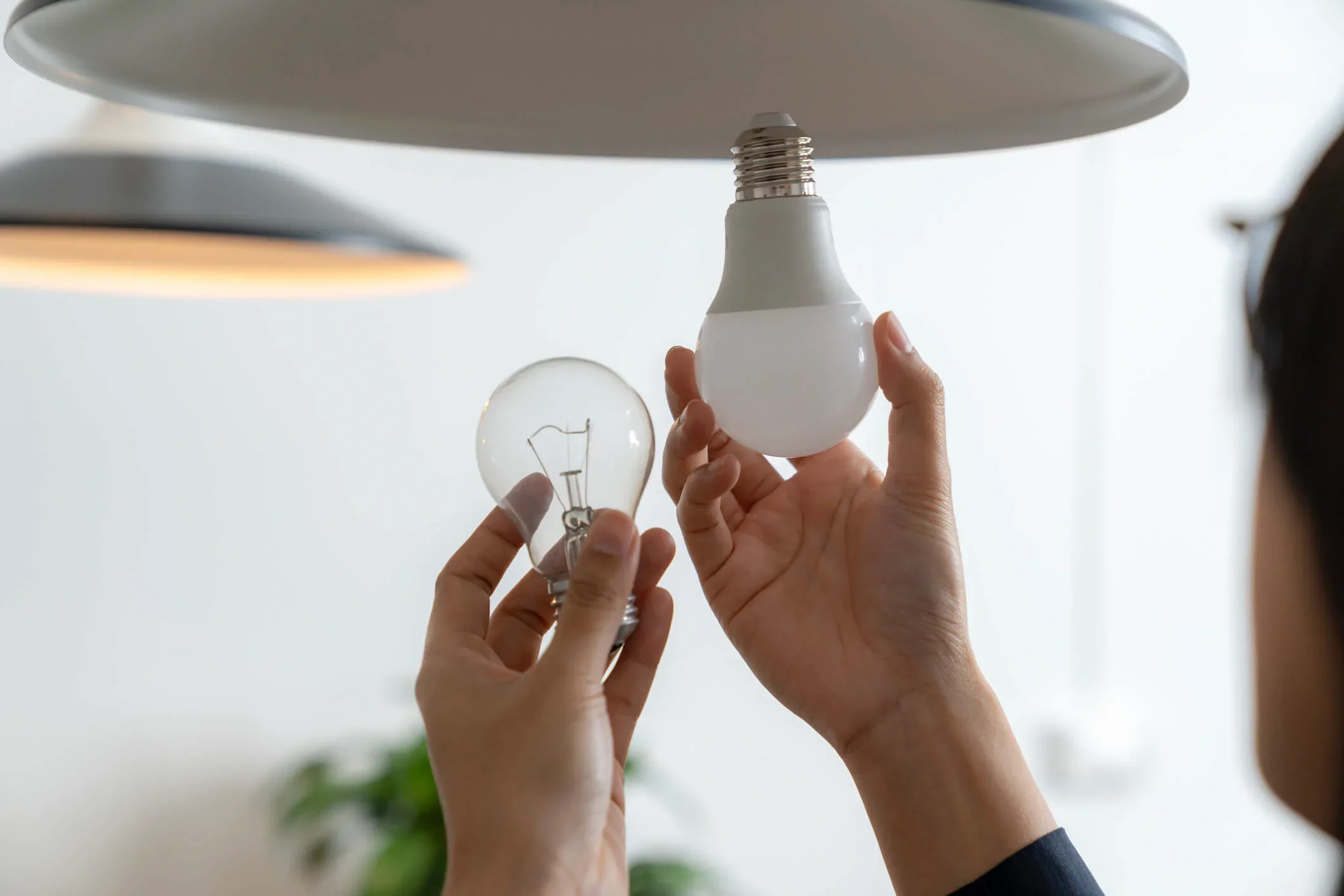
What is energy-efficient lighting?
Energy-efficient lighting uses modern lamps and controls to deliver the same or better light while using far less electricity than traditional incandescent, halogen or older fluorescent fittings. It focuses on high-efficiency bulbs such as LEDs, CFLs and T5 tubes (more on those later). When combined with sensors and smart controls this can also help your business avoid wasting energy when spaces are empty.
Lighting can account for a large portion of business electricity use, particularly in retail, hospitality and office premises where lighting is important to set ambience or meet health and safety best practices. That makes efficient lighting one of the quickest and most visible ways to shrink your energy costs and carbon footprint.
Key business benefits of energy-efficient lighting
Energy-efficient lighting can instantly help to cut your business energy bills by cutting the wattage needed per fitting. When coupled with smart controls, you can also reduce the time that lights may run unnecessarily.
Although generally a bit more expensive than fluorescent lights, LEDs, CFLs and T5 tubes can quickly pay for themselves in savings.
Switching can also support your Environmental, Social, and Governance (ESG) goals by lowering electricity demand, reducing greenhouse gas emissions and easing pressure on the grid at peak times.
Better lighting quality can boost staff comfort and productivity, improve product displays and help you create a more appealing space for customers.
Typical business lighting types
You may find that it's best to use a mix of lamp types and fittings at your business premises. If you can't replace everything at once, you could upgrade gradually as part of wider refurbishments.
Here are the main options you should consider:
- LED bulbs and fittings use up to 75–90% less energy than incandescent and older fluorescent lighting and can last 25,000 to 50,000 hours in commercial use. They are now the default choice for most offices, shops, warehouses and hospitality spaces.
- Compact fluorescent lamps (CFLs) use around 70% less energy than traditional bulbs and can last up to 10,000 hours, but are generally less efficient and flexible than LEDs. They work best in areas with long burn hours, like corridors and back-office spaces.
- T5 and T8 fluorescent tubes are widely used in commercial ceilings and high-bay fittings and are more efficient than older T8/T12 or sodium lamps, especially in large open areas. Slimline T5 tubes can save up to around 45% compared with older fluorescent systems.
- Smart LED systems combine efficient LEDs with controls such as motion sensors, daylight sensors and centralised or app-based control. They help you fine-tune light levels by zone, time and occupancy to squeeze out extra savings.
Costs, savings and lifespans of energy-efficient lighting
Exact numbers can vary by brand, wattage and usage pattern, but there are some ballpark figures you can use for planning your switch to energy-efficient lighting.
| Type | Typical purchase cost (per lamp) | Approx. lifespan (hours) | Typical annual running cost (single lamp, UK example) | Typical saving vs old tech |
| Standard LED bulb | About £2–£6 each | Around 25,000+ hours | Roughly £1.50–£1.70 a year in a typical office-use scenario | Up to 80–90% less energy than halogen or older lamps |
| Smart LED bulb | About £5–£20 each | Around 25,000+ hours | Roughly £1.50–£2.00 a year, with extra savings from controls | Similar efficiency to LED bulbs, plus control-led savings |
| CFL lamp | About £1.50–£3 each | Around 8,000–10,000 hours | Around £2.50 a year in a comparable application | Roughly 70% less energy than incandescent bulbs |
| Halogen energy saver | About £1–£2 each | Around 2,000 hours | Around £7–£8 a year in similar use | Less efficient than LED or CFL; many halogens now phased out |
| T5 / efficient tubes | Varies by fitting; higher upfront than old tubes | Up to 10× older tubes and sodium lights | Typically 45% less energy than older T8/T12 tubes | Immediate savings of over 75% possible when replacing very inefficient systems |
For a simple rule of thumb, replacing a 50 W halogen with an LED equivalent can save around £75 over the life of the bulb before you even factor in replacement costs. Across a whole building, SMEs commonly see lighting costs drop by 30 to 60% after a well-planned LED upgrade and controls project.
What are the best options for your business premises?
Different business settings need different lighting layouts, colour temperatures and controls. Matching the design to your premises helps you get the most from your investment.
In offices, use LED panels or downlights with neutral or cool colour temperatures in work areas and add occupancy and daylight sensors to open-plan spaces and meeting rooms. Breakout zones and receptions can use warmer LEDs and dimmable fittings to create a more relaxed feel.
In shops and retail units, combine bright, efficient LED ambient lighting with directional spotlights to highlight displays and signage. Use separate lighting zones and controls for windows, aisles and back-of-house so you are not over-lighting empty areas.
In warehouses and industrial spaces, opt for LED high‑bay fittings and linear lamps designed for high ceilings and rougher environments. Add motion sensors in racking aisles, loading bays and stores so lighting automatically drops or turns off when no one is present.
For hospitality venues such as cafes, restaurants, pubs and hotels, LEDs help create layered lighting schemes that balance atmosphere and efficiency. Use warm, dimmable LEDs front of house, with harder-working functional LEDs in kitchens, corridors and back‑of‑house areas.
Pros and cons of energy-efficient lighting
Switching to energy-efficient lighting doesn't come with many clear downsides, but it is still worth weighing the trade-offs before making a big upgrade.
On the plus side, LEDs and efficient tubes offer business energy savings, long lifespans and lower maintenance costs than old-style bulbs. They also improve lighting quality and give you more control through dimming, zoning and smart sensors, which can boost safety and productivity.
On the downside, the upfront cost is higher than basic halogens or legacy tubes, especially if you are replacing fittings as well as lamps. Some older dimmers and control gear are incompatible with LEDs, so you may need additional upgrades and design input to avoid flicker or poor performance.
How to choose the right energy-efficient lighting for your business
To get started, run a simple audit of your existing lighting. This will help you understand current costs, problem areas and priorities. Sub‑metering for lighting (where you fit dedicated meters to track energy use for specific lighting circuits or areas) can help you quantify usage and potential savings.
With the audit run, you can work out what you need from your new system, including light levels, colour temperature, and operating hours. You can also then look into any specific requirements, such as display lighting or food-safe fittings. Check lumen-per-watt ratings (see below), rated lifespans and compatibility with existing fittings, and prioritise LEDs and T5s for the biggest efficiency gains.
How to check lumen-per-watt ratings
To check a bulb's lumen-per-watt rating, divide its lumen output (lm) by its power consumption (W). A higher lumen-per-watt rating is better as it means you get more light for the same amount of energy.
Calculating lumen-per-watt ratings is more straightforward than it sounds. Here's how to do it:
- Find the Lumens (lm): Look for the brightness measurement on the bulb's packaging or label.
- Find the Watts (W): Locate the power consumption rating, also on the packaging.
- Divide: Calculate Lumens ÷ Watts = Lumens per Watt.
If you then compare two bulbs, you might come up with the following:
- Bulb A: 360 lumens / 4 watts = 90 lm/W
- Bulb B: 1200 lumens / 10 watts = 120 lm/W (more efficient)
Controls are just as important as lamp choice. Use occupancy sensors in intermittently used areas, daylight sensors near windows and more granular switching to create zones. Consider smart or centralised systems if you operate large multi-zone sites or want easier monitoring and scheduling.
Efficient lighting payback, grants and support
Because lighting is such a visible and predictable load, payback periods on efficient lighting and controls are often short, especially in long‑hours sites. Many businesses recover their upfront spend within a few years through lower bills and reduced replacement and maintenance costs.
There is no single UK grant scheme for energy-efficient lighting, but businesses may still be able to access tax incentives, retrofit finance and local or sector‑specific support for wider energy efficiency upgrades. The UK Business Climate Hub and government finance support pages signpost loans, grants and regional programmes that can help fund lighting as part of a broader retrofit plan.
How to dispose of and recycle your bulbs
LED lamps do not contain mercury, and all of their main materials, including metals and glass, can be recycled. Simply take them to an appropriate recycling point when they finally fail. CFLs and some older fluorescent tubes may contain small amounts of mercury. This means they must never go in general waste and should be sent to specialist recycling or your local civic amenity site.
Upgrading a whole building often generates a lot of old lamps and fittings, so it is worth talking to your contractor or waste provider about compliant collection and recycling options. Proper disposal minimises environmental impact and helps you meet your environmental responsibilities as a business.
Energy-efficient lighting for business FAQs
How much can my business save by switching to LED lighting?
Many businesses see lighting electricity use fall by 50–75% or more when they replace halogens and old fluorescents with LEDs and better controls, with overall lighting bill reductions often in the 30–60% range, depending on hours of use.
How long do LED bulbs last in commercial premises?
Quality LED lamps and fittings typically last around 25,000–50,000 hours, which can equate to many years of service even in long‑hours premises and far longer than halogen or older fluorescent options.
What is the payback period for upgrading my business lighting?
Payback periods vary by building and baseline but are often just a few years, as high electricity prices mean the savings from LEDs and controls quickly outweigh higher upfront costs.
Which type of lighting is most efficient for UK businesses?
LEDs are widely recognised as the most energy efficient option for most business premises, using up to 80–90% less energy than halogens and significantly less than older fluorescent systems.
Do I need to replace all my fittings to move to LEDs?
Not always, as many LED lamps are designed to retrofit into existing fittings, but older dimmers, ballasts and emergency systems may need upgrading or replacing to work reliably with LEDs.
Are there grants or finance options for lighting upgrades?
There is no single grant just for lighting, but SMEs can often access loans, retrofit funding and local schemes that support wider energy efficiency projects, which include lighting upgrades.
Is it time to compare business energy quotes and switch?
Take the hassle out of sorting your next energy deal. We compare from a panel of suppliers. You choose the rates that are right for your business.
By clicking ‘COMPARE TODAYS RATES’ you agree for us to search your current energy supplier and usage though industry held data. Enter manually
Our experts share essential knowledge on business energy







All related guides
View all energy guides
- A complete guide to business energy for offices
- A complete guide to business energy for restaurants
- A complete guide to business energy for shops
- Average business energy consumption - How much does your business use?
- How to get a business energy audit to save money and boost efficiency
- A complete guide to business energy bills
- Business energy brokers – everything you need to know
- What are no standing charge business energy tariffs?
- Business energy efficiency: how to save energy at your business
- Change of Tenancy - Moving business premises and your energy contract
- Commercial property landlord energy advice
- Energy performance certificate for business
- A complete guide to half hourly electricity meters
- How does the energy market affect the cost of your energy bills?
- How switching to energy efficient lighting can save your business money
- How to pay your business energy bills to save money and avoid late fees
- How your business credit score affects your energy deals
- Compare large and industrial business energy prices
- Non-Commodity Costs & TNUoS/DUoS Charges: What Every UK Business Needs to Know in 2026
- Prepayment meters for business: The complete 2025 guide for SMEs
- What are renewable energy certificates and REGOs for small businesses?
- Renewable Energy for Business
- Business Smart Meters: Your Guide to Savings, Installation, and Supplier Comparison
- Commercial solar panel electricity
- The nuclear RAB levy explained: what it means for your business
- A business guide to time-of-use energy tariffs
- Business energy tariffs explained
- Everything you need to know about the Smart Export Guarantee (SEG)
- Compare small business & micro business energy prices
- Compare the cheapest business energy suppliers
- What is the Climate Change Levy?
- Business energy meter installation: Your complete guide
- Multi-site meters and business energy management
- How much is VAT on business energy?
- What happens when your energy supplier goes bust?
- What is a letter of authority (LoA) for business energy?
- What is Market-wide Half-Hourly Settlement (MHHS) and how does it work?
- What is business microgeneration?
How to switch business energy suppliers with MoneySuperMarket
We can switch your business to a better energy deal in three simple steps
1
We find your details
Just enter your business address and we'll use industry data to accurately find and understand your energy usage.
2
We talk through your quotes
One of our UK-based energy experts will search our supplier panel and give you a call to talk through your quotes.
3
You choose the deal you want
With all the information to hand, you choose the deal that best suits your business and we’ll handle the switch for you.
Compare today’s business energy rates
By clicking ‘COMPARE TODAY'S RATES’ you agree for us to search your current energy supplier and usage though industry held data. Enter manually

If you don’t complete the form we may use your details to understand what went wrong or to promote our products or special offers. We may contact you by phone or email.
Contact MoneySuperMarket.com at MoneySuperMarket House, St David's Park, Ewole, Flintshire, CH5 3UZ. © MoneySuperMarket.com Ltd 2013.
Moneysupermarket.com Limited is an appointed representative of Moneysupermarket.com Financial Group Limited ©, which is authorised and regulated by the Financial Services Authority (FSA FRN 303190). Moneysupermarket.com Financial Group Limited, registered in England No. 3157344. Registered Office: Moneysupermarket House, St. David's Park, Ewloe, CH5 3UZ. Telephone 01244 665700.
Important Information
Here's some important information about the services MoneySuperMarket provides. Please read and retain for your own records. About our service


We use cookies to ensure you have the best experience on our website. Cookie Policy